
Last Updated: October 30, 2026
Quick Summary
The best line for frog fishing in grass is braided line, typically 50 pound test for dense cover, since its thin diameter and low stretch let you feel bass through thick mats and drive the hook. Lighter cover calls for 30 to 40 pound braid, and heavy mats may need up to 65 pound.
- Braided line is the default choice for frog fishing in thick grass.
- Use 30 to 40 lb braid in light cover, 40 to 50 lb in medium, and 50 to 65 lb in heavy mats.
- Heavy braid in clear water can look unnatural, so step down a size when fish are pressured.
- Retie your knot every few fish, since braid weakens where it rubs against grass.
- Set the drag tight enough to drive the hook but loose enough to avoid breaking the line.
Table of Contents
Choosing the best line for frog fishing in grass comes down to one thing: keeping your bait on top and your fish in the boat. Anglers who fish heavy vegetation know that the wrong line turns every missed strike into a broken rig. At UntamedSportsman, we build our topwater frogs for heavy cover and slop.
Braided line has become the default for this style of fishing for good reason. Our heavy cover fishing guide covers how to rig weedless lures and choose braid that resists fouling. Its thin diameter and low stretch let you feel a bass through thick mats and set the hook hard enough to pull fish out of cover.
What Pound Test for Frog Fishing Works in Thick Grass
Pound test for frog fishing depends on how dense the cover is and how big the fish you expect to catch.
A common mistake is buying the heaviest line available. Match the line to the cover, not to a fear of losing a fish.
Line Weight by Cover Density
Use this rough guide to pick a starting weight. Adjust based on what you see on the water.
| Cover Density | Typical Conditions | Suggested Braid | Why It Works |
|---|---|---|---|
| Light | Scattered grass, open pockets | 30 to 40 lb | Longer casts, subtle presentation |
| Medium | Patchy lily pads, moderate mats | 40 to 50 lb | Balanced casting and control |
| Heavy | Thick mats, dense grass | 50 to 65 lb | Strong hookset, pulls fish from cover |
Watch out: heavy braid in clear water can make a frog look unnatural. Step down a size when the water is calm and the fish are pressured.
Line Diameter, Casting Distance and Spool Capacity
Check spool capacity before you buy. A reel that holds 150 yards of braid in one size may hold far less in another, and running low on line during a fight is a common way to lose a fish.
Braid Color and Line Visibility in Clear and Stained Water
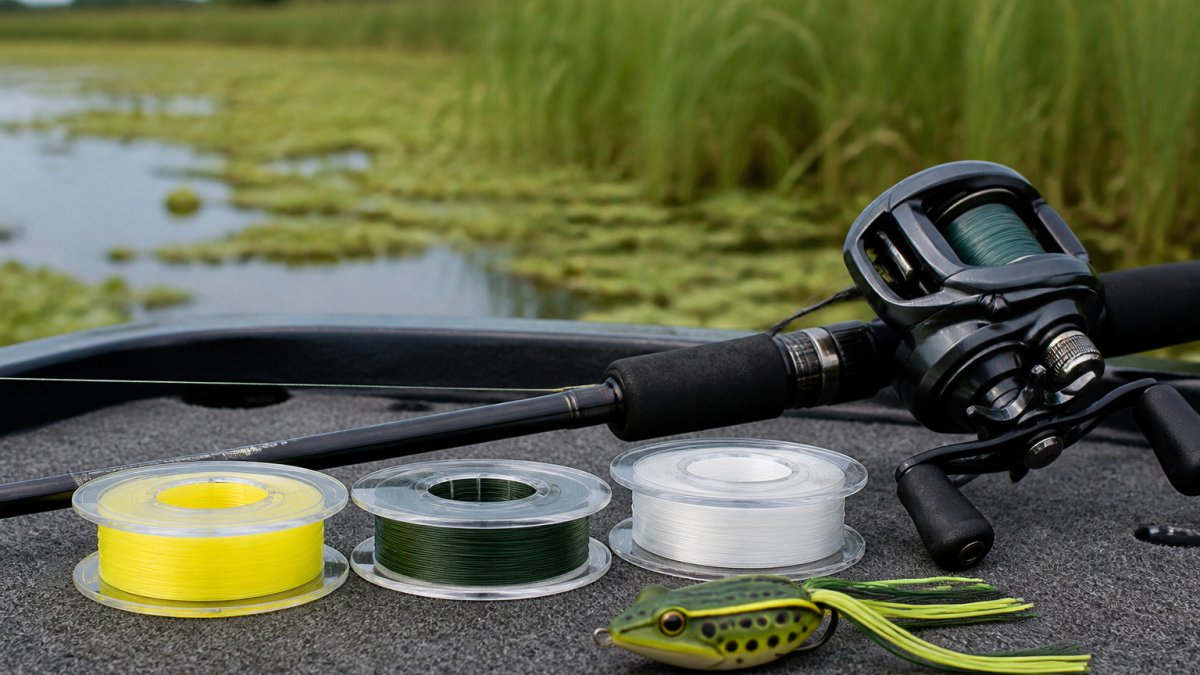
Braid color affects visibility more than many anglers expect. In clear water, a dark green or low-visibility braid blends in better. In stained water, a brighter color helps you track your line and detect subtle strikes.
Keep the leader short, since a long one can tangle in grass.
Frog Fishing Setup for Bass: Rod, Reel and Drag Settings
Your rod, reel and drag need to match your line. Our topwater frog lure guide explains how to match color, size and rig to the cover you're fishing. A medium-heavy or heavy power rod with a fast action gives you the backbone to drive hooks through thick mats. Pair it with a reel that has a strong drag and enough line capacity for long fights.
Set your drag tight enough to drive the hook but loose enough to avoid breaking the line on a sudden run. For a full walkthrough of tackle and techniques for thick cover, see our step-by-step heavy cover guide.
Watch out: never set the drag so tight that a hookset tears the frog from the fish's mouth.
Knots, Line Maintenance and Avoiding Tangles in Weeds
Braid needs a reliable knot. Many anglers use a double uni or a Palomar knot, which hold well with braid and resist slipping. Retie after every few fish, because braid can weaken where it has been abraded against grass or structure.
Rinse your line after saltwater trips, check for frayed sections, and replace it at the first sign of fuzz or nicks. Inspecting your line takes a minute and can save a trophy fish.
Troubleshooting Missed Strikes, Hookset Failures and Line Breaks
Missed strikes in grass often come from a slow hookset or too much line slack. Find proven weedless setups and punching tactics that land bass in heavy cover. Reel down, keep your rod tip up, and drive the hook with a firm, sweeping motion once you feel the fish.
If your line breaks, check the knot first, then the line itself. Most breaks happen at the knot or where the line rubbed against cover. Replace damaged sections and recheck your setup before the next cast.
Choosing Your Line Setup for Your Next Trip to the Grass
Start with 50 pound braid for dense grass, adjust for lighter cover, and match your rod and drag to the line. Browse lures built to resist snagging in vegetation to complete your setup. Pair the setup with a quality topwater frog. Our Croaking Frog ($4.99) floats so it stays on top where the action is, and its excellent kick draws strikes across lily pads and matted grass. The Toxic Tadpole ($1.50) offers a frog profile and five tails for unique action in shallow water.
Frequently Asked Questions
What pound-test line is best for frog fishing in grass?
For most grass and matted vegetation, anglers use braided line in the 50 to 65 pound range, since braid's high strength-to-diameter ratio lets you pull bass out of thick cover without the line stretching or breaking. Lighter braid around 30 to 40 pounds suits thinner, less dense grass and open pockets where casting distance matters more than brute force. Monofilament and fluorocarbon are rarely used for this technique because they stretch more and sink, which makes it harder to feel a solid hookset through dense cover.
Should you use braided line for frog fishing?
Yes. Braided line is the most common choice for frog fishing in grass because it has very little stretch, which lets you transfer a hard hookset through vegetation and into the bass's mouth.
What color braided line is best for frog fishing?
Many anglers choose a low-visibility or green-tinted braid so the line blends with grass and the water surface, while others prefer a bright color to track the line through the cast. Either works as long as you can see the line to detect bites. Light-colored braid may be easier to watch in stained water, and darker shades tend to disappear in clear shallows.
How do you keep a frog from getting tangled in weeds?
Use a heavier braid so the line is strong enough to pull the frog free when it snags, and keep your retrieve moving so the frog rides over the pads instead of sinking into them. Pausing the frog over an opening and then twitching it gives you a controlled presentation with fewer snags.
Get started with UntamedSportsman's frogs and pair them with the right braid to pull more bass out of heavy cover.


Leave a comment
All comments are moderated before being published.
This site is protected by hCaptcha and the hCaptcha Privacy Policy and Terms of Service apply.