

Table of Contents
- How to Fish Heavy Cover for Bass: What You Need Before You Cast
- Reading the Cover: Where Bass Hide in Dense Vegetation
- Best Fishing Lures for Heavy Cover
- How to Punch Heavy Cover for Bass
- Flipping and Pitching into Dense Cover
- Best Line for Bass Fishing Heavy Cover
- How to Fish a Swim Jig Through Grass
- Troubleshooting Snags, Missed Bites, and Bait Separation
- Frequently Asked Questions
Last Updated: October 7, 2026
How to Fish Heavy Cover for Bass: What You Need Before You Cast
Learning how to fish heavy cover for bass starts with one hard truth: the fish are in there, and most anglers are too afraid of snags to go get them.
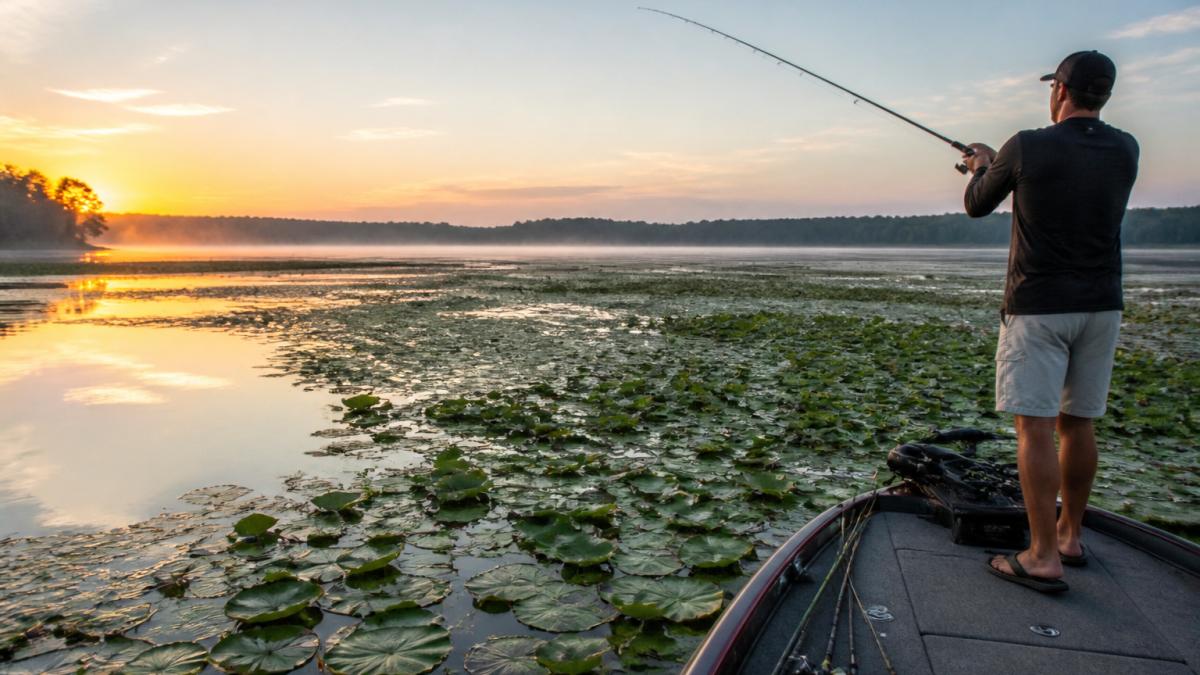
The payoff is real. Big bass hold in cover because it protects them and concentrates their food. But your standard tackle will not cut it here.
Tackle Setup for Heavy Cover
Your heavy cover setup needs three things: power, abrasion resistance, and a hook that will not bend. Skip any one of these and you will lose fish.
- Rod: A heavy or extra-heavy casting rod, 7 to 7.5 feet
- Reel: A high-speed baitcaster with a strong drag
- Line: Heavy braid, 50 to 65 pound test
- Hook: A strong flipping hook or a wide-gap worm hook
- Weights: Bullet weights and flipping weights from 1/2 to 1.5 ounces
- Tools: A hook sharpener and a lure retriever
A common mistake is going too light on the rod. A medium-heavy rod feels nicer to cast, but it cannot pull a hooked bass out of a grass mat. In practice, that extra power is the difference between landing the fish and leaving your bait behind.
Reading the Cover: Where Bass Hide in Dense Vegetation
Bass do not spread evenly through heavy cover. They sit on edges, points, and pockets where they can ambush prey. Find those spots and you will find fish.
Pockets, Points, and Edges
Scan the surface before you cast. Look for these key features:
- Pockets: Small open holes inside a grass mat
- Points: A section of cover that juts out into open water
- Edges: The line where vegetation meets open water
- Laydowns: Fallen trees and brush piles
- Current seams: Moving water against still cover
The edge is usually the highest-percentage spot. Bass patrol that line all day. Pockets inside a mat are ambush points, so a quiet, accurate cast matters more than a long one.
When you find a good edge, work it in sections. Cast parallel to the line, not straight into it. This keeps your bait in the strike zone longer.
Best Fishing Lures for Heavy Cover
The best fishing lures for heavy cover are weedless by design and built to take a beating. Soft plastics, jigs, and frogs top the list.
- Creature baits: Compact profiles that punch through mats
- Craws: Great as jig trailers or stand-alone baits
- Swim jigs: For working grass edges at a steady pace
- Topwater frogs: For slop and floating vegetation
- Swimbaits: For open pockets and edges
We build our own line of soft plastics for exactly this job. The Tramp is a 4-inch beaver-style bait made for flipping, punching, and Tokyo rigs. The Tramp Jr is the same profile in a 3.25-inch package for a more compact presentation.


Creature Baits and Craws
Creature baits and craws move water and look alive, which triggers strikes in low visibility. Rig them weedless and they slide through cover without hanging up.
The Utility Craw works as a stand-alone bait, a jig trailer, or on a drop shot. The Spike Craw has a lifelike crawfish shape with spike-covered claws, and it comes in 3.5, 4.5, and 7-inch sizes.

| Bait | Best Rig | Best For |
|---|---|---|
| Tramp | Flipping, punching, Tokyo rig | Thick mats, flipping |
| Tramp Jr | Flipping, punching, Tokyo rig | Compact presentations |
| Utility Craw | Stand-alone, jig trailer, drop shot | Year-round versatility |
| Spike Craw | Ned rig, jig trailer | Bottom craw imitation |
How to Punch Heavy Cover for Bass
Punching is the technique for getting a bait through a thick vegetation mat to the fish below. You drop a compact bait straight down through the mat, then work it in the open water underneath.
Here is how to punch heavy cover for bass in six steps:
- Position your boat close to the mat, quietly
- Rig a compact creature bait Texas style with a pegged weight
- Make a short, accurate pitch to your target spot
- Let the bait fall through the mat on a tight line
- Watch your line for a tick or a jump
- Set the hook hard and pull the fish out fast
The weight matters most here. Use 1 ounce or heavier for thick mats. Lighter weights sit on top and never reach the fish.
Flipping and Pitching into Dense Cover
Flipping and pitching are close-range techniques for dropping a bait into small targets without spooking fish. Flipping uses a hand-over-hand motion with a short line. Pitching uses a low underhand cast for a bit more distance. Both keep your bait low to the water and land softly. That quiet entry is what gets bites in shallow, pressured cover.
Flipping: The Hand-Over-Hand Method
Flipping is the most accurate way to put a bait into a tight pocket. You hold the rod in one hand and use the other hand to pull line off the reel. The bait swings out and drops straight down.
Here is the sequence:
- Let out enough line so the bait hangs just above the water.
- Swing the bait forward with a smooth, underhand motion.
- As the bait reaches the target, feed line with your free hand.
- Let the bait fall straight down on a semi-tight line.
- Watch your line for a tick or a jump.
- Set the hook hard and pull the fish out fast.
Flipping works best for targets under 15 feet. It is the go-to technique for punching through mats, dropping into pockets, and working the edge of a laydown.
Pitching: The Underhand Cast
Pitching is a low, underhand cast that gives you more distance than flipping while still keeping the bait close to the water. You hold the bait in your free hand, lower the rod tip, and swing the bait forward in a smooth arc.
Pitching works best for targets 15 to 30 feet away. It is the technique for working a grass edge, hitting a point, or reaching a pocket that is just out of flipping range.
Rigging for Flipping and Pitching
Both techniques use the same basic rig: a Texas-rigged soft plastic with a pegged bullet weight. The weight should be heavy enough to punch through the cover but light enough to fall naturally.
Use a compact bait. A 3.5 to 4 inch creature bait or craw is ideal. The bait should slide through cover without hanging up. Peg your weight so it stays tight to the bait.
Cadence and Presentation
Flipping and pitching are not cast-and-reel techniques. You are dropping the bait into a target, letting it fall, and then working it with small hops or drags.
A common pattern is to flip or pitch into a pocket, let the bait fall to the bottom, then hop it once or twice. If nothing hits, reel up and move to the next target.
When to Flip and When to Pitch
Use flipping when you need maximum accuracy and the target is close. Use pitching when you need a little more distance or when you are working a longer edge. Many anglers switch between the two on the same stretch of cover, flipping the tight pockets and pitching the longer edges.
Keep your rod tip low and your movements smooth. A quiet entry is what gets bites in shallow, pressured cover.
Best Line for Bass Fishing Heavy Cover
The best line for bass fishing heavy cover is braided line in the 50 to 65 pound range. Braid does not stretch, so it cuts through vegetation and gives you the power to pull a fish out.
- Braid: Main line for punching, flipping, and frogs
- Fluorocarbon leader: Optional for clear water, adds abrasion resistance
- Monofilament: Skip it in heavy cover, too much stretch
Braid also floats, which helps with topwater frogs. For a leader, tie a short section of fluorocarbon with a strong knot. Check your line for fraying after every fish.
How to Fish a Swim Jig Through Grass
Fishing a swim jig through grass means keeping the bait moving at a steady pace so it swims just over the vegetation. The jig comes through clean because the hook points up and the head pushes weeds aside.
- Cast past the grass edge and reel steadily
- Keep the rod tip up to hold the bait high
- Speed up when you feel grass, slow down at the edge
- Add a craw trailer for extra action
When a bass hits, sweep the rod to the side and keep reeling. A steady retrieve draws reaction strikes from bass that are keyed in on moving prey.
Troubleshooting Snags, Missed Bites, and Bait Separation
Snags, missed bites, and bait separation are the three problems that cost anglers fish in heavy cover. Each one has a fix.
- Snags: Use a lure retriever, or bow the line and pop it free
- Missed bites: Downsize your bait and slow down
- Bait separation: Peg your weight and check your knot
- Missed hooksets: Sharpen your hook and swing harder
- Line breaks: Retie after every fish and after every snag
A missed bite usually means the bass grabbed the tail, not the hook. A shorter bait or a trailer hook can help.
The real difference between anglers who catch fish in cover and those who do not comes down to confidence. Cast into the thick stuff. Trust your tackle.
Frequently Asked Questions
What is the best line for bass fishing heavy cover?
Braided line is the top choice for heavy cover because it has zero stretch and high abrasion resistance. Use 50- to 65-pound braid for punching mats and flipping thick vegetation. The no-stretch property gives you solid hooksets and the power to pull bass out of dense cover. Tie directly to your hook or use a heavy fluorocarbon leader if you want abrasion resistance near rocks. Braid also cuts through grass better than monofilament or fluorocarbon.
How do you punch through thick vegetation for bass?
Punching requires a heavy tungsten weight (3/4 to 1.5 ounces), a compact creature bait like a beaver-style lure, and a heavy or extra-heavy rod. Make a short pitch or flip to the mat, let the bait break through, and watch your line. When it ticks or moves, set the hook hard and reel fast to keep the fish from burying you. Peg your weight so it stays tight to the bait and slides through grass without separation.
What lures work best for bass in heavy cover?
Weedless soft plastics are the most versatile: Texas-rigged creature baits, craws, and worms. Jigs with weed guards work well for flipping and pitching. Hollow-body frogs excel over matted grass and slop. Swim jigs with a trailer are great for cruising through submerged grass. For punching, compact beaver-style baits like the Tramp or Tramp Jr slide through mats and trigger bites. Match your lure to the cover density and the bass's mood.
How do you set the hook and land a bass in thick cover?
Use a heavy or extra-heavy rod with braided line for maximum power. When you feel a bite, reel down until you feel weight, then set the hook with a hard, sweeping motion. Keep the rod tip up and reel fast to keep the bass from wrapping around cover. If the fish buries, apply steady pressure and wait for it to move. Use a landing net and wet your hands before handling the fish to protect its slime coat.
Heavy cover rewards anglers who commit to it, but only if your gear holds up. At UntamedSportsman, we build soft plastics made for exactly this kind of fishing, including our beaver-style creature baits and craw profiles that stay put on the hook and move water in low visibility. Our baits are designed for flipping, punching, and rigging your way, with color options to match the water you fish. Get started with UntamedSportsman and put your bait where the big bass live.


Leave a comment
All comments are moderated before being published.
This site is protected by hCaptcha and the hCaptcha Privacy Policy and Terms of Service apply.