Table of Contents
- Why Buying High Quality Bass Lures Online Beats the Local Tackle Shop
- Quick Comparison: Best Bass Fishing Lures Worth Your Money
- Topwater Frogs for Bass: When Surface Strikes Win
- Bass Lures for Heavy Cover: Baits That Punch Through Slop
- Spinnerbaits for Beginners: A Forgiving First Bait
- How to Choose a Bass Lure for Water Clarity, Season, and Forage
- What Separates High Quality Bass Lures From Cheap Imitations
- Buying Bass Lures Online With Confidence: Shipping, Returns, and What to Check
- Frequently Asked Questions
Last Updated: October 8, 2026
Why Buying High Quality Bass Lures Online Beats the Local Tackle Shop
The best way to buy high quality bass lures online is to match proven lure styles to the water you actually fish, then order from a maker who publishes exact specs, colors, and pack counts.
A tackle shop carries what sells in one region. Online, you order a creature bait for punching mats in July and a drop-shot worm for clear-water finesse in the same box.
Below, ten picks by technique and cover, with prices and a comparison table.
Quick Comparison: Best Bass Fishing Lures Worth Your Money
Here are the best bass fishing lures worth your money, sorted by technique and price.
| Lure | Style | Size | Price | Best For |
|---|---|---|---|---|
| Croaking Frog | Topwater frog | 5 per pack | $4.99 | Lily pads and slop |
| Tramp Jr | Creature bait | 3.25 in | $5.99 | Flipping and punching |
| 6" Dessert Worm | Worm | 6 in, 12 per pack | $3.99 | All-around Texas rigs |
| Ribbed Lizard 6" | Lizard | 6 in, 8 per pack | $5.99 | Textured profiles |
| Craw, Natural | Craw | 4 in or 6 in | $4.99 | Jig trailers |
| Craw, Finesse 3" | Craw | 3 in, 8 per pack | $5.99 | Small jigs |
| Paddletail, Ribbed 5" | Swimbait | 5 in | $6.99 | Moving baits |
| Tapered Tail Crush Jerkibait | Jerkbait | 8 per pack | $5.99 | Hook-hiding profiles |
| Smooth Shot | Drop-shot worm | 12 per pack | $3.99 | Finesse |
| 11" Mega Worm | Worm | 11 in, 11/0 hook | $6.99 | Big bass |
Price and Value at a Glance
Value in bass lures comes down to cost per bait, not sticker price. The 6" Dessert Worm runs $3.99 for 12 worms, roughly 33 cents each, and the Smooth Shot gives you 12 baits at $3.99.

Topwater Frogs for Bass: When Surface Strikes Win
Topwater frogs for bass shine at dawn and dusk, when big fish look up. The Croaking Frog is a floating frog with an excellent kick, made for dragging across lily pads and matted grass.
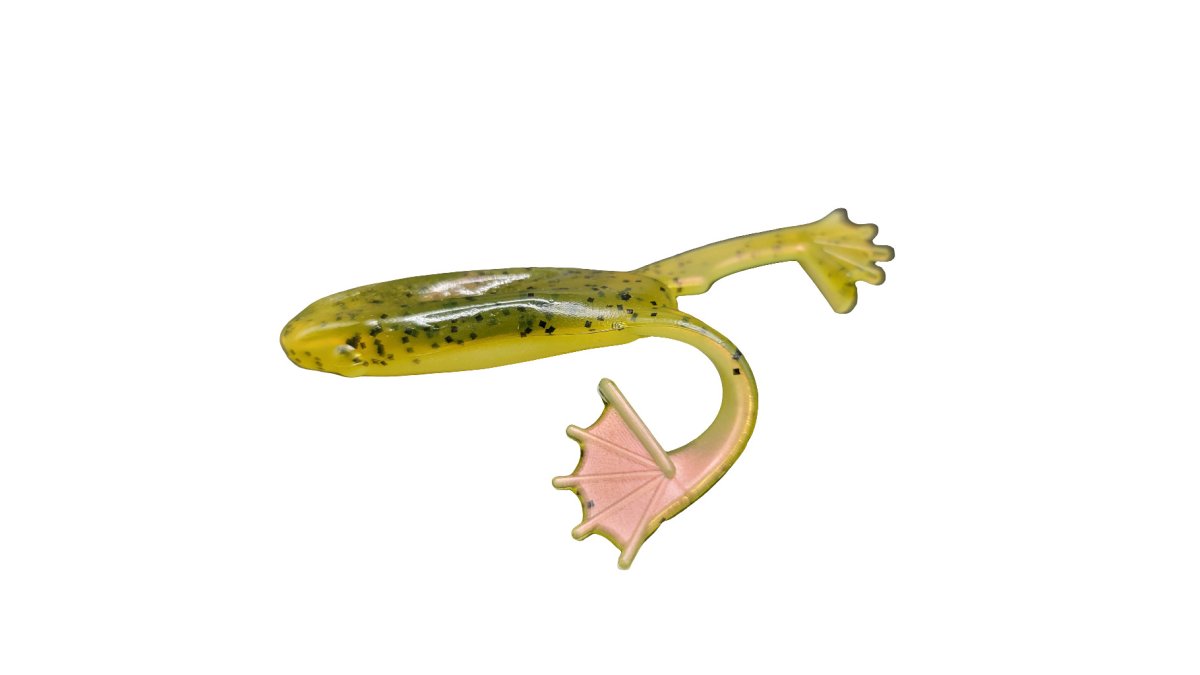
It comes in 12 colors, from natural Watermelon Seed to bold Black/Silk Chartreuse, five per pack for $4.99.
The key is patience. Let the frog sit after it lands. Bass often strike on the pause, not the retrieve.
Bass Lures for Heavy Cover: Baits That Punch Through Slop
Bass lures for heavy cover need a compact profile and a way to hide the hook. Tramp Jr is a 3.25-inch beaver-style creature bait built for flipping, punching, and Tokyo-rig setups, with 20 color options including Okeechobee Craw and Black/Blue Flake.
Creature Baits and Worms for Thick Vegetation
Thick vegetation calls for baits that slide through without hanging up. The 6" Dessert Worm rigs Carolina, Texas, Neko, or Wacky style, and a weedless setup lets it slip through cover. Twelve worms for $3.99. Pair it with the Ribbed Lizard 6", whose ribbed body and forward-facing arms add movement, eight per pack at $5.99.

Spinnerbaits for Beginners: A Forgiving First Bait
Spinnerbaits for beginners work because they're forgiving: cast, reel, and the blades do the work. A double willow setup flashes and thumps through stained water without perfect retrieve control, so beginners cover more water per cast.
Match blade style to clarity: in muddy water, a single large Colorado blade moves more water so fish find the bait by feel; in clear water, double willow blades run tighter and flash brighter.
Blade Styles, Weights, and When to Throw Each
| Blade Style | Water Clarity | Typical Weight | Best Season | Retrieve |
|---|---|---|---|---|
| Single Colorado | Muddy, stained | 3/8 oz | Spring, fall | Slow, steady |
| Double Willow | Clear, lightly stained | 3/8 oz | Summer, fall | Fast, steady |
| Tandem (Colorado + Willow) | Stained | 1/2 oz | Spring, fall | Medium, steady |
| Single Indiana | Clear | 1/4 oz | Winter, early spring | Slow, steady |
A 3/8 oz double willow is the most versatile starting weight for most beginners: it casts far enough to cover water, runs shallow enough for submerged grass, and stays weedless enough to bump cover without constant snags.
Retrieve Mechanics That Actually Matter
Beginners lose bites because they reel too fast or too slow for the blade style. Simple rule: if you can't feel the blades thumping, slow down; if the bait rides the surface, speed up or switch to a heavier head.
When a bass swipes and misses, don't stop the bait. Keep reeling and the fish will usually come back for a second pass.
A Beginner Starter Kit That Covers Most Water
You don't need a wall of spinnerbaits to start. A three-bait kit covers most conditions:
- One 3/8 oz double willow in white or chartreuse for clear water and bright days
- One 3/8 oz single Colorado in black/blue for stained water and low light
- One 1/2 oz tandem in white/chartreuse for wind, depth, and spring prespawn
Pair that with a 6" Dessert Worm on a Texas rig and the Croaking Frog for topwater, and you have a three-technique starter box for under $20, covering topwater, mid-column, and bottom presentations.
How to Choose a Bass Lure for Water Clarity, Season, and Forage
Choosing a bass lure comes down to three variables: water clarity, water temperature, and what the fish are eating. Match all three and your catch rate climbs.
- Clear water: natural colors, smaller profiles, finesse baits like the Smooth Shot on a drop-shot rig
- Stained water: brighter colors, more vibration, craw patterns like Craw, Natural
- Cold water: slow down, downsize, fish deeper with finesse presentations
A common mistake is fishing one lure all day. Change with the conditions, not your mood.

What Separates High Quality Bass Lures From Cheap Imitations
High quality bass lures hold their action cast after cast, keep their color, and don't tear apart on the first strike. Cheap imitations fade, stiffen, and lose their kick after a few fish. The difference shows up in hook slots, jointed bodies, ribbed textures, and consistent plastic.
Plastic Formulation and Softness
Soft plastic baits are made from plastisol, a PVC-based compound. Quality comes down to plasticizer content and colorant quality: higher plasticizer makes a bait softer and more lifelike, but too soft tears on the hookset and too hard won't swim.
A common pattern in heavy cover: cheaper baits tear at the hook slot within two or three fish, while better-formulated baits hold up for ten or more.
Hook Slots, Hook Sizes, and Rigging Geometry
A hook slot is a channel molded into the top of the bait that lets the hook point sit flush.
The Tapered Tail Crush Jerkbait includes a hook slot to hide your hook, eight per pack at $5.99. The 11" Mega Worm is built around an 11/0 hook, which tells you the bait is designed for big fish and heavy line.
Color Fastness and Finish
Color fastness is the bait's ability to hold its color after repeated exposure to water, sun, and fish slime. Cheaper baits use low-grade colorants that bleed or fade after a few trips. Better baits use UV-stable colorants that hold up across a season.
A simple test: leave a bait in direct sun for a day. If the color shifts noticeably, it will fade on the water too.
Scent, Salt, and Flavor Additives
Many soft plastics include salt for weight and flavor, or garlic and other scents for attraction. Salt makes a bait sink faster; garlic and similar additives can encourage fish to hold on longer, giving you more time to set the hook.
The Ribbed Lizard 6" adds garlic flavor and a ribbed body that keeps its shape. That combination, scent plus structural texture, is a common quality marker.
What to Check Before You Buy
- Pack count and cost per bait: A $6.99 pack of 5 is $1.40 per bait; a $3.99 pack of 12 is 33 cents. On snag-heavy water, cost per bait matters more than sticker price.
- Hook slot present: If the listing doesn't mention a hook slot, assume there isn't one.
- Plastic feel: Reviews that mention tearing, stiffening, or fading are the clearest signal of low quality.
Buying Bass Lures Online With Confidence: Shipping, Returns, and What to Check
Buying bass lures online with confidence means checking three things before you order: exact specs, pack counts, and the return policy.
What to check before checkout:
- Length and pack count match what you need
- Color options match your water clarity
- Action described (floating, kicking, ribbed, jointed)
- Shipping cost and delivery window
For families and weekend anglers, start with the 6" Dessert Worm at $3.99 and the Croaking Frog at $4.99.
The hardest part of bass fishing isn't finding fish, it's finding lures that hold up in heavy cover without costing a fortune per bait.
Frequently Asked Questions
What is the top rated bass lure for heavy cover?
Soft plastics rigged weedless consistently rank highest for heavy cover because they slide through vegetation without snagging. Creature baits like the Tramp Jr, a 3.25-inch beaver-style bait built for flipping and punching, and the 6-inch Dessert Worm, which can be rigged Texas or Carolina style, are both strong choices. The Croaking Frog also works over matted grass and lily pads when bass are feeding on the surface. Matching the bait to the density of cover matters more than any single lure.
What types of bass lures should beginners buy first?
Beginners do well with a small, versatile set: a soft plastic worm for Texas rigging, and a topwater frog for surface action. The 6-inch Dessert Worm at $3.99 per pack of 12 offers the most rigging options for the money. Start with two or three lure styles rather than a large assortment, and learn each one before adding more.
Are expensive bass lures worth buying?
Price alone does not guarantee quality, but higher-priced lures often use better hooks, stronger split rings, and more durable soft plastic formulas. A $3.99 pack of 12 Dessert Worms or a $4.99 Croaking Frog delivers solid value because you get multiple baits per pack. The real test is whether a lure holds up after repeated casts into cover. Cheap soft plastics tear quickly, which means you re-rig more often and spend more time tying knots than fishing.
How do I choose the right bass lure for the conditions?
Start with water clarity and temperature. In stained or muddy water, use lures with strong vibration or bulk, like the 5-inch Ribbed Paddletail. In clear water, downsize to finesse options like the Smooth Shot on a drop-shot rig. In colder water, slow down with a suspending jerkbait such as the Tapered Tail Crush Jerkbait. During warmer months, topwater frogs and fast-moving baits trigger reaction strikes. Match the hatch by checking what forage is present.
How do I buy high quality bass lures online without getting burned?
Check the product listing for exact specifications: length, hook size, quantity per pack, and color options. Read customer reviews and star ratings to gauge durability and real-world performance. Confirm shipping costs and delivery windows before checkout. Buying directly from a manufacturer like UntamedSportsman means you get the listed price without third-party markups. Look for lures with specific design details, like the 11-inch Mega Worm that includes an 11/0 hook, so you know exactly what arrives.


Leave a comment
All comments are moderated before being published.
This site is protected by hCaptcha and the hCaptcha Privacy Policy and Terms of Service apply.