
Last Updated: November 1, 2026
Quick Summary
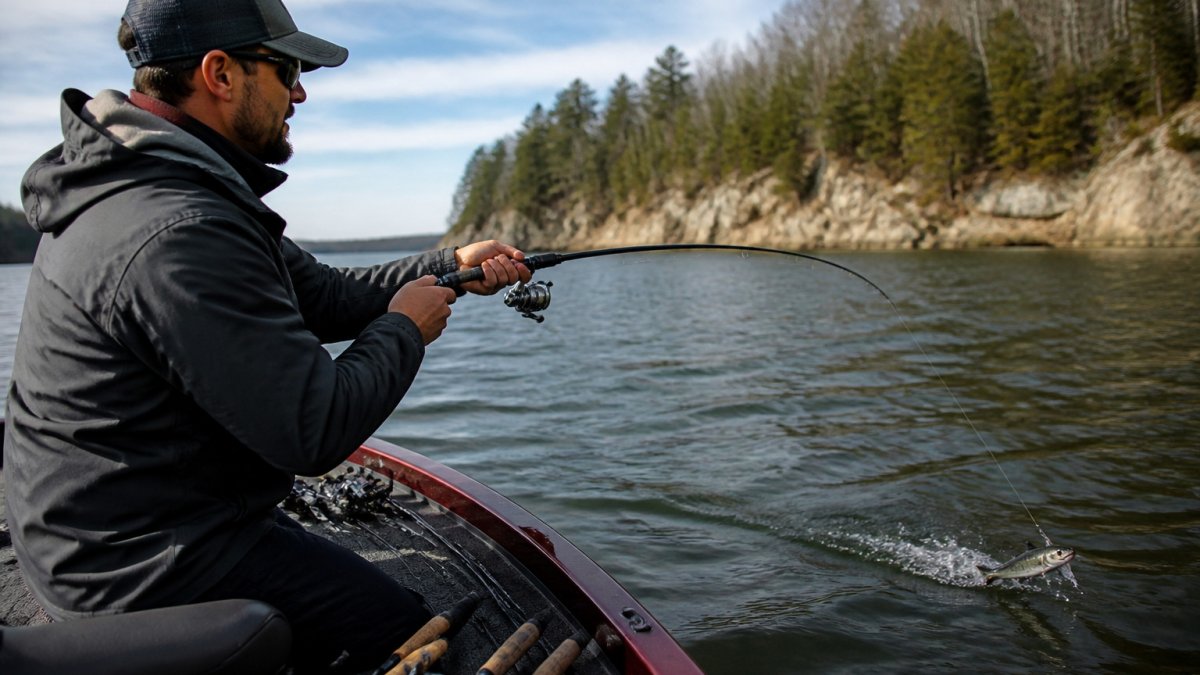
To learn how to retrieve swimbaits for maximum action, keep your rod tip low and reel at a steady pace so the lure does the swimming. Start slower than you think you need, since a retrieve that is too fast makes the tail spin without a realistic swimming path. Adjust speed and pauses to water temperature and clarity.
- Keep the rod tip low and reel at a steady, consistent pace.
- Start slower than you think you need; too fast makes the tail spin.
- Cold water below about 50°F calls for a slow steady reel with a two- to three-count pause.
- Warm water above 65°F suits a faster steady retrieve with pauses of one count at most.
- Check hook alignment, weight placement, and retrieve speed before blaming the bait for weak tail action.
Table of Contents
- How Swimbait Retrieves Create Action
- Choosing the Right Retrieve for Your Swimbait Style
- Paddle-Tail Swimbait Retrieve Step by Step
- Jointed Swimbait Retrieve Technique
- Setting Swimbait Retrieve Speed and Pauses
- Troubleshooting Weak Swimbait Tail Action
- Start Retrieving Your Next Swimbait With Purpose
- Frequently Asked Questions
How Swimbait Retrieves Create Action
Swimbaits catch fish because they move like real baitfish, and learning how to retrieve swimbaits for maximum action decides how much of that movement you get. A swimbait that sits still is just a lump of plastic. Reel it steadily and the body and tail start working. Change your speed and the action changes with it. For most anglers, learning how to retrieve swimbaits for maximum action is the difference between a lure that gets ignored and one that draws strikes.
Here's the core idea: the lure does the swimming, and you control how it swims. Keep your rod tip low and reel at a steady pace. Let the bait's own design handle the rest. A consistent retrieve lets the bait's design work for you.
Watch out: a retrieve that is too fast can make the tail spin without pushing the bait through a realistic swimming path, so start slower than you think you need.
Choosing the Right Retrieve for Your Swimbait Style
Not every swimbait wants the same retrieve. A paddle-tail bait and a segmented or jointed bait each move differently, so match your retrieve to the bait in your hand.
- Paddle-tail baits: Reel steadily so the tail flares and pushes water.
- Jointed baits: Use a slower, even pull to let the body segments flex.
- Heavy cover: Keep the retrieve tight and short to reduce snags.
The Thumping Shad 4" is a good starting point for a steady, lifelike retrieve. A shad profile and paddle tail reward a consistent pace.
Paddle-Tail Swimbait Retrieve Step by Step
This is the retrieve most anglers should learn first, because paddle tails respond well to a clear, repeatable pattern.
- Cast the bait past your target and let it sink for a two-count.
- Start reeling at a steady pace with the rod tip low.
- Keep the bait just under the surface or at your target depth.
- Watch the tail. It should flare and push water with each pass.
- If the tail goes quiet, speed up slightly until the action returns.
- Finish the cast by lifting smoothly, not jerking.
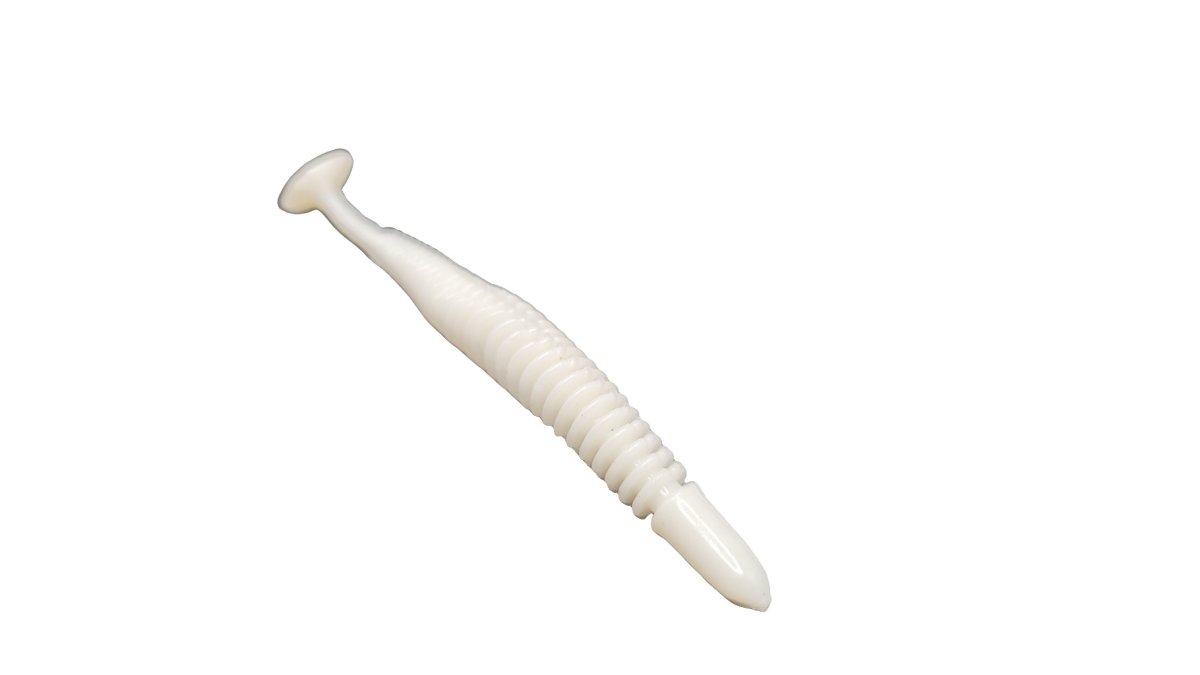
The Paddletail, Ribbed 5" has a paddle tail that swims with lively, slithering movement.

Jointed Swimbait Retrieve Technique
Jointed swimbaits flex at each segment, so the retrieve should feel smooth and unhurried. Reel at a steady pace and let the joints do the wiggling. Pulling too hard straightens the body and kills the natural S-shape. Many anglers find that a slower, even pull produces more realistic movement than a fast one.
Setting Swimbait Retrieve Speed and Pauses
Speed is the simplest control you have, but the right speed is not a fixed number, it is a response to water temperature, clarity, light, current, and how active the fish are. Use the conditions below as a starting decision guide, then fine-tune on the water.
Condition-Based Retrieve Decision Guide
- Cold water (below about 50°F): Slow down and lengthen pauses. A common pattern is a slow, steady reel with a two- to three-count pause, letting the bait glide and settle. Fish are less willing to chase, so give them time to commit.
- Cool water (50-65°F): Start with a moderate steady retrieve and add a one-count pause every few seconds. This is the most forgiving range; adjust pause length until you get follows.
- Warm water (above 65°F): Fish are more willing to chase. A faster steady retrieve and short bursts cover water and trigger reaction strikes. Keep pauses short, a one-count at most, so the bait does not lose its fleeing-baitfish look.
- Clear water: Fish can inspect the bait, so favor a natural, steady pace and avoid exaggerated bursts. Longer casts and a steady retrieve keep the bait from spooking fish.
- Stained or muddy water: Fish rely more on vibration and silhouette. Slow down slightly so the tail pushes more water, and use short bursts to create a thump fish can feel.
- Bright, high sun: Fish often hold tighter to cover. Keep the retrieve tight to structure and use a slower, more deliberate pace.
- Low light (dawn, dusk, overcast): Fish roam more and are more willing to chase. A faster steady retrieve and occasional bursts cover water efficiently.
- Current: Cast upstream and reel just fast enough to keep the tail working as the bait comes back with the flow. In strong current, slow your reel and let the water do some of the work; in slack water, you need to supply the speed.
Speed and Depth Control
Speed and depth are linked. A faster retrieve lifts the bait; a slower retrieve lets it sink. To hold a target zone:
- Count the bait down after the cast (one count per second is a practical estimate) until you reach the depth you want.
- Reel at the slowest pace that still keeps the tail flaring.
- If the bait rises out of the zone, slow down or add a brief pause to let it settle.
- If it snags or drags bottom, speed up slightly or raise the rod tip.
A common pattern is to fish the same cast at two speeds, a slow pass, then a faster pass, and note which one draws follows. That tells you more than any general rule.
Using Speed Changes and Short Bursts
Short bursts of speed can wake up a lazy fish. Reel faster for two or three turns, then return to your normal pace. The change in rhythm often triggers a strike that a steady retrieve misses. Use bursts sparingly, since too many will break the natural look. A practical cadence is a steady retrieve for five to eight seconds, a one-count pause, then a two- to three-turn burst before settling back to steady.
The table below sums up how water temperature shapes your retrieve speed and pause length.
| Water condition | Retrieve speed | Pause length |
|---|---|---|
| Cold, below about 50°F | Slow, steady | Two to three count |
| Cool, 50-65°F | Moderate, steady | One count every few seconds |
| Warm, above 65°F | Faster steady | One count at most |
| Clear water | Natural, steady | Minimal |
| Stained or muddy water | Slightly slower | Short bursts |
Troubleshooting Weak Swimbait Tail Action
Weak or inconsistent tail action is usually a rigging or speed problem, not a bad bait. Work through this sequence before you switch lures.
Step-by-Step Diagnostic Sequence
- Check the tail by hand. Flex the tail at the bait's hinge point. It should move freely and return to center. If it is stiff, bent, or torn, replace the bait.
- Check rig alignment. Lay the bait on a flat surface and sight down the length. The hook point, weight, and bait nose should form a straight line. An off-center hook or a weight seated to one side makes the bait roll and kills tail action.
- Check weight placement. A heavy jig head or a weight pushed too far forward drags the nose down and lifts the tail out of the water. Try a lighter weight or slide the weight back slightly so the bait swims level.
- Check retrieve speed. Start slow and increase until the tail begins to flare. If the tail only works at high speed, the bait is likely rigged off-center or the tail is stiff.
- Check the rod tip. A high rod tip lifts the bait and can make it roll. Keep the tip low and pointed toward the lure for a straight, level track.
Corrective Cues for Common Problems
- Bait rolling: Usually an off-center hook or a weight seated to one side. Re-seat the hook straight and center the weight.
- Tracking crooked: The bait is bent or the hook is not aligned with the bait's centerline. Straighten the bait and re-rig.
- Tail not flaring: Retrieve too slow, tail too stiff, or weight too heavy. Speed up slightly, flex the tail by hand, or go lighter.
- Bait spinning: Retrieve too fast or the tail is bent to one side. Slow down and check the tail for a set bend.
- Bait rising too fast: Retrieve too fast or the weight is too light. Slow down or add a slightly heavier weight.
When Tail Modification Helps or Harms Action
Trimming the tail can increase action on some baits, but it also reduces the surface area that pushes water. A common pattern is to trim only a torn or split tail back to clean plastic, not to shorten a healthy tail. If you do trim, cut symmetrically and test the bait at slow speed first, an uneven cut makes the bait roll. On most baits, a healthy tail out of the package works better than a modified one, so modify only when the tail is already damaged.
A common mistake is blaming the bait when the retrieve is the problem. Adjust your speed and rigging before you switch lures.
Start Retrieving Your Next Swimbait With Purpose
Good swimbait retrieves come down to a few habits: keep a steady pace, match the retrieve to your bait, and use speed changes and pauses on purpose. Practice the paddle-tail steps until the tail action feels automatic. Then experiment with pauses and bursts until you find what works in your local water. Pick up a Thumping Shad 4" and start with a steady retrieve on your next trip.

Frequently Asked Questions
How do you retrieve a swimbait?
Cast beyond your target, let the bait sink to the depth where fish are holding, then start a steady retrieve with the rod tip low and the reel turning at a consistent pace. Keep the rod tip pointed toward the bait so you feel the tail kick through the line. If the bait stops producing a pulse, speed up slightly or add a short pause. Most swimbaits work best with a steady retrieve that keeps the tail moving without pulling the bait too high in the water column.
What is the best speed to retrieve a swimbait?
A moderate speed that keeps the paddle tail or jointed body moving with a consistent pulse is the best starting point. Slow-rolling works well in cold water or around cover, while a faster steady retrieve suits warmer water and open areas. Vary your speed on each cast until you find the pace that produces strikes. Speed control matters more than any single fixed number, so adjust based on fish activity and water temperature.
How can I get more action out of my swimbait tail?
Use a steady retrieve so the tail stays loaded and moving. Make sure the hook and jig head are rigged straight so the bait swims true. Check that the paddle tail is not bent or torn, since a damaged tail loses its kick. Try the UntamedSportsman Paddletail, Ribbed 5" at $6.99 or the Thumping Shad 4" at $2.99, both designed around a paddle-tail action that thumps through the water.
How do you retrieve a jointed swimbait?
Jointed swimbaits move with a side-to-side wobble, so a steady, moderate retrieve usually produces the most natural action. Keep the rod tip low and avoid sudden, hard jerks that can collapse the joint motion. Add short pauses to let the bait flare and follow the lure, then resume the steady retrieve. Paired with a medium-heavy rod and a fast-action tip, this approach gives you clean control over the bait's movement.



Leave a comment
All comments are moderated before being published.
This site is protected by hCaptcha and the hCaptcha Privacy Policy and Terms of Service apply.