Last Updated: November 2, 2026
Quick Summary
Comparing different worm profiles comes down to body shape, tail geometry, and length, which together control how a soft plastic moves, falls, and displaces water. Straight tails glide for finesse and clean falls, while ribbon and curly tails wave and pulse for water displacement, stained water, and reaction bites.
- Match body shape to depth and tail geometry to the mood of the fish.
- Straight tails suit finesse rigs like drop shot and shaky head; ribbon and curly tails suit heavy cover.
- Start at 6 inches and size up if bass are short-striking your worm.
- Only the Ribbon Tail and Spade Worm hold up to a fast burn retrieve.
- Keep worms flat in a divided box and out of direct sun to protect tail shape.
Table of Contents
- Worm Profiles Side by Side: What Actually Changes Underwater
- Types of Soft Plastic Worms in the UntamedSportsman Lineup
- Straight-Tail Worm vs Curly-Tail Worm: Action, Speed, and Rigging
- Soft Plastic Worm Sizes: Matching Profile Length to Forage and Cover
- Retrieve Speed and Fish Response: How Each Profile Moves
- Matching Worm Profiles to Water Clarity and Seasonal Conditions
- Soft Plastic Bait Storage: Keeping Profiles and Colors Ready
- Pick Your Profile and Cast With Confidence
- Frequently Asked Questions
Worm Profiles Side by Side: What Actually Changes Underwater
Comparing different soft plastic worm profiles starts with one truth: a bass never sees your label. It sees a silhouette, feels a vibration, and decides. Two baits can share the same length and color and still fish nothing alike, because the tail does the talking.
A worm profile is the combination of body shape, tail geometry, and overall length that determines how a soft plastic bait moves, falls, and displaces water. Change any one of those three elements and you change what the fish experiences.
Below, we break down each profile in our lineup, match them to rigs and conditions, and show you exactly where each one earns a spot in your box.
Body Shape and Tail Geometry at a Glance
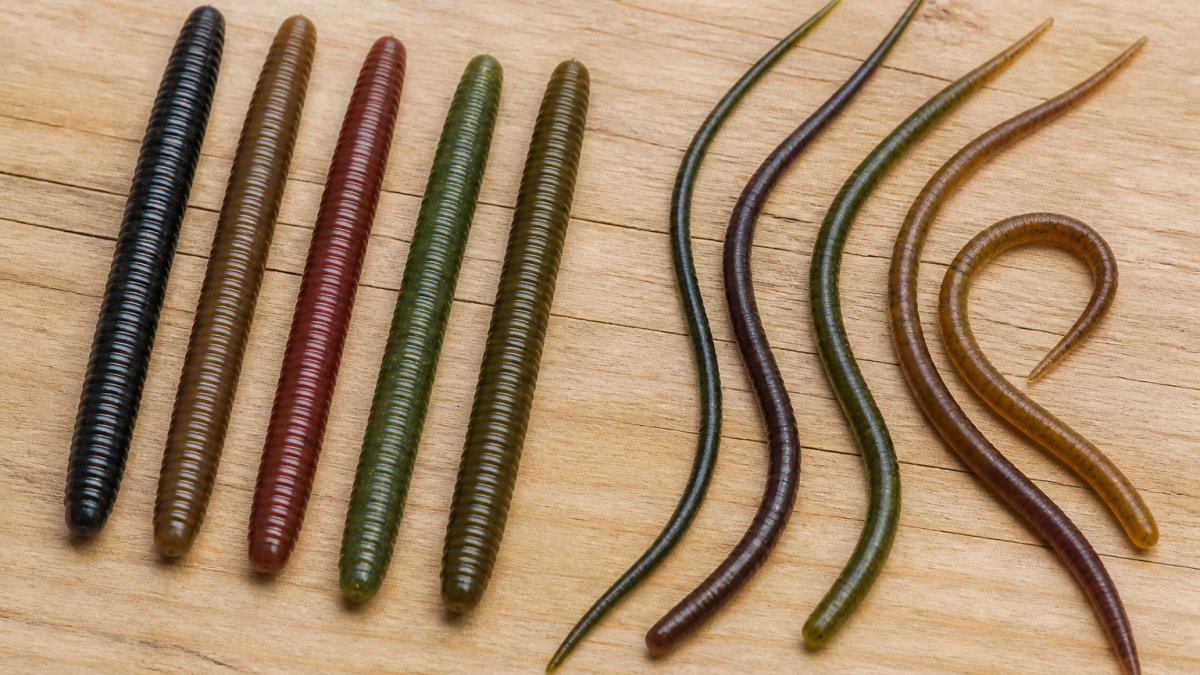
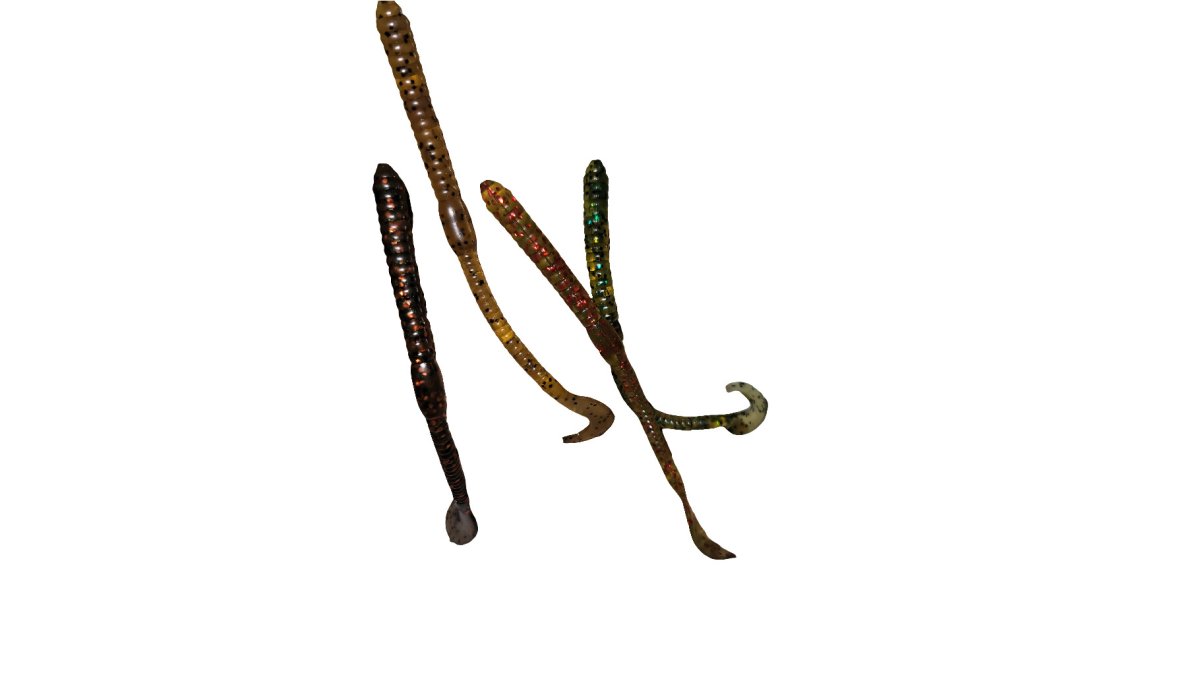
Body shape controls fall rate and how the bait sits on the bottom. A fully rounded body sinks predictably and reads as natural forage. A slender body with an egg sack drops faster and triggers reaction strikes. Tail geometry controls everything after the drop: a straight tail glides, a ribbon tail waves, a curly tail pulses, and a spade tail wobbles. Match body to depth and tail to mood.

Types of Soft Plastic Worms in the UntamedSportsman Lineup
Our worm lineup covers five distinct profiles, each built for a specific job on the water:
- Natural Worm 6": fully rounded body, no flat sides, lifelike from every angle. $3.99 for 10 worms.
- 6" Dessert Worm: the classic all-around profile. $3.99 for 12 worms.
- 7" Ribbon Tail Worm: long wavy tail, garlic scented, built for cover. $4.99 for 12 worms.
- C-Tail Worm: curved tail that undulates at slow speeds. $4.99 for 12 worms.
- 6" Round Spade Worm: slender body with egg sack and rounded spade tail. $4.99 for 11 worms.
You can browse the 7" Ribbon Tail Worm to see the profile up close before you commit.

Straight-Tail Worm vs Curly-Tail Worm: Action, Speed, and Rigging
The straight-tail vs curly-tail debate is really a rig-and-cover question. Tail shape decides how a worm moves; the rig decides where and how it moves through structure. Treat them as a pair and the choice gets much simpler.
The Core Difference
- Straight-tail profiles (Natural Worm, Dessert Worm) track in a clean line with a subtle glide. They are the finesse choice: slow, weightless drifts, pressured fish, and clear water where a natural fall matters more than thump.
- Curly-tail and ribbon-tail profiles (C-Tail, Ribbon Tail) keep the whole body moving even at a crawl. They displace more water, which helps fish find the bait by feel in stained water and heavy cover.
Profile by Rig and Cover
| Rig / Cover | Best profile | Why |
|---|---|---|
| Texas rig, heavy vegetation | 7" Ribbon Tail | Big tail pushes water and slides through grass; the long profile reads over the tops |
| Texas rig, wood and docks | 6" Dessert Worm | Compact straight tail skips and falls cleanly; fewer hang-ups than a long ribbon |
| Carolina rig, open flats | 7" Ribbon Tail or C-Tail | Long leader lets the tail wave and float; ribbon flashes, C-Tail undulates at slow drags |
| Drop shot, deep and clear | 6" Round Spade Worm | Spade tail wobbles on a nearly motionless presentation, built for a bait that sits and quivers |
| Shaky head, rock and gravel | 6" Dessert Worm | Straight tail stands up and glides; slim body reads natural on a slow drag |
| Weightless, shallow and pressured | Natural Worm 6" | Lifelike rounded body and clean glide; the subtle choice when fish have seen everything |
| Punching mats | 7" Ribbon Tail | Bulk and tail action survive a heavy weight and a fast fall |
Rigging Notes That Change the Choice
- Texas and Carolina rigs reward straight tails for a natural fall and ribbon or curly tails when you want the bait to announce itself. On a Carolina rig, the long leader is what lets a ribbon tail do its work, shorten it and you waste the profile.
- Drop shot and shaky head are finesse rigs, so match them to finesse profiles. A big ribbon tail on a drop shot is mostly wasted motion; a spade or straight tail is the better fit.
- Weightless presentations favor the Natural Worm and Dessert Worm, where a clean glide beats a heavy tail.
If you want to see the alternative profile in person, check out the C-Tail Worm and compare the tail curve against what's already in your box.
Soft Plastic Worm Sizes: Matching Profile Length to Forage and Cover
Soft plastic worm sizes should mirror what bass are eating. A 6-inch worm matches most shad and bluegill forage and casts cleanly into tight cover. A 7-inch bait pushes more water and appeals to bigger, more aggressive fish, especially around heavy vegetation where profile matters more than subtlety.
When in doubt, start at 6 inches and size up if the fish are short-striking. You can shop the full worms category to compare lengths and profiles side by side.
Retrieve Speed and Fish Response: How Each Profile Moves
Most guides tell you a ribbon tail "waves" and a straight tail "glides" and stop there. That is not useful on the water, because the same worm behaves differently at a dead crawl, a steady swim, and a fast burn. The table below is the comparison most articles skip: how each profile in the lineup actually moves across four retrieve speeds, and what that means for your handle turn.
| Profile | Slow drag / dead crawl | Steady swim | Hop and pause | Fast burn |
|---|---|---|---|---|
| Natural Worm 6" (straight, rounded body) | Tracks in a clean line, slight body roll, near-zero tail action | Holds a straight glide; body stays inline | Nose-down on the fall, glides on the lift | Blows out of its line and spins; loses the natural read |
| 6" Dessert Worm (classic straight tail) | Subtle tail quiver, best when barely moving | Clean tracking, mild side-to-side | Falls with a slow tail flutter | Tumbles; action collapses above a moderate speed |
| 7" Ribbon Tail Worm | Long tail waves gently, reads as wounded forage | Tail rolls and flashes; strong water displacement | Tail collapses on the fall, then flares on the lift | Rolls hard and thumps, best reaction bait in the lineup |
| C-Tail Worm (curved tail) | Whole body undulates even at a crawl | Continuous S-curve through the body | Tail holds its curve through the pause | Kicks wide but can over-rotate; keep it under a fast swim |
| 6" Round Spade Worm | Spade tail wobbles at almost any speed | Steady wobble, forgiving for beginners | Wobbles on the fall, good on a drop shot | Wobbles fast without blowing out; most speed-tolerant |
What the Speeds Actually Do
- Slow drag (barely turning the handle): The C-Tail and Ribbon Tail are the only two profiles that keep producing action. Straight tails and the Natural Worm go nearly dead, which is exactly what pressured, cold, or finicky fish sometimes want, but it is a deliberate choice, not a default.
- Steady swim (a normal, continuous retrieve): Straight-tail profiles track truest. This is where the Natural Worm and Dessert Worm earn their place, a clean, natural line with no wasted motion.
- Hop and pause (lift-and-drop): Tail geometry shows up most on the fall. Ribbon tails flare and collapse; spade tails wobble; straight tails glide. Match the fall to the mood, flare for reaction, glide for inspection.
- Fast burn: Only the Ribbon Tail and Spade Worm hold up. Burning a straight-tail worm kills its action and costs you strikes, so slow down before you speed up.
Matching Worm Profiles to Water Clarity and Seasonal Conditions
Water clarity decides color and profile together. Our guide on which bass lures work best in stained water goes deeper on clarity-specific choices.
Soft Plastic Bait Storage: Keeping Profiles and Colors Ready
Soft plastic bait storage protects two things: tail shape and color. Baits crammed into a hot tackle box bend, bleed color, and lose the tail geometry that makes them work. Keep worms flat in a divided box, separate colors with small bags, and store out of direct sun. Garlic-scented baits like the Ribbon Tail should stay sealed so the scent holds.
If your tails are already tearing, our article on why soft plastic lure tails tear covers fixes and prevention.
Pick Your Profile and Cast With Confidence
Start with one straight-tail, one ribbon-tail, and one curly-tail, then let the water tell you which to tie on.
Frequently Asked Questions
What are the main types of soft plastic worms?
The main types are straight-tail, ribbon-tail, curly-tail, C-tail, and spade-tail worms, plus finesse and creature-style profiles. Straight-tail worms like the Natural Worm 6" and Dessert Worm deliver subtle, natural movement. Ribbon-tail and C-tail worms add swimming action through the whole body. Spade-tail designs like the 6" Round Spade Worm combine a slender body with a rounded tail that moves with the water.
When should you use a straight-tail worm?
Use a straight-tail worm when bass are pressured, the water is clear, or you need a subtle presentation on a drop shot, Neko rig, or weightless setup. The Natural Worm 6" has a fully rounded body with no flat sides, giving it a lifelike profile from every angle.
What is the difference between a curly-tail worm and a ribbon-tail worm?
A ribbon-tail worm like the 7" Ribbon Tail Worm uses a long, wavy tail. The C-Tail Worm uses a curved tail.
Which worm profile works best in heavy cover?
The 7" Ribbon Tail Worm is suited to Texas, Carolina, and weedless rigs. The 7" Ribbon Tail Worm is built for Texas, Carolina, and weedless rigs, so it slides through vegetation and lets the tail work as you retrieve. The C-Tail Worm's curved tail sets the whole worm undulating on a slow presentation, which helps when bass are holding tight to cover and refuse fast-moving baits.
What size soft plastic worm should I use for bass?
Match soft plastic worm sizes to local forage and cover. The Natural Worm 6" is listed for largemouth and smallmouth bass. Step up to a 7-inch Ribbon Tail Worm when you want a bigger profile for pressured fish or murky water. Smaller 4- to 5-inch finesse worms work when bass are feeding on small baitfish or when the bite is tough.
Building a worm lineup that actually covers water takes the right profiles, not the biggest collection. UntamedSportsman manufactures soft plastics built for heavy cover and slop, with multiple color options and tails designed to keep kicking cast after cast. Browse the lineup, pick your profiles, and fish with a plan. Shop our newest bait and put these profiles to work on your next trip.


Leave a comment
All comments are moderated before being published.
This site is protected by hCaptcha and the hCaptcha Privacy Policy and Terms of Service apply.