
Last Updated: November 3, 2026
Quick Summary
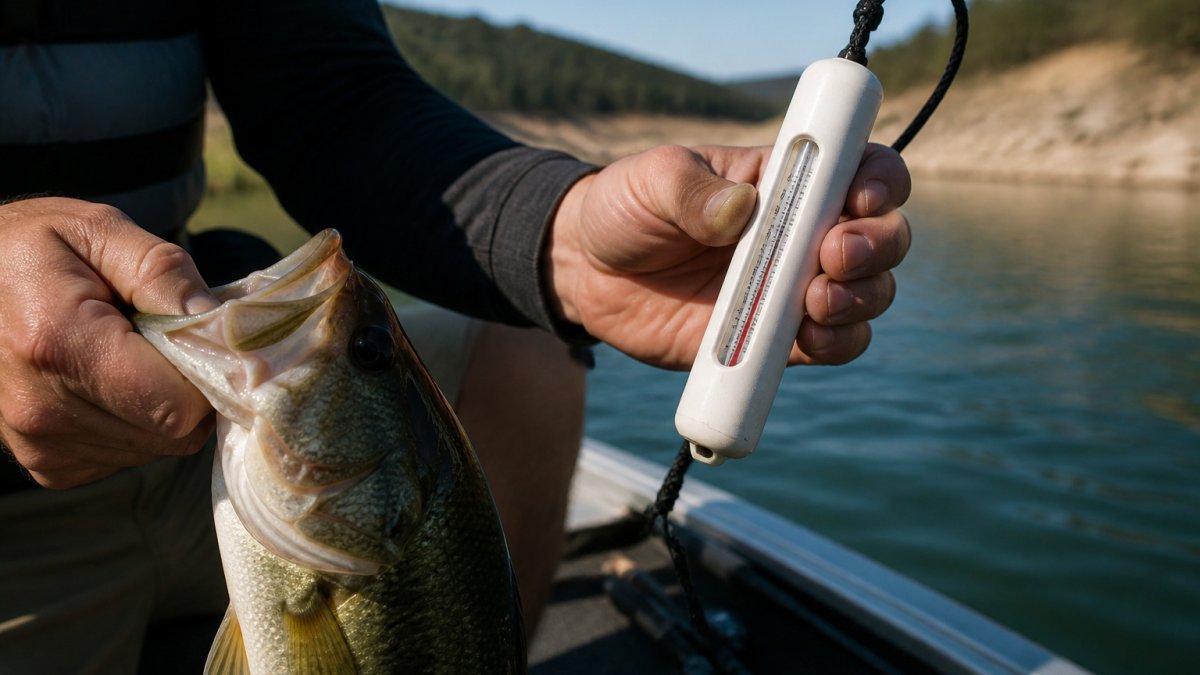
Water temperature tells you where bass are holding. Take readings at several depths with a probe thermometer, let the probe settle at each depth for 30 to 60 seconds, and log the numbers with time, weather and location. Compare those readings against the seasonal chart to narrow your search before you cast.
- Bass care about the thermometer, not the calendar, so readings guide where they hold.
- Let the probe sit 30 to 60 seconds at each target depth before reading it.
- Take readings at the surface and at mid-column or bottom depths, and note the spread.
- Surface readings change fast, while readings at depth give a more stable picture.
- Use the seasonal chart as a starting point, then adjust for your own lake and conditions.
Table of Contents
- Why Water Temperature Controls Where Bass Are
- Tools You Need to Measure Water Temperature Accurately
- Step-by-Step: How to Take a Reliable Water Temperature Reading
- Bass Fishing Water Temperature Chart by Season
- How to Read Water Temperature for Bass in Summer
- Bass Fishing in 50 to 60 Degree Water
- What Water Temperature Do Bass Move Shallow, and What Lures to Throw
- Your Next Step: Put a Reading on the Water This Weekend
- Frequently Asked Questions
Why Water Temperature Controls Where Bass Are
Water temperature is one of the biggest clues to where bass will be on any given day. Bass are cold-blooded, so their body temperature, metabolism and feeding drive all rise and fall with the water around them.
Here's the reality most anglers miss: bass don't care about the calendar. They care about the thermometer. A lake can still feel like spring to you while the water is holding at a temperature that keeps bass sluggish and deep.
A quick temperature reading can help narrow the search from the whole lake to a few specific zones. This guide walks through five steps to take a reliable reading and turn it into a plan.
Tools You Need to Measure Water Temperature Accurately
You don't need expensive gear to read water temperature well. You do need a tool that is accurate, quick to read and easy to reposition at different depths.
- Digital probe thermometer: Fast readings and easy to read at a glance
- Pocket infrared thermometer: Reads surface temperature in seconds, but only the top layer
- Waterproof cord or line: Lets you lower a probe to specific depths
- Weighted sinker: Keeps the probe straight and sinking to the target depth
- Notebook or phone app: Track readings by location, depth and time
If you're on a budget, a basic digital probe with a cord covers most needs. Pair it with a simple log so you can compare readings from day to day.
Step-by-Step: How to Take a Reliable Water Temperature Reading
Temperature ranges alone don't tell you how to take a reading you can trust. A reading is only useful if it is repeatable, taken at a known depth, and recorded with enough context to compare against the next trip. Follow these steps every time you fish a new spot.
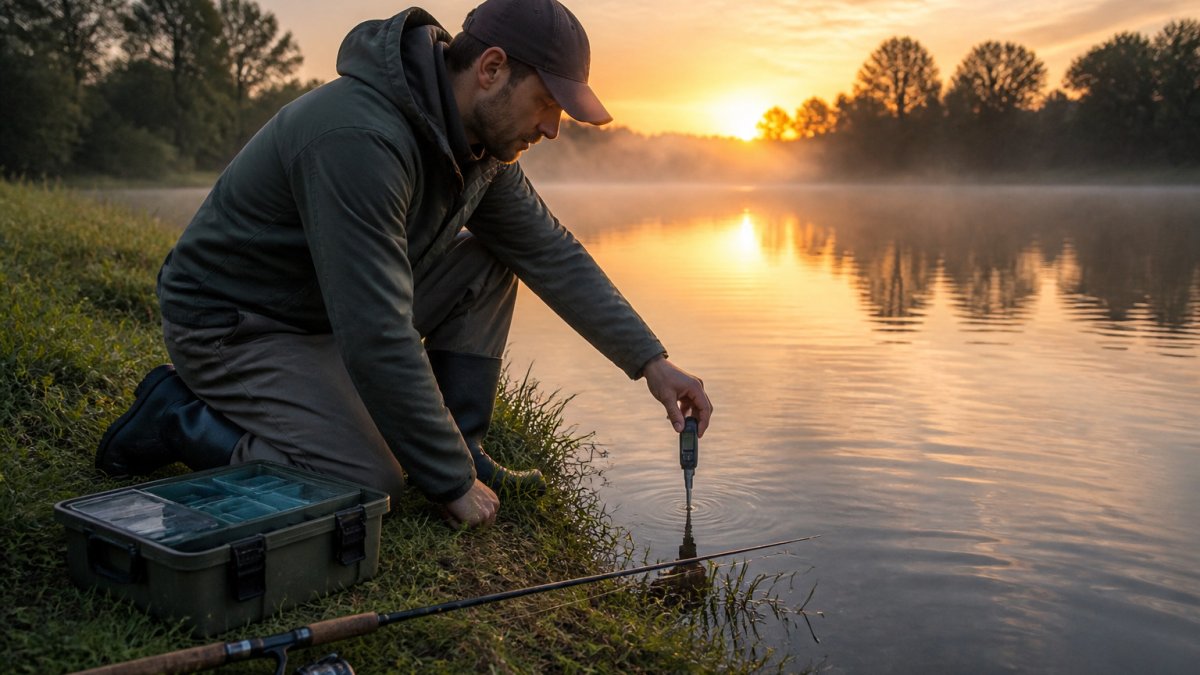
- Choose a representative spot. Pick open water near likely bass cover, such as a point, a drop-off, or a weed edge, but stay several feet away from the boat, dock pilings, and sun-soaked metal. Structure absorbs and radiates heat, so a reading taken tight to it can be several degrees off from the water bass are actually sitting in.
- Let the probe equilibrate. Clip a digital probe to a marked cord and lower it to the target depth. Give it 30 to 60 seconds at that depth before you read the display. A probe that just hit the water is still catching up to the surrounding temperature, and pulling it up too soon gives you a number that reflects the last few feet of the drop rather than the depth you care about.
- Read at two or three depths. Take a surface reading at the top foot, then a mid-column reading, then a reading near the bottom or at the depth where you expect bass to hold. Write each number down with its depth. The spread between them is often more informative than any single number.
- Record the context, not just the number. Log the temperature, depth, time of day, sky condition, wind direction, and recent weather. A 62-degree reading after three warm days means something different from a 62-degree reading two days after a cold front.
- Repeat at a second spot. One reading can mislead you. Compare two or more spots that differ in depth, wind exposure, or inflow to find the pattern rather than a single data point.
Watch out: A probe with a low battery or a dirty sensor can give inaccurate readings, so check it against a second thermometer at the start of the season and replace batteries before they fade.
Surface Temperature Versus Temperature at Depth
Surface temperature is the top layer, and it changes fast. Sun and wind can warm or cool it within hours, and a boat's fish-finder surface reading is usually taken at the transducer, which may sit only a foot or two below the surface. That number tells you about the skin of the lake, not the water where bass are holding.
Temperature at depth is slower to change and often tells a more stable story. In summer, a warm surface can sit on top of noticeably cooler water, and bass may stay deep even though the top feels pleasant. In winter, the pattern can invert, with the coldest, densest water at the surface and slightly warmer water below.
Why Readings Change Through the Day and With the Weather
Water temperature shifts with time of day, sunlight, wind, and weather. Shallow water usually warms through the afternoon and cools overnight, so a morning reading and an afternoon reading at the same spot can differ by several degrees. A warm wind can push surface water and raise readings on one shoreline while a cold front drops them quickly across the lake.
Take readings at the same time each day when you can, so comparisons are fair. Note the weather with every reading so you can spot patterns, such as how a cold front pushed bass deeper or how a stretch of warm nights moved fish shallow.
Bass Fishing Water Temperature Chart by Season
Use this chart as a starting point, not a rulebook. Ranges vary by latitude, lake size, depth, and species, so treat the numbers as guides and let your own readings refine them.
| Season | Typical Water Temp (°F) | Likely Bass Behavior | Where to Look |
|---|---|---|---|
| Early Spring | 45-55 | Staging near spawning flats, slow feeding | Main-lake points, channel swings, south-facing banks that warm first |
| Spring Spawn | 60-70 | Shallow beds, pre-spawn feeding | Flats, pockets, and coves with hard bottom and cover |
| Summer | 75-85 | Deeper cover, shaded structure, low light | Ledges, brush piles, docks, and inflows that stay cooler |
| Fall | 60-70 | Feeding up along banks and points | Creek arms, bait schools, and wind-blown banks |
| Winter | Below 50 | Slow, deep, less active | Deep channel edges, steep banks, and wintering holes |
Pair the chart with your own readings. When your numbers match a range, you have a strong starting point for where to fish. But the chart alone will not tell you whether a 68-degree reading means bass are on beds or already backing off, because the same number can mean different things in different water.
Why the Same Temperature Means Different Things on Different Lakes
Latitude, lake size, depth, and current can all shift what a given temperature means. A shallow reservoir can warm well before a deep, clear lake does, and a lake with a spring inflow can hold cooler water in one arm than another.
Treat the chart as a regional average and adjust for your waterbody. Note the lake, the depth, and the date with every reading so you build a local pattern instead of relying on a universal number.
Combining Temperature With Clarity, Depth, and Forage
Temperature is one input, not the whole decision. A 70-degree reading in muddy water calls for different lures and locations than a 70-degree reading in clear water, because bass rely more on vibration and proximity in low clarity. Pair the temperature with what you see: clarity, depth, cover, and bait. If the water is warming and bait is shallow, fish shallow even if the chart says otherwise. If the water is cooling and bait has moved deep, follow the forage rather than the calendar.
The anglers who get the most from a temperature reading use it to narrow the search, then confirm with clarity, depth, and bait before committing to a spot.
How to Read Water Temperature for Bass in Summer
Summer is when many anglers struggle most. Surface water can climb past 80 degrees, and bass often push deep or hide in shade. Your readings should guide you to cooler pockets.
Look for these clues:
- Water that is cooler at depth than at the surface
- Shaded docks, brush piles and weed edges
- Springs or inflows that keep the water a few degrees cooler
Summer bass often gather in areas with steady oxygen and cooler temperatures. If your top reading is hot, check the depth before you give up on a spot.
Bass Fishing in 50 to 60 Degree Water
When water sits between 50 and 60 degrees, bass are cold-weather fish. Their metabolism slows, so they strike less often and prefer slow, controlled presentations.
Focus on these areas:
- Deeper flats and channel edges that hold a little warmth
- Dark bottom areas that absorb sun
- Steep banks near deep water
Slow down your retrieve and keep your lure close to the bottom. Many anglers find that a few extra seconds of pause makes the difference in cold water.
What Water Temperature Do Bass Move Shallow, and What Lures to Throw
Bass often move shallow when water warms into the upper 50s and the 60s, especially in spring. At this stage, they're feeding up and getting ready to spawn. Stained water can make them harder to see, but vibration and movement still get their attention.
For stained water, try these choices:
- Spinnerbaits: Flash and vibration help bass find the bait
- Crankbaits: Good for covering water and triggering reaction strikes
- Soft plastics: Work slowly along cover and bottom structure
Match your lure to the temperature. In cooler water, slow down. As the water warms, you can speed up and cover more ground.
Your Next Step: Put a Reading on the Water This Weekend
Reading water temperature is a skill that gets better every trip. Start with the five steps, log your numbers and compare them to the seasonal chart. Within a few outings you'll know where bass are likely to be before you make your first cast.
Ready to fish smarter? Get your gear set up and take that first reading. You can also browse UntamedSportsman's newest bait selection, including topwater frogs, swimbaits and creature baits built for heavy cover and slop, and SHOP OUR NEWEST BAIT to start your next trip with the right tools.
Frequently Asked Questions
What is a good water temperature for bass?
Largemouth bass are most active when water sits roughly between 60 and 75 degrees Fahrenheit, and their feeding tends to peak in the upper part of that range. Below about 50 degrees they slow down sharply and strike less often. Above roughly 85 degrees they seek cooler, oxygen-rich water, often deeper or shaded. Smallmouth bass prefer slightly cooler water. Treat these as starting ranges, then adjust based on your lake, season, and the readings you actually take on the water.
Is 50 degrees too cold to fish for bass?
Not necessarily, but it changes how you fish. At 50 degrees, bass metabolism is low and they usually hold near deeper structure or steep banks. Slow presentations work best, such as a jig or drop shot kept in contact with the bottom and moved slowly. Fast retrieves rarely get strikes. Bass in 50 to 60 degree water can still be caught, so focus on fewer, more deliberate casts.
Should you use surface temperature or a lake's deeper water temperature?
Use both when you can. Surface temperature changes quickly with air temperature, wind, and sunlight, so it can mislead you during a warm spell or cold front. Readings at the depth where you expect fish tell you more about where bass will hold. Take a reading at the surface, then check a few feet down or at the depth of the cover you are targeting, and compare the two before deciding where to fish.
How do you measure water temperature while bass fishing?
A digital probe thermometer with a cord long enough to reach your target depth works well. Lower it slowly, wait for the display to settle, and record the reading at several depths if the water is deep. Take readings in the same spot at the same time of day so you can compare them. Avoid taking readings from the boat's live well or from a spot shaded by your hull, since those can give false numbers.



Leave a comment
All comments are moderated before being published.
This site is protected by hCaptcha and the hCaptcha Privacy Policy and Terms of Service apply.