
Table of Contents
- Why Soft Plastic Lure Tails Tear: The Real Causes
- How Hook Placement and Rigging Technique Affect Durability
- Tail-Specific Failure Mechanics: Straight, Paddle, and Curly Tails
- Plastic Softness, Salt Additives, and Fish Strike Damage
- How to Fix Torn Soft Plastic Baits: Repair Methods by Tear Location
- The Best Way to Store Soft Plastic Baits to Prevent Tearing
- Durability Testing and Knowing When to Replace a Bait
- Conclusion
- Frequently Asked Questions
Last Updated: October 19, 2026
Why Soft Plastic Lure Tails Tear: The Real Causes
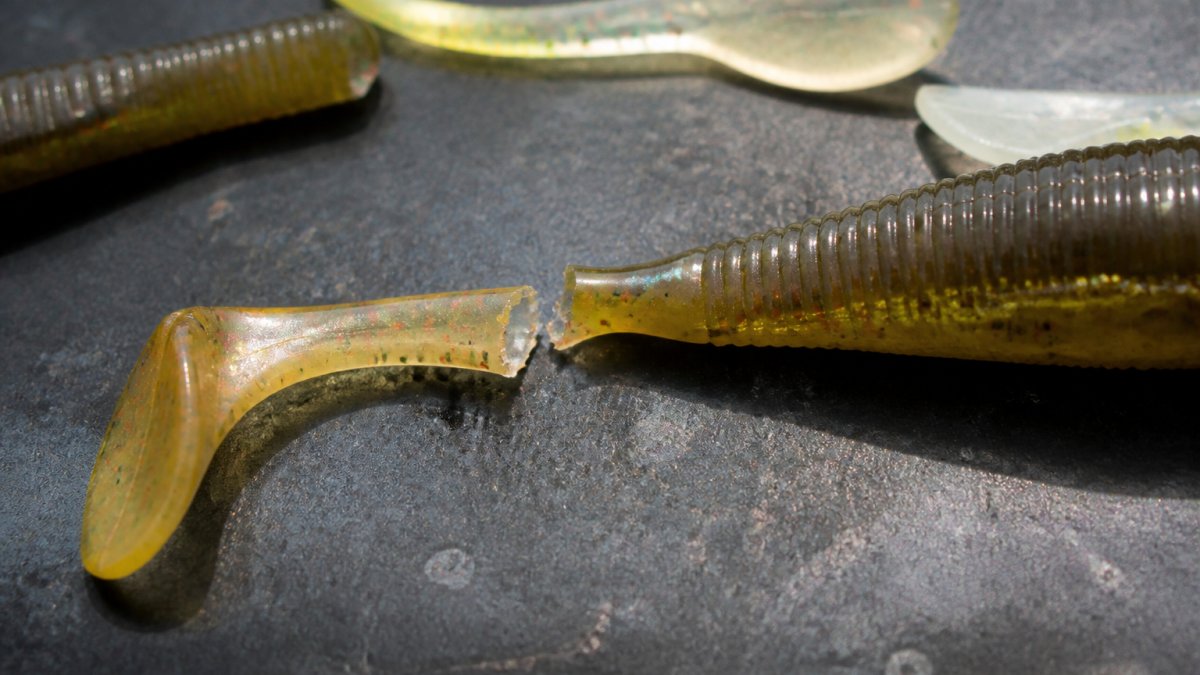
A torn tail almost never means bad luck. It means something in your setup is stressing one spot, cast after cast, until the plastic gives out. Soft plastic lure tails tear because thin plastic, repeated flexing, and sharp hardware all meet at the weakest point on the bait.
Most tears fall into three groups:
- Rigging stress around the hook hole
- Material fatigue from softness and additives
- Impact damage from fish strikes and cover
Fix the cause, not just the tear, and your baits last far longer.
Stress Around Hook Holes and Rigging Points
The hook hole is where every tear starts. Each cast pulls on the same small circle of plastic, stretching it every time the bait lands, drags, or gets hit. That stress point grows with every retrieve.
A few things make it worse:
- Forcing a thick hook through a narrow slot
- Reusing the same rigging hole after a fish pulls the bait down the hook
- Over-tightening a screw-lock or bait keeper
Once the plastic around the hook hole whitens or thins, a split is close. Rotate your hook to a fresh spot before that happens.
How Hook Placement and Rigging Technique Affect Durability
Good rigging spreads the load; bad rigging concentrates it on one spot, and that spot fails first. The difference between a bait that lasts all day and one that splits on the third cast is usually a few seconds of care at the hook.
Start with these habits:
- Run the hook point straight through the center line, not at an angle
- Keep the hook slot aligned so the plastic does not twist on the retrieve
- Leave a small gap between the hook eye and the bait nose
Hook and Rigging Compatibility by Bait Style
Most tail tears blamed on "cheap plastic" are really a hook-to-bait mismatch. Match the hook to the bait and the tear problem shrinks fast. Here is how we pair them:
| Bait Style | Best Hook Choice | Rigging Note |
|---|---|---|
| Straight-tail worm | Offset worm hook | Run point through the body, skin-hook lightly |
| Paddle tail swimbait | Weighted swimbait hook | Keep the keeper centered on the nose |
| Curly-tail grub | Jighead | Match hook gap to tail width |
| Ribbed paddletail | Screw-lock keeper | Do not overtighten the screw |
Our Paddletail, Ribbed 5" pairs well with a weighted swimbait hook, and the ribbed body holds a keeper without tearing at the nose.

Matching Hook Size, Wire, and Keeper Style to the Bait
Hook compatibility is not just about shape. Four variables decide whether a bait tears at the nose or survives the day:
- Hook gap. The gap should clear the bait body with a little room to spare. Too narrow a gap crowds the plastic and forces the point to exit at an angle, which starts a tear at the hook hole. Too wide a gap on a thin bait lets the hook rock side to side and wallows out the nose.
- Wire thickness. Heavy wire holds big fish but does not flex, so it acts like a lever inside a soft bait and splits the plastic at the hook slot. Light wire flexes with the bait and is gentler on thin tails, but it bends out on heavy cover. Match wire to the cover you fish, not to the fish you hope to catch.
- Keeper style. A screw-lock keeper grips best but concentrates stress at the screw entry point. A spring keeper spreads load over a wider area. A simple bait-keeper barb is the least secure but the least damaging. On soft, salt-heavy baits, a spring keeper or barb usually outlasts a screw-lock because it does not chew one hole.
A practical rule: if the bait body is thinner than the hook gap is wide, size down the hook. If the bait is firmer than the wire is stiff, size up the wire. Fishing the same bait all day? Rotate the hook to a fresh spot every few fish.
Rigging Position and Tear Location
Where you put the hook predicts where the bait will tear:
- Nose-rigged: tears at the nose and hook hole first.
- Texas-rigged: tears at the hook slot and the bend where the bait exits the weight.
- Weighted swimbait hook: tears at the keeper and along the belly weight channel.
Once you know the pattern, you can inspect the right spot before each cast instead of discovering the tear after a missed hookset.
Tail-Specific Failure Mechanics: Straight, Paddle, and Curly Tails
Each tail shape fails in its own way. Knowing which one you fish tells you where to watch.
- Straight tails tear at the base where the thin tail meets the thicker body. Repeated whipping on the retrieve wears that joint.
- Paddle tails split along the paddle edge or crack where the paddle hinges. Fast retrieves flex that hinge hard.
- Curly tails tear at the curve, because the curl twists in the water and works the same crease every time.
A straight-tail bait like our C-Tail Worm moves with a slow, rolling action, so the stress builds slowly. A fast paddle bait builds stress quickly. Match your retrieve speed to the tail, and you cut wear.

Plastic Softness, Salt Additives, and Fish Strike Damage
Softer plastic feels great in the water but tears sooner, stretching thin at stress points. Firmer plastic holds its shape but can crack instead of stretching.
Additives matter too. Some additives, like salt, weaken the plastic. Salt-loaded baits fish well and sink faster, but the salt draws moisture and makes the plastic more brittle over time.
Fish strikes add the final damage: a bass crushing the tail leaves small punctures and crushed sections that become the next tear.
How to Fix Torn Soft Plastic Baits: Repair Methods by Tear Location
You can fix many tears, but the method depends on where the tear sits. Here is how to repair torn soft plastic baits by location:
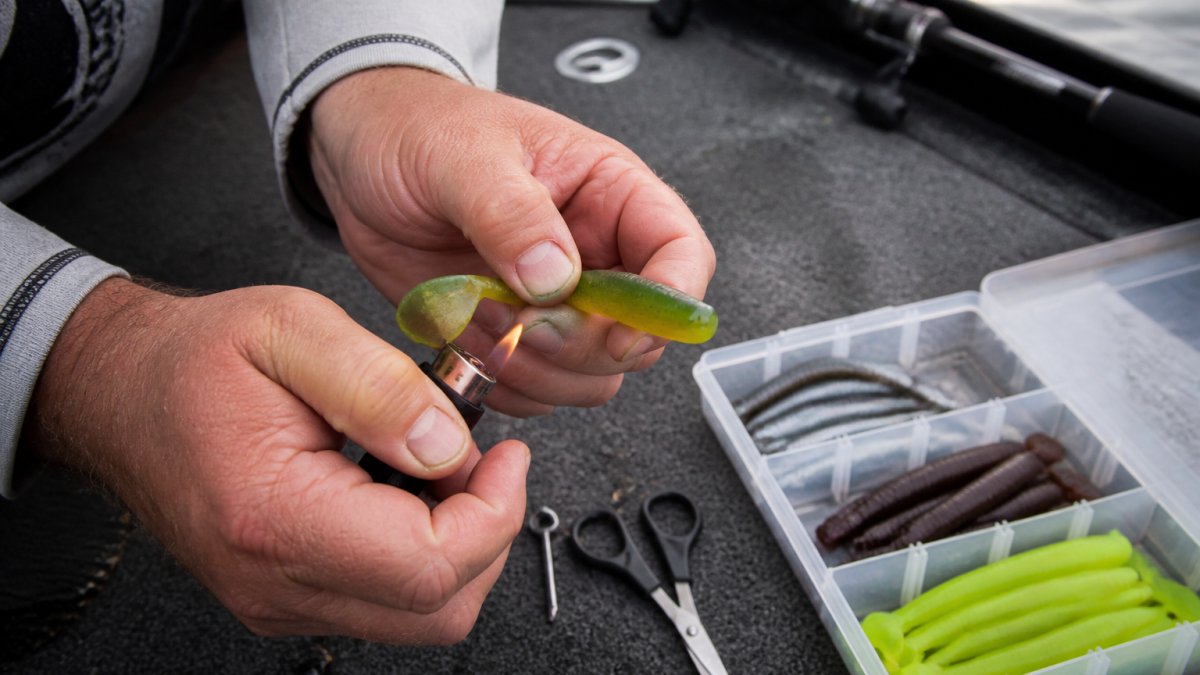
- Nose or hook hole: Pinch the plastic closed and touch it with a heated hook point to seal it, then re-rig in a fresh spot.
- Mid-body split: Use a bait mend with heat sealing for a clean weld, or a drop of repair adhesive for a quick hold.
- Tail base: Heat seal both sides, press them together, and hold until cool. This is the strongest spot for a weld.
Heat Sealing vs. Repair Adhesive: Which Holds
Heat sealing wins on most tears. Melting the plastic fuses it into one piece, so a pliable repair flexes with the bait. The catch is control: too much heat turns the plastic brittle.
Repair adhesive is faster and safer for small punctures, but the bond is weaker on a flexing tail. Use it for bite damage near the nose, not for a split paddle.
| Repair Method | Best For | Weakness |
|---|---|---|
| Heat sealing | Tail base, mid-body splits | Easy to overheat |
| Repair adhesive | Small punctures, nose damage | Weak on flexing tails |
The Best Way to Store Soft Plastic Baits to Prevent Tearing
The best way to store soft plastic baits is cool, flat, and away from other plastics. Heat softens the plastic and lets salt draw moisture. Sun breaks it down. Mixing different plastics in one box can cause chemical reactions that melt or stiffen baits.
Follow these storage rules:
- Keep baits in their original bags, flat and out of direct sun
- Store in a cool, dry place, not a hot trunk or garage
- Keep different plastic types in separate bags
A simple binder or a divided box works well. Our Paddle Worm 4" and other baits stay pliable longer when stored this way.

Durability Testing and Knowing When to Replace a Bait
Most anglers judge a bait by feel, which is why bait reviews are so inconsistent. A repeatable test tells you more than a squeeze, not lab-grade precision, just a consistent way to compare baits and know when a tail is about to fail.
A Repeatable Bench Test
Run the same test on every bait before it goes in the box:
- Bend test. Fold the tail back and forth ten times at the base. Count how many cycles it takes before the plastic whitens. A bait that whitens in two or three cycles is already tired.
- Hook-hole check. Look at the hook hole against a light. Thinning shows as a lighter ring. If the ring is wider than the hook wire, the hole will not hold.
- Stretch check. Pinch the tail and pull gently. A healthy bait stretches and snaps back. A brittle bait cracks or tears at the pinch point.
- Surface check. Run a thumbnail along the tail edge. Small nicks and crushed sections from old strikes are where the next tear starts.
Write the results on the bag. After a few trips you will know which baits in your box are on their last legs before they cost you a fish.
Measuring Useful Life on the Water
Anecdotes do not compare baits. Two simple measures do:
- Casts before tail failure. Count casts from a fresh bait until the tail tears or the hook hole will not hold. Track it across a few baits of the same model.
- Fish landed before failure. Count fish caught before the tail fails. This is the more honest number for anglers who fish heavy cover, because fish strikes do damage that casts alone do not.
Neither number is a lab result, but both are repeatable enough to compare two baits side by side. If one model fails after a dozen casts and another lasts a full trip, you have your answer.
A Quick Diagnostic Decision Tree
When a tail tears, the location tells you the cause. Work through this before you repair or replace:
- Tear at the nose or hook hole: rigging stress. Check hook gap, keeper style, and whether you re-rigged in the same hole. Fix the rigging before you fix the bait.
- Tear at the tail base: repeated flexing or material fatigue. Check the bend test. If the plastic whitens quickly, the bait is worn out, not misrigged.
- Tear along the paddle or curl edge: impact damage or fast-retrieve flex. Trim the ragged edge, seal it, and slow the retrieve slightly.
Replace a bait when:
- The tail base whitens or splits
- The hook hole will not hold a hook
- The plastic feels stiff or brittle
A quick on-the-water check saves you a lost fish. Keep fresh baits handy and retire the tired ones.
Conclusion
Every torn tail tells you something: a sharp hook point, a hot tackle box, or a bait that has fished its last cast. Fix the cause and most tears stop before they start. When you need fresh, durable baits built for heavy cover, UntamedSportsman makes swimbaits and worms with strong action and reliable bodies. Shop our newest bait and keep your tail in the water, not in the trash.
Frequently Asked Questions
Does salt content make soft plastic lures weaker?
Yes. Salt is added to soft plastics for weight and taste, but it also interrupts the plastic's internal structure, which makes the bait less stretchy and more likely to split at thin points like the tail. Baits with heavy salt loads often tear faster around hook holes and tail joints. If durability matters more than sink rate, lean toward baits with lower salt content or softer, stretchier formulas, and rig them so the hook does not sit right at a thin section.
How can I prevent my soft plastic tails from tearing during rigging?
Start by matching hook size to bait size so the hook point exits cleanly instead of stretching a hole. Wet the hook point or use a bait needle before threading, and avoid re-rigging in the same spot over and over, since each pass widens the hole. On paddle tails and swimbaits, seat the hook so the tail hangs free and does not bend against the hook shank. A small drop of super glue at the nose also keeps the bait from sliding down and tearing.
What is the best glue for mending soft plastic lures?
Cyanoacrylate (super glue) works well for clean, straight tears because it bonds fast and stays flexible enough for a slow retrieve. For larger splits or missing chunks, a heat seal with a lighter or hot knife usually holds better because it actually re-melts the plastic back together. Match the method to the tear: glue for hook holes and small nicks, heat for tail splits. Test the repair with a few casts before trusting it around heavy cover.
How long does a soft plastic lure last?
There is no fixed number, but a soft plastic fished around heavy cover and repeatedly struck typically lasts a handful of outings before the tail splits or the hook hole widens past the point of holding. Baits fished in open water with lighter rigging last longer. Check the tail after every few fish: once a tear reaches the hook point or the tail stops kicking properly, replace it. Storing baits flat and out of heat extends usable life noticeably.

Leave a comment
All comments are moderated before being published.
This site is protected by hCaptcha and the hCaptcha Privacy Policy and Terms of Service apply.