
Table of Contents
- What You'll Need Before You Rig a Creature Bait
- Step-by-Step: How to Rig Creature Baits Weedless
- The Best Hooks for Creature Baits
- Picking the Texas Rig Weight for Creature Baits
- Rigging a Texas Rig Creature Bait Around Weeds and Grass
- Common Weedless Rigging Mistakes and How to Fix Them
- Conclusion
- Frequently Asked Questions
Last Updated: October 21, 2026
What You'll Need Before You Rig a Creature Bait
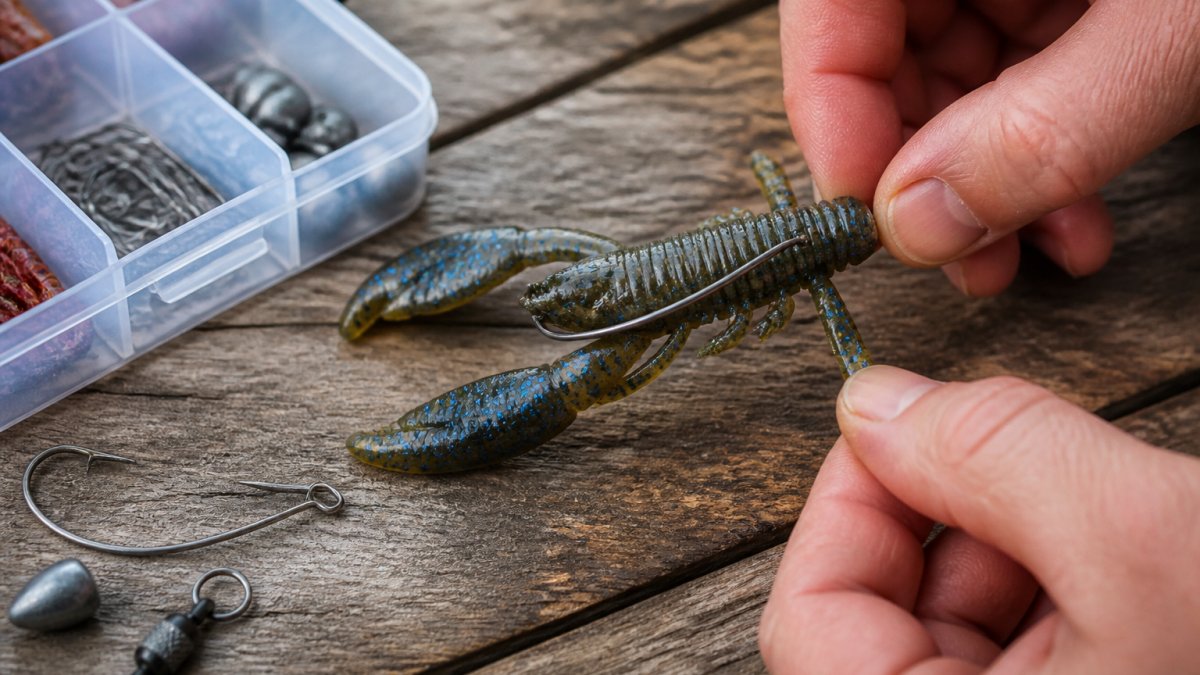
Rigging a creature bait weedless starts with four things: a soft plastic creature bait, an offset or wide-gap hook, a bullet weight, and a baitcasting or spinning rod heavy enough for cover.
A creature bait is a soft plastic lure with flapping claws, wings, or twin tails that push water and trigger bites.
Here is the short version of what you need:
- Creature bait: a beaver-style bait, craw, or twin-tail bug
- Hook: offset worm hook or wide-gap hook, sized to the bait
- Weight: bullet sinker, pegged or unpegged
- Tool: hook sharpener and, if you peg, a bobber stop or toothpick
We build our creature baits for exactly this job. The Tramp is a 4-inch beaver-style bug that flips and punches well, and the Tramp Jr shrinks the same profile to 3.25 inches for lighter cover and finesse flipping.


Step-by-Step: How to Rig Creature Baits Weedless
The Texas rig is the standard weedless setup for creature baits, and it takes about a minute once you have done it a few times.
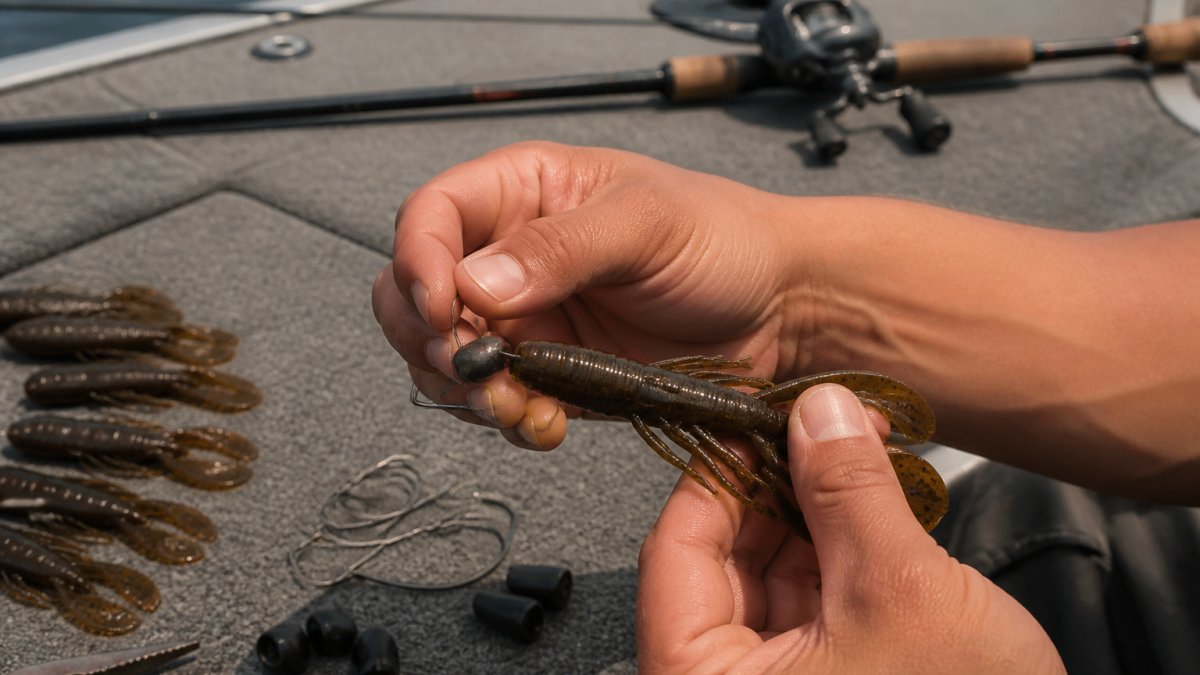
Step 1: Thread the Hook Point Through the Nose
Slide the hook point into the center of the bait's nose and out the top, about a quarter inch back. Push it through until the hook eye and knot sit snug against the nose. Keep the bait straight on the shank. A bait that sits crooked will spin on the retrieve and twist your line.
Step 2: Slide, Rotate, and Bury the Hook Point
Rotate the hook so the point faces the bait's belly. Measure where the point lands on the bait body, then back the hook out of the nose and re-enter the bait at that spot. Push the hook through until the point barely breaks the plastic's back. Now bury the point just under the surface, flat against the bait. That is the skin-hook, and it is what makes the rig weedless.
Step 3: Test That the Rig Is Truly Weedless
Hold the bait by the hook eye and drag it across your palm. If the point grabs your skin, it is not buried deep enough. Run the bait through a patch of grass at your feet. If it collects weeds on the hook point, adjust. A properly rigged bait slides through vegetation with the point tucked away.
| Step | Action | Time | What Success Looks Like |
|---|---|---|---|
| 1 | Thread point through nose | 10 sec | Bait sits straight on shank |
| 2 | Rotate and skin-hook point | 20 sec | Point buried flat, no exposed tip |
| 3 | Test on palm and in grass | 15 sec | No snag, no weed collection |
The Best Hooks for Creature Baits
An offset round-bend hook or a wide-gap hook is the right choice for creature baits, and the size should match the bait's bulk rather than its length.
Sizing guidance, in plain terms:
- 3 to 3.5-inch baits: 2/0 to 3/0 offset or wide-gap
- 4 to 5-inch baits: 3/0 to 4/0
- 6-inch and up: 4/0 to 5/0, wide-gap preferred
Match the hook gap to the bait's thickness, not just its length. If the gap is too narrow, the bait balls up on the hookset and you miss fish. If it is too wide, the bait slides down the shank.
Picking the Texas Rig Weight for Creature Baits
Weight choice comes down to three variables: how fast you need the bait to fall, how much bottom contact you need to keep, and how dense the cover is.
A practical starting point by cover and depth:
- Weightless: shallow grass edges, clear water, pressured fish, and skipping under docks. The bait falls slowly and stays in the strike zone, but you give up bottom contact and casting distance in wind.
- 1/8 to 3/16 oz: sparse vegetation and slow-fall presentations in 2 to 6 feet of water. Good for letting a creature bait flutter claws-first on the fall.
- 1/4 to 3/8 oz: moderate cover, wind, deeper grass edges, and 6 to 12 feet of water. This is the all-around range most anglers keep tied on.
- 1/2 oz and up: punching matted grass and heavy slop, or fishing current where you need the bait pinned to the bottom.
Match the weight to the bait's bulk, not just its length. A 4-inch beaver-style bait with a thick body needs more weight to reach the same fall rate as a 4-inch twin-tail bug with a slimmer profile.
Pegged vs. Unpegged: When It Actually Matters
Pegging the sinker keeps it tight against the bait's nose so the weight and bait move as one unit.
Unpegged weights shine in open water and sparse grass. The free-sliding weight lets the bait fall more naturally and gives a fish a little more time to take the bait before feeling weight. That freer fall can draw strikes from pressured fish.
How to peg without overthinking it:
- Bobber stop: slide a rubber bobber stop onto the line above the weight. Adjustable and reusable.
- Toothpick: break off the tip in the weight's hole. Fast, but it can nick the line if you are not careful.
- Sinker stop or peg: purpose-made pegs hold well and are easy to swap.
One more adjustment: in current, go heavier than you think you need. A 3/8-ounce weight that holds bottom in still water will drag in a river. Bump to 1/2 ounce and keep the bait in contact.
Rigging a Texas Rig Creature Bait Around Weeds and Grass
Fishing a Texas-rigged creature bait around weeds rewards a slow, deliberate approach, but the rig itself should change with the vegetation. The same hook, weight, and cadence that works in sparse grass will fail in matted slop.
Cast past your target, let the bait fall on a semi-tight line, and count it down. Then reel slowly, keeping the bait in contact with the grass. When you feel the bait tick a stalk, pause. A longer pause often triggers the bite.
Sparse Grass
Use a lighter weight (1/8 to 3/16 oz) and leave it unpegged so the bait falls naturally. Keep the hook point buried but shallow, just under the surface, so it exposes easily on the hookset. Fish a steady slow retrieve with occasional pauses. The goal is to let the bait flutter and look vulnerable, not to bulldoze through the grass.
Matted Grass and Slop
Go heavier (3/8 to 1/2 oz and up) and peg the weight tight to the nose. A pegged rig punches through the mat instead of separating and collecting vegetation. Bury the hook point flat and slightly deeper than you would in open water, because the mat will press the bait against the hook on the way through. Fish the edges and the holes first, then punch through the mat itself. Keep the rod tip down and use a steady pull rather than a sharp snap.
Pads
Pads are shade structure, so fish the shade lines and the gaps between pads. Use a moderate weight (1/4 to 3/8 oz) and keep the bait moving so it does not settle into a pad and snag. A pegged weight helps here because the bait needs to slip off pad stems. Cast beyond the pad, bring the bait to the edge, and let it fall in the gap.
Brush
Brush is the most unforgiving cover for a weedless rig because the hook point can catch on wood even when it is buried. Cast to the outside edges and work the bait through slowly. Use a lighter weight so the bait falls slower and you can feel the brush before the bait wedges into it. If you are getting hung, check that the hook point is buried flat and consider a bait with a thicker head that holds the hook more firmly.
Open Water and Deep Edges
When the grass thins out, switch to an unpegged weight and a slightly lighter setup. The bait can fall more naturally and you can fish a slower, more finesse-oriented retrieve. This is also where a weightless or 1/8-ounce rig can outfish a heavy Texas rig, especially on pressured fish.
For a bigger profile in heavy cover, the Hang Time is a 7-inch creature bait with pulsing side flappers and twin tails. Its thicker head gives the hook a firmer hold than a worm-style nose, which matters when you are dragging through slop.

Common Weedless Rigging Mistakes and How to Fix Them
The same rigging mistakes show up again and again, and each one has a simple fix. Most come down to the hook point not being buried correctly or the bait sitting crooked on the shank.
- Point exposed: the bait snags on every cast. Bury the point flat under the surface.
- Bait sliding down the shank: add a drop of super glue or a bait stop at the nose.
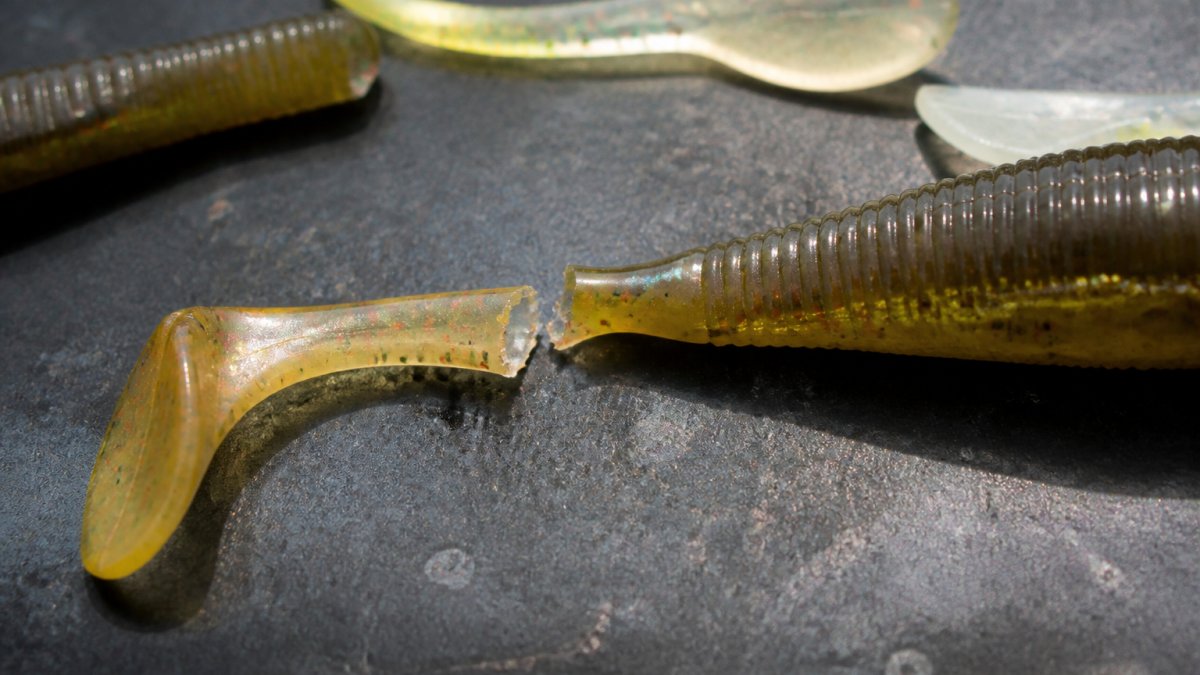
- Bait tearing at the nose: use a bait with a thicker head, or add a small piece of plastic to the hook eye.
- Crooked bait: re-thread so the bait sits straight. A crooked bait spins and twists line.
- Missed hooksets: check hook gap and sharpness. A wide-gap hook clears a thick bait better.
Conclusion
Rigging a creature bait weedless is a skill that pays off every time you fish heavy cover. Thread the nose, rotate and bury the point, test the rig, then match your hook and weight to the bait and the vegetation.
At UntamedSportsman, we build creature baits for the kind of cover that eats lesser plastics. Our Spike Craw brings a craw profile with a thick torso that holds a hook, and our full creature lineup is made to stay put and keep working through grass and slop.
Frequently Asked Questions
How do you rig a creature bait weedless?
Start with an offset or wide-gap hook and a bullet weight if you need depth. Push the hook point through the nose of the bait, slide it up the shank, rotate the bait, then run the point back through the body and bury it just under the surface of the plastic. Give it a light tug to confirm the point stays covered. That buried point is what lets you drag the bait through grass without snagging on every stem.
What hook should you use for a creature bait?
The best hooks for creature baits are offset or wide-gap models sized to the bait. Wide-gap hooks give the bulky body room to collapse on the hookset. Match hook size to bait size so the point clears the plastic cleanly.
What weight should you use when Texas rigging a creature bait?
The Texas rig weight for creature baits depends on depth and cover. Use 1/8 to 3/16 ounce for shallow grass and a slow fall, 1/4 to 3/8 ounce for moderate depth and wind, and 1/2 ounce or more for punching dense mats. Peg the sinker with a bobber stop so it stays tight to the bait and the rig stays compact in heavy vegetation.
Should a creature bait hook point be buried in the plastic?
Yes. Burying the hook point just under the surface of the plastic is what makes the rig weedless. Leave the point exposed and it will catch on grass, wood, and stems on every cast. The trade-off is that you need a firm hookset to drive the point through the plastic. Skin-hook it shallow so the point breaks through easily when a bass bites.


Leave a comment
All comments are moderated before being published.
This site is protected by hCaptcha and the hCaptcha Privacy Policy and Terms of Service apply.