
Last Updated: October 28, 2026
Quick Summary
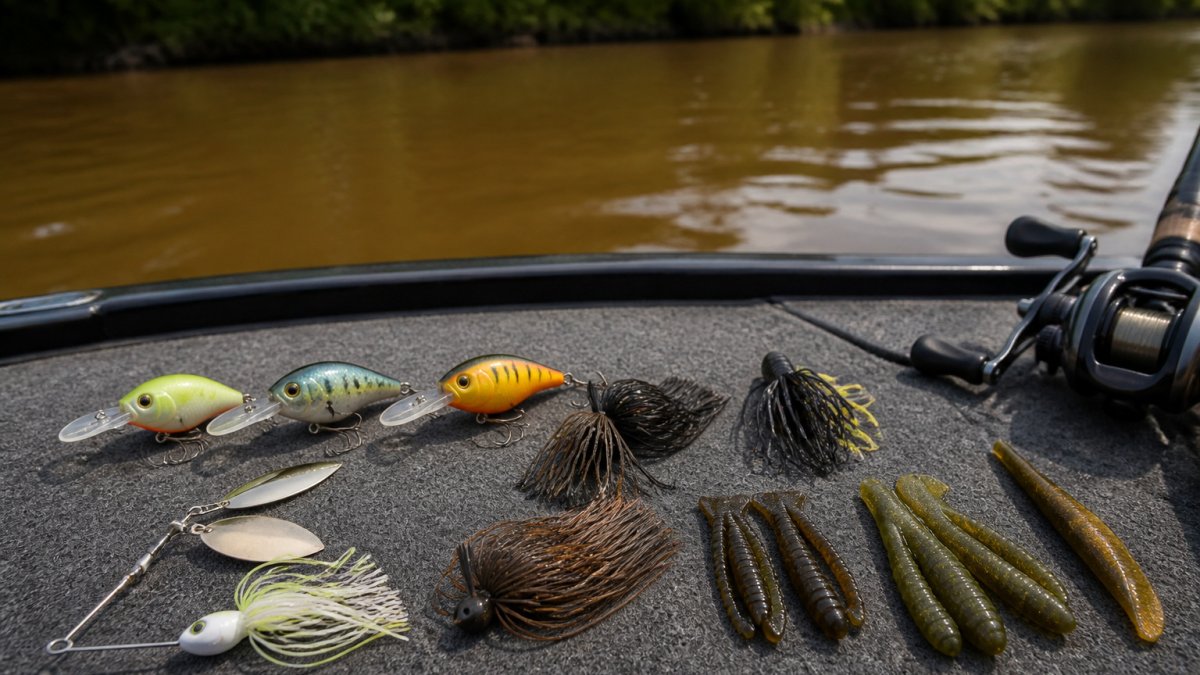
The best bass fishing techniques for stained water are spinnerbaits, lipless crankbaits, chatterbaits, flipping creature baits, and topwater frogs or buzzbaits. Stained water limits visibility, so bass find these baits by vibration, sound and flash rather than sight.
- Stained water often means visibility of only a few feet, far less than clear lake water.
- Spinnerbaits give vibration and flash at mid-range distances and are beginner-friendly.
- Lipless crankbaits cover water fast and trigger reaction strikes with a loud rattle.
- Flipping creature baits and craws in heavy cover produce the biggest fish in the heaviest cover.
- In heavily muddy water under about 1 foot, go dark or bright and slow the retrieve.
Table of Contents
- How Water Clarity Changes the Way Bass Feed
- Ranking the 5 Best Bass Fishing Techniques for Stained Water
- Matching Lure Color to Water Clarity
- Rod, Reel, Line, and Setup for Dirty Water
- How to Catch Bass in Murky Water When They Stop Biting
- Your Next Trip: Build a Stained-Water Lure Lineup
- Frequently Asked Questions
How Water Clarity Changes the Way Bass Feed
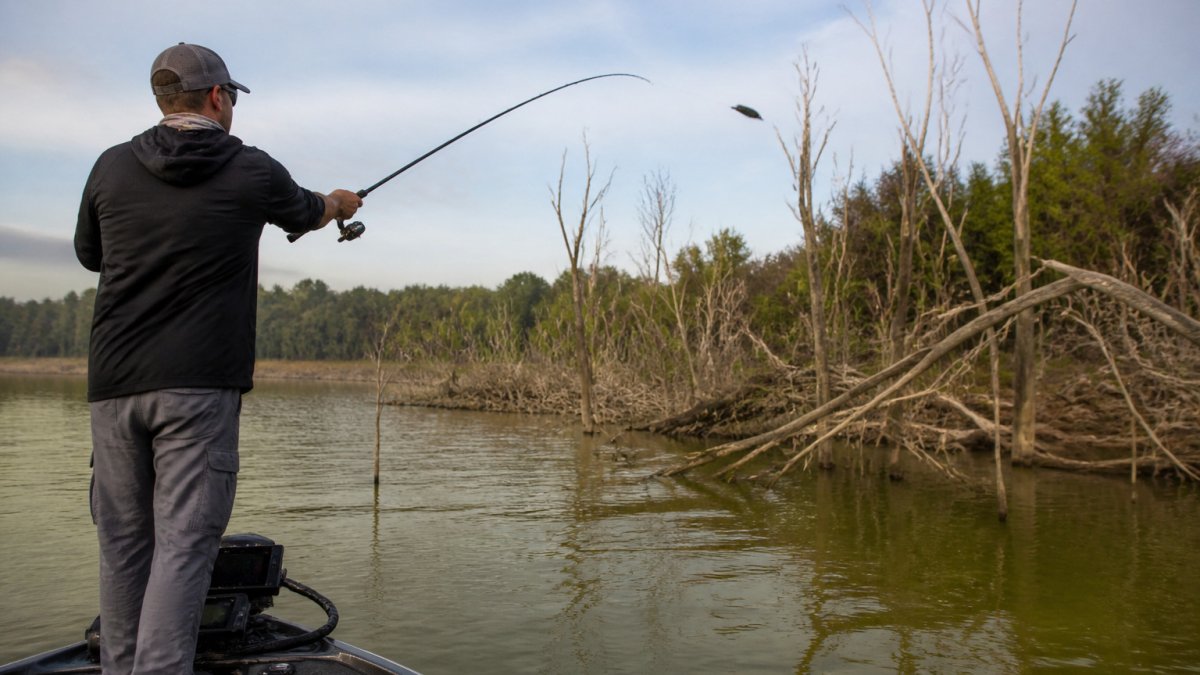
Anglers who understand water clarity can make informed choices about their approach. Stained water, the tea-colored or lightly muddy water left behind after rain and wind, changes how bass hunt. Fish rely less on sight and more on the vibration, sound and flash of a bait. That shift is the key to choosing the best approach.
Stained water typically means visibility of only a few feet, which is far less than clear lake water. Bass in these conditions often stay shallower and hold closer to cover. They move slower, but they still strike aggressively when a lure gives off the right signal. Your job is to make the bait easy to locate and hard to ignore.
Use the lure to do the work that sight can't. Choose baits that thump, rattle, flash or push water. Then slow your retrieve enough to give the fish time to find it.
Ranking the 5 Best Bass Fishing Techniques for Stained Water
Use the comparison framework as a decision tool, not a rigid order, the best technique on any given day is the one that matches the water you are actually fishing.
| Rank | Technique | Best Conditions | Presentation | Visibility Signal | Skill Level |
|---|---|---|---|---|---|
| 1 | Spinnerbait | Lightly to moderately stained water, wind-blown points, weed edges | Steady slow roll, 1-3 feet above cover | Blade flash plus skirt thump | Beginner-friendly |
| 2 | Lipless crankbait | Active fish in open water or along flats | Cast past cover, sharp pulls, medium-fast reel | Loud rattle plus tight wobble | Beginner-friendly |
| 3 | Chatterbait / bladed jig | Grass edges, riprap, searching lots of water | Slow to medium burn, keep blade thumping | Low-frequency vibration plus trailer action | Intermediate |
| 4 | Flipping creature baits and craws | Heavy cover, docks, brush, mats | Pitch into pockets, let fall, watch line | Bulk and fall profile at close range | Intermediate to advanced |
| 5 | Topwater frog and buzzbait | Warm shallow water, pads, mats, early morning | Steady retrieve with pauses | Surface noise and water displacement | Beginner-friendly |
1. Spinnerbaits: Vibration and Flash at Mid-Range Distances
- Trade-off: Excellent search bait and very snag-resistant around wood, but it is less effective in matted vegetation than a flipping bait.
2. Lipless Crankbaits: Rattle-Driven Reaction Strikes
- Trade-off: Covers water fast and triggers reaction bites, but the treble hooks foul in heavy cover, so it is a poor choice for punching mats.
3. Chatterbaits and Bladed Jigs: Covering Water with Sound
- Trade-off: More snag-prone than a spinnerbait around wood, but it hunts better through grass and deflects off rock.
4. Flipping Creature Baits and Craws in Heavy Cover
- Trade-off: The slowest way to cover water, but it produces the biggest fish in the heaviest cover.
5. Topwater Frogs and Buzzbaits for Shallow, Warm-Water Bites
When the water is warm and the bass are shallow, topwater baits are one option to consider.
Matching Lure Color to Water Clarity
Color matters less than sound and movement in stained water, but it still influences strikes. The problem with most color advice is that it treats "stained" as one condition. In practice, lightly stained water and heavily muddy water call for different color, size, and vibration choices. Use a simple visibility test to decide where you are on that scale before you tie on a bait.
A Practical Water-Clarity Threshold
- Heavily muddy (visibility under about 1 foot): Go dark or go bright. Black, black-and-blue, and dark brown silhouette against the lighter background, while chartreuse and white give bass a visible target. Increase vibration and slow the retrieve, because the fish are finding the bait by feel more than by sight.
Adjusting Color, Size, and Vibration Together
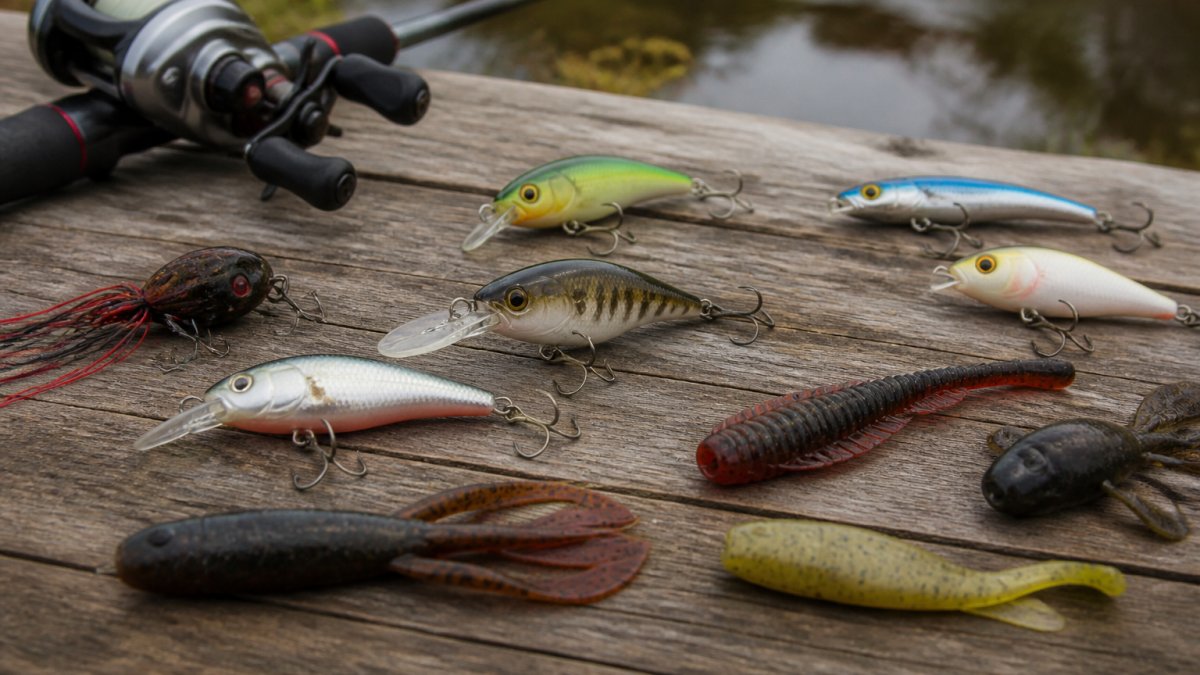
Our Thumping Shad 4" has a classic shad profile and a light-catching body that catches the light as it flutters. The Craw, Finesse 3" is a compact, jointed crawfish-profile bait designed to pair with a small jig. The Tramp is a 4-inch creature lure.


Rod, Reel, Line, and Setup for Dirty Water
Match your gear to the technique. For spinnerbaits and chatterbaits, a medium-heavy rod with a fast tip helps you feel bites through the blade. For flipping heavy cover, use a heavier rod and braided line so you can horse fish out of mats.
Line choice also depends on the water. Fluorocarbon sinks and performs well around cover, while braid gives you sensitivity and strength. Use a rod with enough backbone to set the hook through thick vegetation.
How to Catch Bass in Murky Water When They Stop Biting
If you still aren't getting bites, try a smaller profile. Scale your baits down and fish them more slowly to match bass that have grown cautious.
Your Next Trip: Build a Stained-Water Lure Lineup
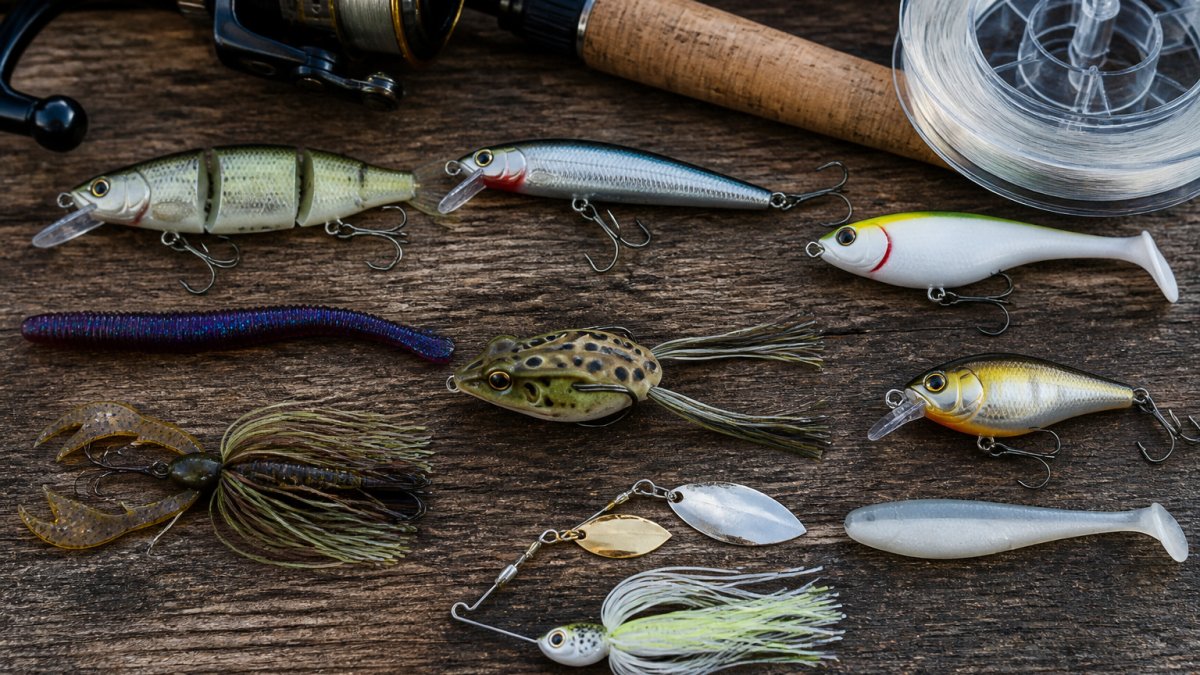
The Paddle Worm 4" is described as a finesse lure, and the 4" Dessert Worm is described for finesse presentations. The Croaking Frog is a floating topwater frog made for fishing heavy cover, including lily pads and matted grass.
Frequently Asked Questions
What are some good bass lures for fishing in stained water?
UntamedSportsman's [Paddletail, Ribbed 5"](https://untamedsportsman.org/products/5-paddletail) has a paddle-tail design, and the [Thumping Shad 4"](https://untamedsportsman.org/products/thumping-shad-4) has a paddletail that thumps as it moves through the water.
What color lure is best for stained water?
UntamedSportsman's [Croaking Frog](https://untamedsportsman.org/products/croaking-frog) is available in 12 colors, including Black/Silk Chartreuse and Watermelon Seed.
How do you locate bass when water visibility is low?
Bass rely on their lateral line to sense movement and vibration when they cannot see far. Choose lures that thump, rattle, or pulse, and work them along shallow cover such as laydowns, docks, and grass edges where bass ambush prey. Slow down your retrieve near structure and vary your speed until you get a response. Fish tend to hold close to cover in stained water, so keep your casts tight to the structure.
Should you fish fast or slow in stained water?
Generally, fish a faster, more noisy retrieve in stained water because bass find moving, vibrating lures more easily. Spinnerbaits and lipless crankbaits work well with a steady, mid-speed retrieve. When water is very dirty or bass seem sluggish, slow your presentation with a jig or creature bait and pause frequently. Adjust your speed until bass respond, since their feeding activity changes with water temperature and clarity.


Leave a comment
All comments are moderated before being published.
This site is protected by hCaptcha and the hCaptcha Privacy Policy and Terms of Service apply.