
Table of Contents
- Why Crappie in Cover Rewards a Different Approach
- How to Find and Map Cover Before You Cast
- Crappie Fishing in Brush Piles: Presentations That Work
- Best Crappie Lures for Heavy Cover
- Crappie Fishing Depth in Summer: Finding the Target Depth
- Boat Positioning, Anchoring, and Night Fishing Lights
- Troubleshooting Snags, Short Strikes, and Slow Bites
- Handling Crappie Responsibly and Knowing Your Regulations
- Frequently Asked Questions
Last Updated: October 14, 2026
Why Crappie in Cover Rewards a Different Approach
Crappie in cover behave differently from crappie in open water, and that single fact changes everything about how you fish for them. At UntamedSportsman, we build lures for anglers who fish thick stuff, so we think about this constantly. Brush piles, blowdowns, and rock piles give crappie shade, safety, and a steady food supply. The fish hold tight to the structure instead of roaming. That means you stop hunting for scattered fish and start picking apart specific spots. Below, we'll show you exactly how to find cover, pick the right presentation, and pull crappie out of it all year.
Most guides treat cover as one big category. It isn't. A submerged brush pile in 12 feet of water fishes nothing like a shallow laydown in 3 feet. Depth, water clarity, and season all shift which presentation works.
How to Find and Map Cover Before You Cast
Finding cover starts before your first cast. Idle along a likely bank or flat with your electronics running and watch for the shapes that hold fish. A common mistake is fishing the first brush pile you see instead of mapping several and picking the best ones.
Here's a simple system we use:
- Cruise the flat at a steady speed and watch your sonar
- Drop a waypoint on every brush pile, rock pile, or stump you mark
- Note the depth of each piece of cover
- Check whether a drop-off sits within a cast of the cover
- Rank your waypoints and fish the top three first
This takes ten minutes and saves an hour of random casting.
Reading Electronics for Submerged Structure
Submerged structure shows up on sonar as a hard return with a distinct shape. Brush looks soft and fuzzy on the screen. Rock piles show as bright, blocky marks. Timber stands tall with branches you can pick out. Turn up your sensitivity and slow down so you don't blow past deep brush.
Marking Cover Adjacent to a Drop
Cover adjacent to a drop is the best cover of all. Crappie use the shallow side to feed and slide into deeper water when the light changes. When you find a brush pile sitting on the lip of a drop-off, mark it and come back to it at different times of day.
U.S. Fish and Wildlife Service guidance on aquatic habitat and structure
Crappie Fishing in Brush Piles: Presentations That Work
Crappie fishing in brush piles comes down to two presentations: vertical jigging over deep brush and float fishing shallow water. Pick based on depth, not habit.
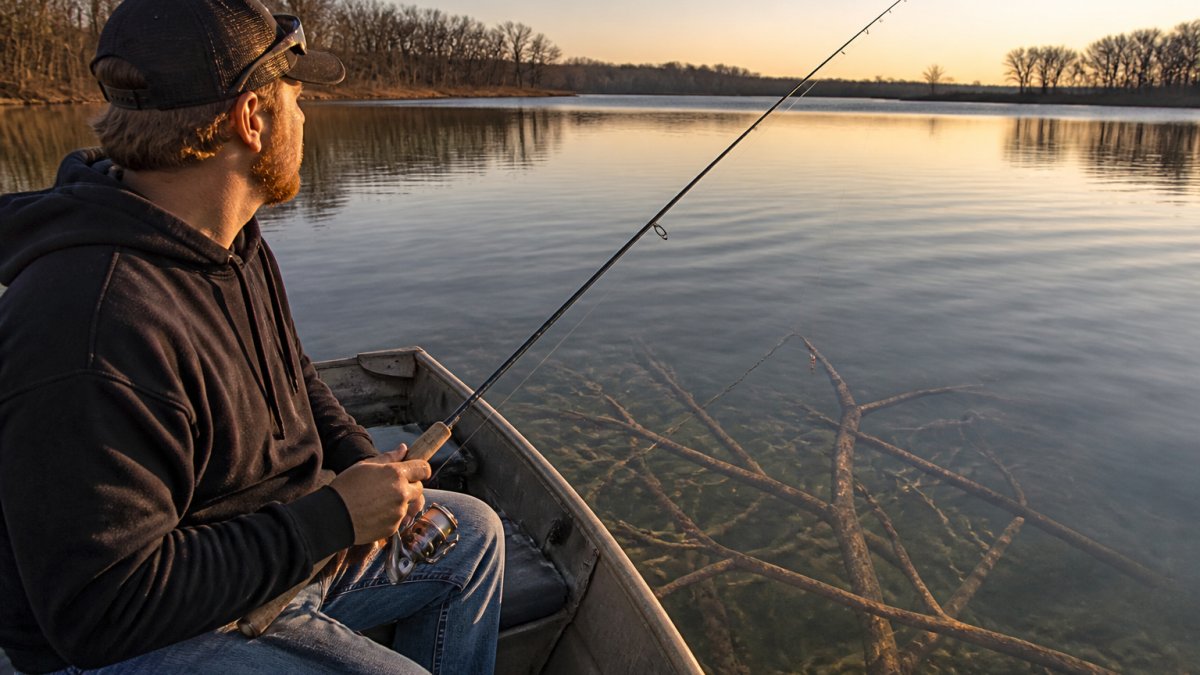
An angler in a small aluminum boat on a calm lake at golden hour, holding a light spinning rod with a slip bobber rig, submerged brush visible just below the surface beside the boat
Vertical Jigging Over Deep Brush
Hold your boat directly over the pile and drop a small jig straight down. Keep your line vertical and work the jig just above the brush tops. Deep brush holds fish on the edges, so watch your electronics and match the depth where you see marks.
Bobber and Float Rigs for Shallow Water
A slip bobber lets you suspend a small bait at an exact depth and fish it slowly. Set the bobber stop so your bait hangs just above the cover. Drift it past the pile, let it sit, then twitch it. Bite detection is easy because the float tells you everything.
Best Crappie Lures for Heavy Cover
Small baits rule in cover. Crappie have small mouths, and a compact profile slips through brush without snagging.
Our picks from the UntamedSportsman lineup:
- 2" Crappie Grub ($2.99): a tapered, minnow-like body with an enhanced tail for extra action, 20 per pack
- Grub, Small 1.5" ($1.99): a standard 1.5-inch grub built for crappie and panfish, 20 per pack
- Grub, Twin Tail 1.5" ($2.99): flowing twin tails with strong action for its size, 15 per pack
- Lil Fishy ($1.29): a tiny fan-tailed fish lure for small mouths and tiny hooks, 20 per pack
Lure |
Size |
Count per Pack |
Price |
Best For |
|---|---|---|---|---|
Crappie Grub |
2" |
20 |
$2.99 |
Deep brush and vertical jigging |
1.5" |
20 |
$1.99 |
Shallow water and finicky fish |
|
Twin Tail Grub |
1.5" |
15 |
$2.99 |
Slow retrieves and extra action |
Lil Fishy |
Tiny |
20 |
$1.29 |
Tiny hooks and ice fishing |
Crappie Fishing Depth in Summer: Finding the Target Depth
Summer forces crappie deeper, but the exact depth changes with water temperature, clarity, current, and the thermocline. The anglers who catch fish in July and August are the ones who adjust depth before they adjust baits. Here is a systematic way to find the target depth on any body of water.


Start with surface temperature. Crappie prefer water in the low-to-mid 70s. Once surface temps push into the 80s, fish slide down to find that comfort zone.
Find the thermocline on your electronics. It shows as a faint horizontal band where the water density changes. In many summer lakes it sets up between 15 and 25 feet. Fish will hold at or just above that band because it concentrates oxygen and baitfish.
Water clarity changes the depth window. In clear water, crappie push deeper and hold tighter to cover because light penetrates farther. In stained or muddy water, they can be shallower and more aggressive. A common pattern is to add 3 to 5 feet of depth in clear water and subtract that in stained water. Current also matters.
Work these zones in order, and let the fish tell you which one is active:
- Shallow cover, 3 to 8 feet, early and late in the day when light is low
- Mid-depth brush, 8 to 15 feet, during low light and on cloudy days
- Deep brush and timber, 15 to 25 feet, at midday and under bright sun
- Suspended fish above deep structure, at the thermocline depth, when baitfish are stacked
Target depth matters more than lure choice in summer. If you are not getting bites, change depth before you change baits. Drop your jig 2 feet at a time until you find marks that react. When you catch one, note the exact depth and repeat it.
U.S. Geological Survey information on lake stratification and thermoclines
Boat Positioning, Anchoring, and Night Fishing Lights
Boat positioning decides whether you catch fish or spook them, and in cover it is the difference between fishing the structure and fishing the water beside it.
Set up upwind or upcurrent of the cover and let your presentation drift into the strike zone. This keeps your boat off the structure and lets your bait approach naturally.
Anchoring works well over deep brush so you can hold a vertical jig steady, but it has trade-offs. An anchor holds you in one spot, which is perfect when you have marked a pile loaded with fish.
For shallow cover, a quiet approach matters more than perfect positioning. Push-pole or use your trolling motor on low speed. Crappie in 3 feet of water spook easily, and a trolling motor wash or a hull slap can shut down a shallow flat for an hour.
Night fishing changes the game. Submerged lights draw baitfish, and baitfish draw crappie. Hang a light over deep cover and fish the edges of the glow. The brightest zone is not always the best zone.
Light choice and placement matter. A green or white submersible light on a cord lets you set the depth of the glow. Suspend it just above the cover so baitfish concentrate where you want them.
U.S. Fish and Wildlife Service guidance on aquatic habitat and structure
Troubleshooting Snags, Short Strikes, and Slow Bites
Snags, short strikes, and slow bites all have fixes. Work through them in order before you move.
Problem |
Likely Cause |
Fix |
|---|---|---|
Constant snags |
Bait fishing too deep in the cover |
Raise your bait above the brush tops |
Short strikes |
Bait too large or too fast |
Downsize and slow your retrieve |
Slow bites |
Wrong depth or wrong spot |
Change depth, then change location |
Missed hooksets |
Too much slack line |
Tighten up and set the hook firmly |
Retrieve speed matters. Crappie often want a slow, steady presentation in cover. If you're getting taps without hookups, slow down and let the bait hang longer.
Handling Crappie Responsibly and Knowing Your Regulations
Responsible handling keeps crappie populations healthy. Wet your hands before touching a fish, support its body, and return it quickly if you're not keeping it. Use a landing net to reduce stress.
Know your local regulations before you fish. Creel limits, size limits, and season dates vary by state and by water. Check your state wildlife agency's current rules, since they change year to year. Some states also restrict the use of multiple rods or artificial lights, so confirm what's legal where you fish.
Association of Fish and Wildlife Agencies state regulations directory
Cover more water, log what you find, and you'll build a map of fish-holding structure that pays off every trip.
Fishing cover well takes patience, the right small baits, and a system for finding structure before you cast. UntamedSportsman builds lures for exactly this kind of fishing, with compact grubs and small profiles designed to slip through brush and draw strikes. Our 2" Crappie Grub and Twin Tail Grub give you the action and size crappie want in heavy cover. Get started with UntamedSportsman and put more crappie in the boat this season.
Frequently Asked Questions
How deep should you fish for crappie in cover?
Start where the cover meets a depth change. In spring, crappie in cover often sit in 2 to 6 feet of shallow water around spawning brush. By summer, the same fish slide to 12 to 25 feet and suspend just above deep brush or timber. Use your electronics to mark the top of the structure, then set your bait a foot or two above it. If you get no bites in 10 minutes, move up or down the water column in 2-foot increments until you find the school.
How do you avoid snags when crappie fishing in brush piles?
Fish above the cover, not inside it. Set your jig or minnow so it rides just over the top of the brush, and use a slow, steady retrieve instead of a hard hookset. When you do hang up, stop reeling, give slack line, and gently shake the rod tip rather than pulling. Light wire hooks bend free more easily than heavy ones. Vertical jigging directly over marked brush also cuts snags compared to casting across a pile.
What is the best bait for crappie in heavy cover?
Small soft plastics rigged on light jigs are the most versatile choice for heavy cover. A 1.5 to 2-inch grub or twin-tail grub in a natural or chartreuse color matches the baitfish crappie feed on and slips through tight branches better than bulky baits. Live minnows under a slip bobber work well around submerged trees, but soft plastics let you cover more water and lose fewer baits to snags. Carry several colors and sizes so you can match the baitfish you see on your electronics.
How do you find crappie in cover during summer?
Look for deep brush, rock piles, and standing timber sitting next to a drop-off or channel edge. Baitfish stack on that structure, and crappie follow. Idle along the break with your sonar, mark the densest cover, and drop a waypoint. Early and late in the day, fish may still hold in shallow water near weed edges. At midday, target the deepest cover in the area and fish slowly. If one pile is empty, move to the next rather than waiting it out.

Leave a comment
All comments are moderated before being published.
This site is protected by hCaptcha and the hCaptcha Privacy Policy and Terms of Service apply.