
Last Updated: November 6, 2026
Quick Summary
Adjust your fishing tactics by season by checking water temperature first, then finding the bait and matching presentation speed and bait size to conditions. Fish slow, small profiles in cold water and fast, larger reaction baits when bass are actively chasing baitfish.
- Shallow, dark-bottomed water warms faster than deep water, so early-season bass stack in the warmest available water.
- Spring calls for small soft plastics, finesse jigs, and jerkbaits, while summer fish chase swimbaits, crankbaits, and topwater.
- The fall flip occurs when surface water drops out of the 70s and holds in the 60s, pushing bass to chase baitfish.
- Winter fishing rewards vertical jigging and finesse worms on light line, since cold bass feed less often and move shorter distances.
- A southern reservoir can reach prespawn temperatures weeks before a northern natural lake, so trust your thermometer over the calendar.
Table of Contents
- Why Water Temperature Drives Every Seasonal Fishing Tactic
- Early Spring Bass Fishing Tactics: Target the Warmest Water First
- Best Bass Lures for Spring and Summer: Match Bait Size to the Season
- Is Dropshot Fishing Effective for Summer Bass?
- Fall Fishing Tactics: Follow Baitfish and Feed Aggressively
- Winter Fishing Tactics: Slow Presentations and Small Profiles
- A Season-by-Season Decision Framework for Fishing Tactics
- Build Your Seasonal Tackle Box with UntamedSportsman Baits
- Frequently Asked Questions
Why Water Temperature Drives Every Seasonal Fishing Tactic
Water temperature is the master switch for fish behavior, and it is the first thing to check before you tie on a lure. Bass are cold-blooded, so their metabolism, feeding windows, and location all shift as water warms and cools through the year. That single fact is why the best way to learn how to adjust fishing tactics by season is to stop thinking in calendar months and start thinking in degrees. At UntamedSportsman, we build our baits around this reality: the same lake fishes completely differently in April and August.
Here is the principle most anglers get wrong. Air temperature lies, and water temperature tells the truth. A string of warm afternoons in March does not warm a lake's main body, but it does warm shallow, dark-bottomed pockets that face the sun. Fish find those pockets first. The U.S. Geological Survey water temperature monitoring resources confirm that shallow water responds to sunlight far faster than deep water, which is exactly why early-season fish stack into the warmest available water.
If you want to apply this principle properly, read our guide on how to read water temperature for bass before your next trip. It walks through where to check, what the readings mean, and how a few degrees change where you cast.
Early Spring Bass Fishing Tactics: Target the Warmest Water First
Early spring bass fishing tactics come down to one rule: find the warmest water and fish it slowly. In early season, bass are transitioning out of winter dormancy and moving toward spawning flats, but they rarely commit to a single spot. They follow warmth, and warmth concentrates on dark bottoms, rock, and wind-protected banks that catch the afternoon sun.
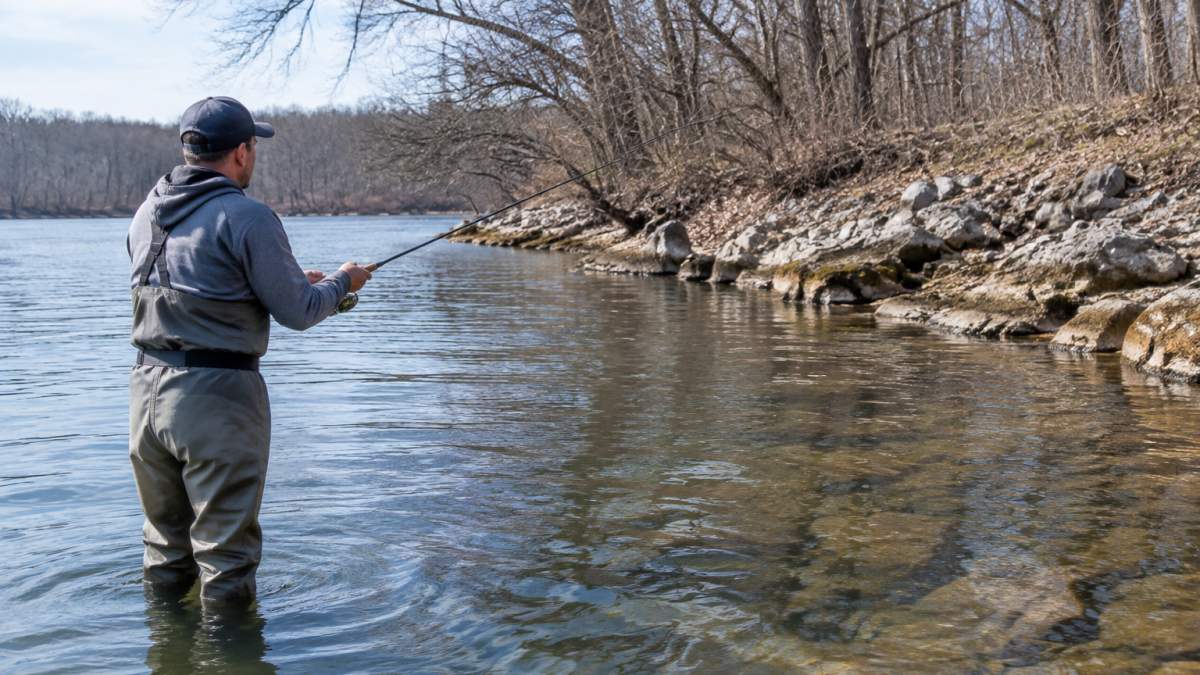
The practical trigger is water temperature, not the calendar. A shallow, dark-bottomed bay can run several degrees warmer than the main lake on the same afternoon, which is exactly why you fish the warmest water first and check it with a thermometer rather than trusting the date.
A common mistake is fishing too fast too early. Cold bass will not chase a burning retrieve. Slow down, downsize, and fish the north-facing banks last. Watch your line closely, because early-season strikes are often a subtle tick rather than a violent hit.
Species matter here. The same warming shallows that draw prespawn bass also pull crappie toward brush and dock pilings, walleye toward rocky shoreline breaks after dark, and northern pike into shallow vegetation to spawn.
Regional timing is the other half of the equation. A southern reservoir can reach prespawn temperatures weeks before a northern natural lake at the same latitude, and high-elevation water lags further still. Rather than memorizing a month, log the temperature at which you first see fish move up on your home water, then watch for that number next year.
Best Bass Lures for Spring and Summer: Match Bait Size to the Season
The best bass lures for spring and summer are the ones that match the size of what bass are actually eating right now. Spring means smaller baitfish and emerging craws, so compact soft plastics, jigs, and jerkbaits get bit. As summer arrives and baitfish grow, bass switch to bigger meals, and your lure selection should follow.
Match the hatch, as the saying goes, and pay attention to bait size above all else. Spring fish respond to finesse fishing and slow presentations. Summer fish are more willing to chase reaction baits like crankbaits, swimbaits, and topwater. If you want a proven shortlist of options that hold up across the calendar, our roundup of bass lures that work all year covers the core lineup.
- Spring: small soft-plastic worms, finesse jigs, jerkbaits
- Early summer: swimbaits, squarebill crankbaits, creature baits
- Late summer: topwater frogs, big worms, deep crankbaits
Is Dropshot Fishing Effective for Summer Bass?
Yes, dropshot fishing is highly effective for summer bass, especially when fish hold deep and refuse to chase. The dropshot keeps a small bait in the strike zone longer and lets you work pressured fish with a slow, quivering presentation. It shines in clear water and on suspended bass that ignore faster moving baits.
Summer fishing pushes many bass deep during the heat of the day, and that is where a finesse presentation earns its keep. Rig a small worm or finesse bait above the weight and keep the bait in place. When fish are shallow and aggressive instead, switch to a faster surface approach. Our best topwater frogs for summer bass guide covers the shallow-cover alternative for warm-water days.
Fall Fishing Tactics: Follow Baitfish and Feed Aggressively
Fall fishing tactics revolve around baitfish movement and aggressive feeding. As water cools, bass and other predators feed heavily to build reserves for winter, and they herd baitfish into creeks, points, and shallow flats. Find the bait, and you find the fish.
The temperature signal to watch is the fall flip: when surface water drops out of the 70s and holds in the 60s, bass often shift from deep summer structure to chasing shad and other baitfish along creek channels, points, and the mouths of coves.
This is the season to speed up. Reaction baits, spinnerbaits, and lipless crankbaits trigger strikes from fish that are actively chasing. Watch for birds and surface disturbances, because both signal baitfish schools. Retrieve speed matters here: a steady, fast cadence that mimics a fleeing baitfish outperforms a slow drag. Fall is short, so fish it hard while the feeding window is open.
Match your lure to the bait size you see. When shad are small and scattered, downsize to compact crankbaits and small swimbaits; when baitfish are larger and schooled tight, throw bigger lipless cranks, spinnerbaits, and glide-style swimbaits.
Different species run different fall programs. Walleye push onto points and humps to ambush baitfish after dark, crappie stack around brush and bridge pilings, and trout in lakes and rivers feed hard before winter. Saltwater anglers see the same logic in reverse for many species: fall bait migrations offshore and in estuaries drive feeding flurries that reward fast, flashy presentations.
Fall's short days and cooling water can turn a hot bite cold in a hurry, so do not assume a pattern that worked last week still holds. Re-check temperature and bait location each trip, and be ready to slow down if a cold front shuts the feed off.
Winter Fishing Tactics: Slow Presentations and Small Profiles
Winter fishing tactics reward patience and small profiles. Cold water slows a fish's metabolism, so bass feed less often and move shorter distances. Presentations must slow to a crawl, and bait size should shrink to match lethargic forage.
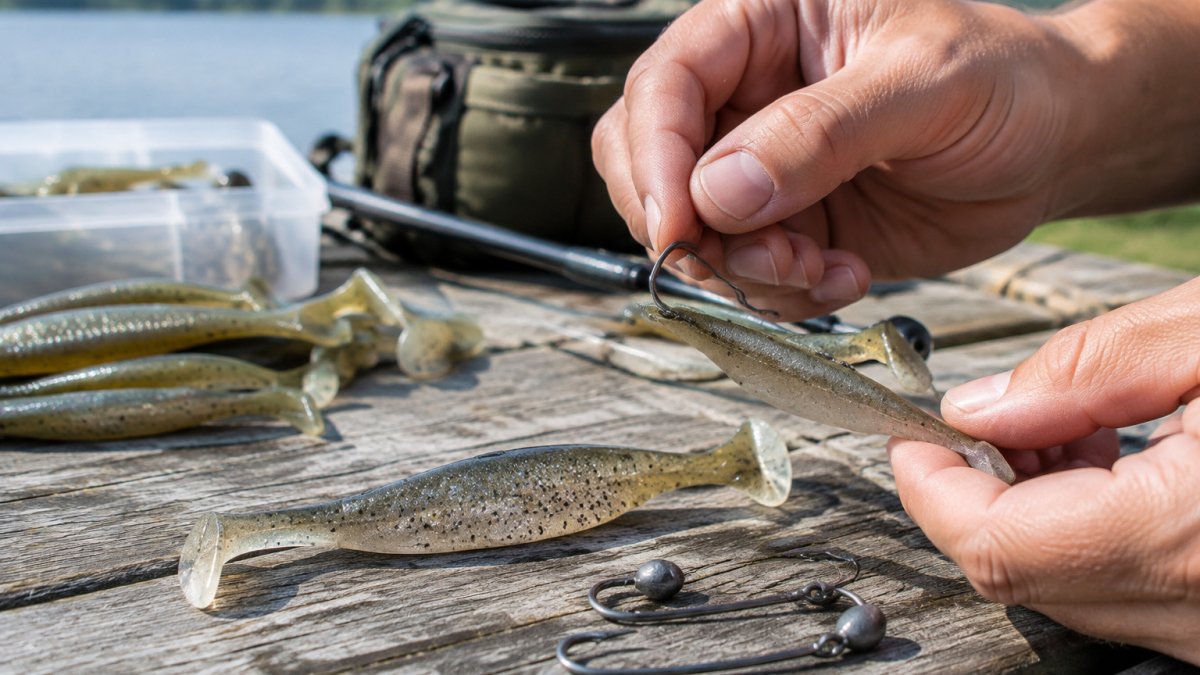
Vertical jigging and finesse fishing dominate the cold-water playbook. Small soft plastics, tiny jigs, and finesse worms fished on light line get the most looks. A common mistake is overworking the bait. In winter, less action often produces more strikes. For panfish and trout in cold water, small profiles like our Ice Spike and Lil Fishy are a good match, while the Sonar Spike's thin tail shows up well on forward-facing sonar.
A Season-by-Season Decision Framework for Fishing Tactics
Use this framework to turn conditions into decisions instead of guessing. Check water temperature, find the bait, and match your presentation speed and bait size to the season. That sequence handles most days on the water.
| Season | Water Temp Signal | Fish Location | Presentation | Bait Size |
|---|---|---|---|---|
| Early spring | Cold, warming shallows | Shallow, sunlit banks | Slow, finesse | Small |
| Summer | Warm surface, cool depths | Deep during heat, shallow at dawn | Fast reaction or dropshot | Medium to large |
| Fall | Cooling, baitfish active | Following baitfish | Fast, aggressive | Large |
| Winter | Coldest water | Deep, slow | Very slow, vertical | Small |
This decision framework also accounts for regional and climate differences. A southern reservoir warms weeks before a northern natural lake, so trust your thermometer over the calendar. Species matter too: walleye, crappie, and trout respond to the same temperature logic but with their own depth and bait preferences. Ready to go deeper? Our advanced bass fishing techniques guide covers seasonal patterns and cold-weather tactics in more detail.
Build Your Seasonal Tackle Box with UntamedSportsman Baits
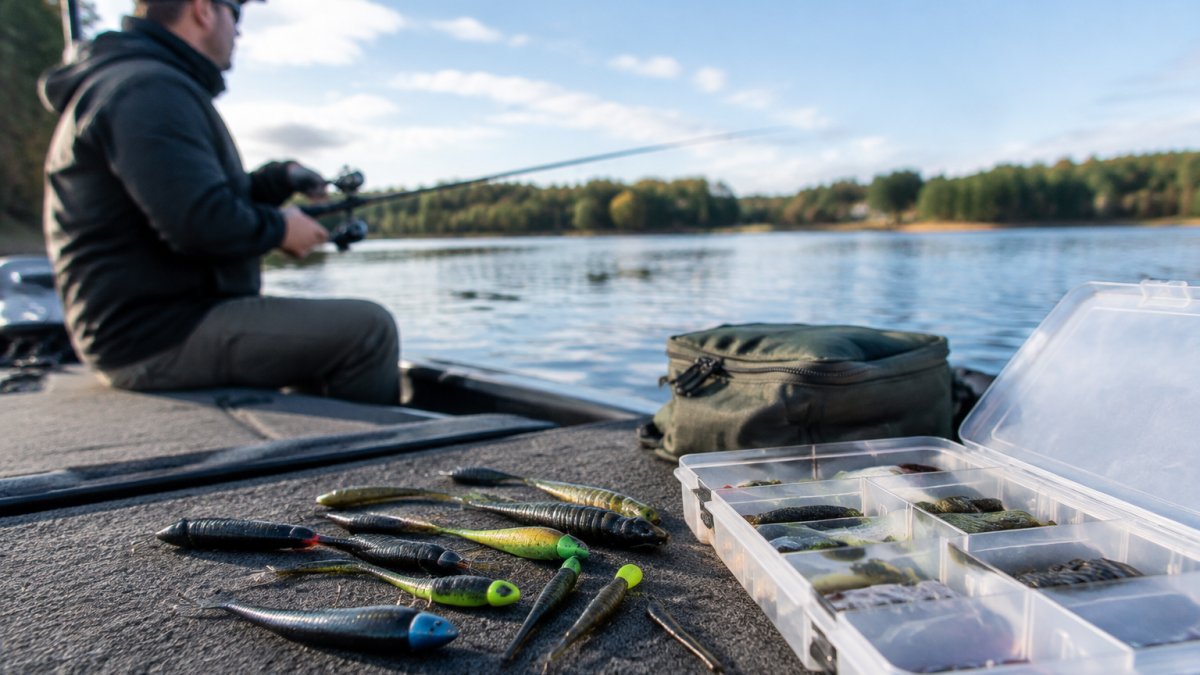
A seasonal tackle box should carry small finesse profiles for cold water and bigger reaction baits for warm, aggressive fish. That is how you stay ready as conditions shift. Our soft-plastic lineup covers both ends of that range, from compact panfish and ice baits to finesse worms built for dropshot and forward-facing sonar.
The Dancing Reaper ($4.99) is a drop-shot weapon with a gliding fall that draws strikes when a standard worm gets ignored. The Sonar Spike ($3.99) is a finesse worm that shows up exceptionally well on forward-facing sonar and is a drop-shot option for trout, walleye, and bass. For cold-water panfish, the Ice Spike ($1.29) packs extra movement into a tiny profile, and the Lil Fishy ($1.29) is a fan-tailed option for small mouths and tiny hooks. Browse our full fishing worms collection to build out your box.
Frequently Asked Questions
How do water temperatures dictate seasonal fishing tactics?
Water temperature sets fish metabolism, which sets how far and how fast a fish will chase a lure. In cold water, bass and panfish slow down and hold tight to cover, so slow presentations and small profiles work best. As water warms through spring and summer, fish feed more aggressively and will chase reaction baits like crankbaits and swimbaits. When fall water cools again, baitfish schools move and fish feed heavily before winter. Check surface temp at the start of every trip and adjust retrieve speed, lure size, and depth to match it.
What are the best bass lures for spring and summer transitions?
Spring and summer call for different tools, so carry both. In early spring, throw jerkbaits, finesse worms, and drop-shot rigs slowly around spawning flats and the first warm banks. As summer arrives, switch to topwater frogs over slop, swimbaits along weed edges, and creature baits pitched into heavy cover. A drop-shot with a small worm still works in summer when fish hold deep. Match bait size to the forage you see, and keep a slow option ready for cold fronts that shut fish down mid-summer.
Is dropshot fishing effective for summer bass?
Yes, and it may be the most reliable summer tactic when bass move deep and suspend. A drop-shot keeps your bait above the bottom at a fixed height, which lets you fish vertically under docks, along ledges, and around deep brush where fish hold in cool water. Use a finesse worm like the Sonar Spike and shake it in place rather than dragging it.
What is the hardest month to catch bass?
Late winter and the coldest stretch of the season are typically the toughest, because bass metabolism is at its lowest and fish feed rarely. Mid-summer can also be hard when water temps peak and fish go deep or feed at night. The fix in both cases is to slow down. Downsize lures, fish deeper structure, and target low-light windows at dawn, dusk, or after dark. Patience and a slow presentation matter more than covering water when the bite is cold.
The anglers who catch more fish are not the ones with the most tackle. They are the ones who read the water and adjust before the fish tell them to. UntamedSportsman builds baits for exactly that approach, with soft plastics designed to perform in heavy cover and slop, deliver strong kick action to draw strikes, and stay on top when you need a surface presentation. Get started with UntamedSportsman and match your bait to the season instead of fighting it.



Leave a comment
All comments are moderated before being published.
This site is protected by hCaptcha and the hCaptcha Privacy Policy and Terms of Service apply.