Table of Contents
- Why Beginners Lose Lures (and Money) in Heavy Cover
- Quick Comparison: 8 Snag Resistant Lures for Beginners
- How We Picked These Weedless Lures for Bass
- 1. Croaking Frog: Best Topwater Pick for Lily Pads and Slop
- 2. Tramp and Tramp Jr: Best Creature Baits for Punching Mats
- 3. Craw, Utility and Finesse Craw: Best Craw Patterns for Rock and Wood
- 4. Switch and Jig Switch: Best Stick Baits for Grass Edges
- 5. 6" Dessert Worm: Best Texas-Rigged Soft Plastics for Weeds
- Snag Resistance vs. Hook-Up Rate: The Trade-Off Nobody Explains
- How to Free a Snagged Lure Without Breaking It Off
- Frequently Asked Questions
Last Updated: October 17, 2026
Why Beginners Lose Lures (and Money) in Heavy Cover
Heavy cover holds the biggest bass and costs beginners the most tackle.
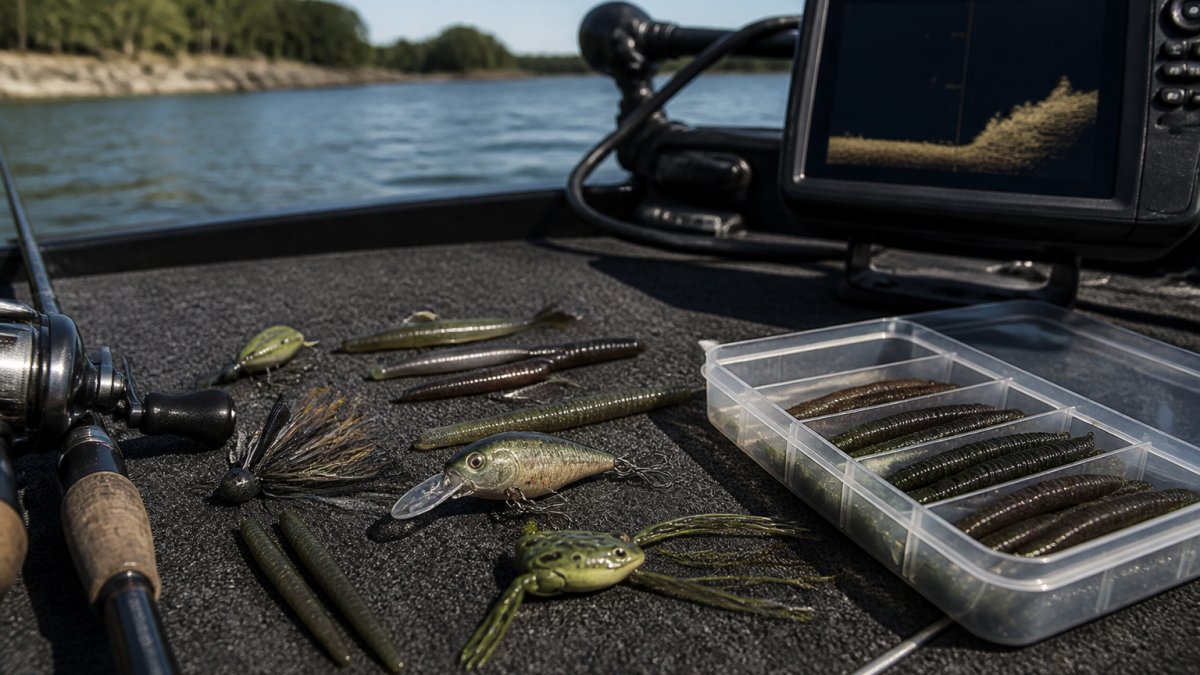
The best snag resistant lures for beginners slide through grass, wood, and rock with the hook point tucked out of harm's way.
This guide ranks eight beginner-friendly options by cover type, explains how to rig each weedless, and covers the trade-off nobody talks about: snag resistance versus hook-up rate.
Quick Comparison: 8 Snag Resistant Lures for Beginners
Here is every lure in this guide, sorted by the cover each one handles best.
| Lure | Price | Best Cover | Rig Style |
|---|---|---|---|
| Croaking Frog | $4.99 | Lily pads, matted grass | Hollow-body topwater |
| Tramp | $5.99 | Punching mats, flipping | Texas, Tokyo |
| Tramp Jr | $5.99 | Flipping, punching | Texas, Tokyo |
| Craw, Finesse 3" | $5.99 | Rock, wood | Small jig trailer |
| Craw, Utility | $4.99 | Wood, rock, drop shot | Texas, jig, drop shot |
| Switch, Jig 4" | $4.99 | Grass edges, bottom | Shaky head |
| 5" Switch | $4.99 | Grass edges, open water | Texas, wacky |
| 6" Dessert Worm | $3.99 | Weeds, grass | Texas, Carolina |
Match the lure to the cover first, then to the fish. A frog that walks over lily pads is wrong over chunk rock, and a craw that skips rocky bottom fouls in matted grass.

How We Picked These Weedless Lures for Bass
We ranked these eight on snag avoidance, ease of weedless rigging, retrieve forgiveness, cover range, and price per fishable bait, beginners lose lures while they learn.
A common mistake is buying a lure for the fish you want, not the water you fish. Every pick here can be rigged so the hook point stays protected.
Beginner Buying Criteria: What Actually Matters
Use these five checks before you spend money:
- Hook-point protection. Can the point be buried in the plastic or shielded by a guard? An always-exposed point is not a cover bait.
- Rigging forgiveness. Can you rig it correctly on the first or second try, without a special tool?
- Retrieve tolerance. Does it still look alive if you reel too fast or too slow? A bait that only works at one cadence is a trap.
Budget Math: How Many Lures a Beginner Actually Needs
A practical starter set for snag-prone water is three bait families, each covering a different depth and cover type:
- One topwater frog for pads and matted grass.
- One creature or craw bait for punching mats and working wood or rock.
- One straight-tail or stick worm for Texas-rigged weeds and grass edges.
At the table prices, that is roughly $14 to $18 for one of each, or $25 to $30 with two packs of your most-thrown bait. Lose three or four exposed-hook baits in one afternoon of pad fishing and the weedless kit pays for itself.
Tackle You Need to Fish These Baits
Weedless baits are only weedless if the rest of your setup cooperates. A medium-heavy 7-foot baitcasting or spinning rod gives you the backbone to drive a hook through plastic and vegetation. Line choice matters too:
- Braid, 30- to 50-pound test, for frogs and punching. It cuts through grass, floats for topwater, and has almost no stretch, which helps you set the hook at distance.
- Fluorocarbon, 10- to 15-pound test, for Texas-rigged worms and craws around wood and rock, where abrasion resistance matters more than float.
- Offset worm hooks, size 3/0 to 5/0, cover most of the soft plastics in this guide. Match the hook gap to the bait's body thickness so the point can bury cleanly.
These Baits Catch More Than Bass
The same weedless principles work across species. A Texas-rigged worm or small stick bait fished slowly along cover draws walleye and crappie, and a compact craw or creature bait is a legitimate panfish and smallmouth presentation. For anything other than largemouth, size down, slow the retrieve, and keep the hook point protected.
1. Croaking Frog: Best Topwater Pick for Lily Pads and Slop
The Croaking Frog is the best choice for beginners fishing lily pads and matted grass.
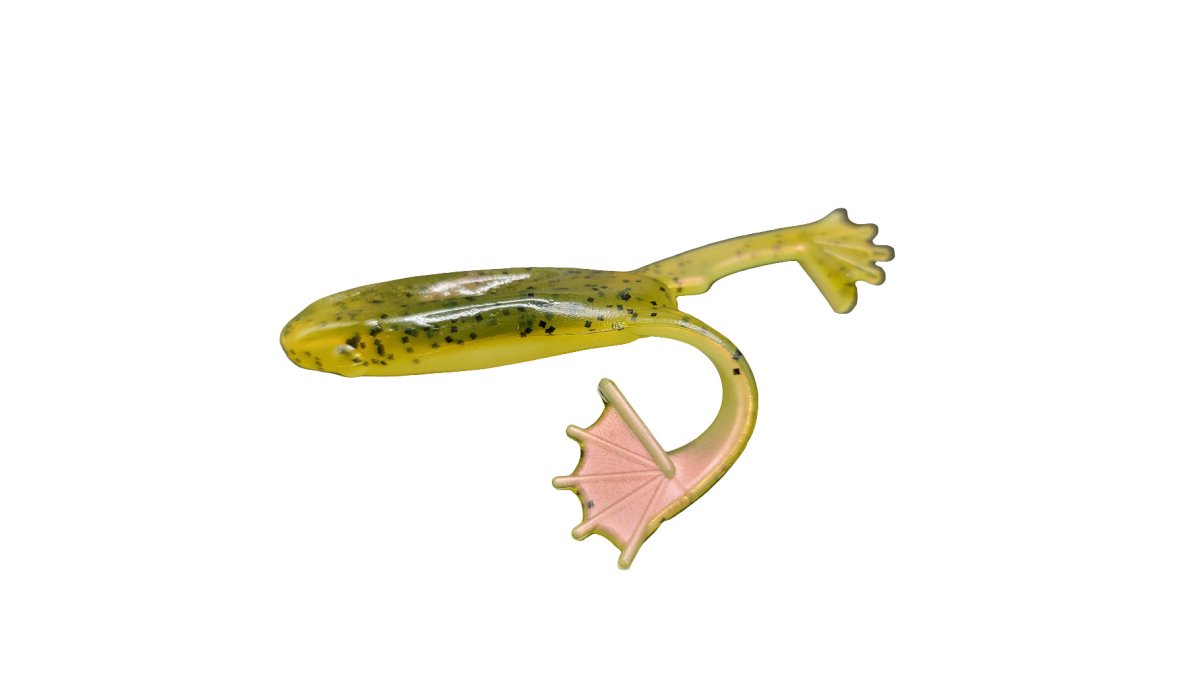
Rigging is simple: tie it on, and the hook point stays hidden until a fish strikes and collapses the body.
The honest limitation: frogs demand patience. Beginners often reel too fast and miss the strike window. Wait until you feel weight before setting the hook.
2. Tramp and Tramp Jr: Best Creature Baits for Punching Mats
When grass grows into a thick mat, punch a creature bait through the top. The Tramp is a 4-inch beaver-style bug bait built for flipping, punching, and Tokyo-rig setups, pure bass candy in heavy cover.

Rig it Texas-style with a pegged bullet weight so it drops straight through the mat; the compact profile slips through gaps bulkier baits cannot. Tramp Jr does the same job in a 3.25-inch package for smaller targets and finicky fish.

3. Craw, Utility and Finesse Craw: Best Craw Patterns for Rock and Wood
Rock and wood call for a crawfish profile that hugs bottom without hanging up. The Utility Craw is a versatile soft plastic you can rig alone, pair with a jig, or fish on a drop shot, the most flexible pick in this guide.
On rocky bottom, a Texas-rigged Utility Craw keeps the point protected while the bait crawls across structure. The Finesse Craw is the smaller, jointed option for a small jig. Both let you change your rig instead of switching baits.
4. Switch and Jig Switch: Best Stick Baits for Grass Edges
Stick baits shine along grass edges, where bass sit between cover and open water. The 5" Switch rigs Texas or wacky for a slow, natural fall that draws strikes from fish holding on the edge.
The 4" Jig Switch pairs with a round jig head and shines on a shaky head, where its extra length gives more action than a ned bait.
SHOP the 5" Switch and Jig Switch
5. 6" Dessert Worm: Best Texas-Rigged Soft Plastics for Weeds
The 6" Dessert Worm is the classic worm every beginner should carry, and Texas-rigged soft plastics for weeds start here. It rigs Carolina, Texas, Neko, or Wacky to match the presentation to the water.
For thick weeds, a Texas rig keeps the hook point buried and the worm slides through cover on the fall. Each pack includes 12 worms, and at $3.99 it is the cheapest way to learn weedless fishing without fear of losing baits.
Snag Resistance vs. Hook-Up Rate: The Trade-Off Nobody Explains
More snag resistance usually means a slightly lower hook-up rate. A hook tucked into a bait cannot grab a fish until the strike collapses the plastic or the fish takes the whole bait, that split-second delay is the price of fishing cover.
When the point is buried, the fish must compress the plastic before the hook reaches tissue. Thicker plastic and a deeper point take longer; thinner plastic and a point near the surface grab faster, and catch more weeds on the way in.
Why the Trade-Off Exists
Three variables decide how much hook-up rate you give up:
- Plastic thickness. A hollow-body frog collapses easily, so the hook reaches the fish fast. A thick creature bait takes more compression.
- Hook-point depth. A point buried a quarter inch deep is very weedless and slow to grab. A point resting just under the skin is faster and slightly more prone to fouling.
- Hook gap and wire diameter. A wide-gap hook reaches around the bait's body to find purchase. A heavy-wire hook resists bending in cover but takes more force to drive home.
Skin-Hooking: The Beginner's Best Compromise
Skin-hooking a Texas rig, where the point barely pokes through the plastic, balances both goals: most of your snag resistance and most of your hook-up rate. The technique:
- Rig the bait Texas-style with the point buried.
- Pull the point back until it barely tents the plastic, you should see a small bump, not an exposed hook.
- Run your thumb over the bump. If the point pokes you, it is too far out. If you feel nothing, it is too deep.
That tiny tent is the sweet spot. It slides through grass and wood, but the point is close enough to the surface that a strike drives it through in one motion.
How to Tune the Trade-Off
You can shift the balance based on what you are fishing:
- Heavy mats and thick pads: bury the point deeper and use a heavier weight. You will miss a few more fish, but you will keep your bait.
- Sparse grass and grass edges: skin-hook the bait. You get more hook-ups and still avoid most fouling.
- Wood and rock: use a Texas rig with a slightly exposed point and a light weight. The bait falls slower and the hook is ready when a fish picks it up.
Setting the Hook on a Weedless Bait
Because the point must travel through plastic, you need a firmer, faster sweep than with an exposed hook. Reel down until the line is tight, then sweep the rod hard and keep reeling, do not stop halfway. A weak hookset is the most common reason beginners lose fish they actually hooked.
How to Free a Snagged Lure Without Breaking It Off
Knowing how to free a snagged lure saves money and keeps you fishing. Never yank: point the rod tip at the snag, apply steady pressure, and let the line's stretch do the work. Often the bait pops free on its own.
If steady pressure fails, try the bow-and-arrow method: pull the line tight, then release it so it snaps back and pops the lure loose.
Frequently Asked Questions
What lures are least likely to snag in weeds?
Texas-rigged soft plastics, topwater frogs, and weedless creature baits are the least likely to snag. A Texas rig buries the hook point inside the plastic body, so the bait slides over grass, reeds, and wood without catching. Topwater frogs like the Croaking Frog sit on the surface and cross lily pads with the hooks tucked against the body. Both designs trade a little hook-up speed for far fewer lost lures.
Are weedless lures good for beginners?
Yes, and they are often the smarter first buy. Weedless lures let you cast into grass, pads, and brush where bass actually hold without donating tackle every few casts. The trade-off is hook-up rate: a buried hook point needs a firmer hookset than an exposed one. Start with a Texas-rigged worm or a topwater frog, keep your rod tip up, and set the hook hard when you feel weight.
What is the easiest lure for a beginner to use in heavy cover?
A Texas-rigged soft plastic worm is the simplest starting point. You need one hook, one weight, and a 6-inch worm like the Dessert Worm. Cast it into a gap, let it sink, and drag it slowly. A topwater frog is a close second because you can see the strike, which teaches timing fast. Both cost under $6 per pack, so mistakes stay cheap.
Can you use topwater frogs around weeds and slop?
That is exactly what they are built for. The Croaking Frog floats, so it stays on top of matted grass and lily pads instead of sinking into them. Drag it across the pads, pause over an opening, then twitch. The kick action draws strikes during low-light windows at sunrise and sunset. Wait until you feel the fish before setting the hook, since bass often slap the bait first.
How do I free a snagged lure without breaking my line?
Never pull straight back with the rod. Point the rod tip at the snag, reel down until the line is tight, then pluck the line like a guitar string. This pops the lure loose from most wood and rock. If that fails, walk to the opposite bank and pull from the reverse angle. As a last resort, wrap the line around a stick and pull straight back so the lure breaks off instead of your rod tip.

Leave a comment
All comments are moderated before being published.
This site is protected by hCaptcha and the hCaptcha Privacy Policy and Terms of Service apply.