
Table of Contents
- Advanced Bass Fishing Techniques 2026: What Changes This Year
- Bass Fishing Techniques by Season: A Year-Round Playbook
- Bass Fishing Retrieve Speed: When to Burn, Work, or Soak a Lure
- Cold Weather Bass Fishing Tactics That Still Produce
- Glide Bait Fishing for Bass: Triggering Trophy-Class Strikes
- Matching Rod, Reel, and Line to Each Advanced Technique
- Troubleshooting: What to Change When the Bite Stops
- Conclusion
- Frequently Asked Questions
Last Updated: October 17, 2026
Advanced Bass Fishing Techniques 2026: What Changes This Year
Advanced bass fishing techniques in 2026 reward anglers who read water and conditions before they tie on a lure. At UntamedSportsman, we build baits for the places where bass actually live, and the anglers who catch consistently are the ones who let temperature, clarity, and pressure pick the presentation. The single biggest shift this year is that forward-facing sonar has moved from novelty to default on tournament decks, which means pressured fish see more lures than ever.
Reading Conditions Before You Pick a Technique
Water temperature, clarity, depth, and fishing pressure decide more than any lure choice. Start with surface temperature: bass are cold-blooded, so their feeding windows compress as water cools. Clarity comes next. Stained water favors vibration and color contrast, while clear water demands natural finishes and longer casts. The U.S. Geological Survey water data resources are a practical starting point for tracking temperature trends on your home lake.
Bass Fishing Techniques by Season: A Year-Round Playbook
Bass fishing techniques by season follow one rule: find the forage, then match the mood. The mistake most anglers make is treating the four seasons as four separate playbooks. A better framework is a single decision loop you run every trip: check water temperature, identify the dominant forage and its location, then pick a presentation that matches the bass's energy level.
Water Temperature Is the Master Variable
Bass are cold-blooded, so their metabolism and feeding windows track water temperature more closely than air temperature or calendar date. Most practitioners use these rough bands as a starting point, then adjust for the specific lake:
- Below 50°F: Lethargic fish, tight to deep structure. Slow, bottom-oriented presentations.
- 50-60°F: Prespawn transition. Fish stage on secondary points and creek channel swings.
- 60-70°F: Spawn and immediate postspawn. Shallow flats, beds, and the first drop-off.
Carry a thermometer or use a sonar unit with a temperature readout, and log surface temp at each stop. A pattern that produced at 58°F often dies at 64°F, and knowing the number tells you when to switch before the bite tells you.
Spring: Prespawn, Spawn, and Postspawn Are Three Different Fisheries
Spring is not one pattern. Prespawn bass stage on secondary points, creek channel swings, and the first hard bottom adjacent to spawning flats. This is the window for a chatterbait or spinnerbait worked parallel to the bank, and for a jerkbait on suspending fish. Once water holds in the low-to-mid 60s, bass move onto beds on shallow flats with hard bottom and cover; sight-fishing with a compact finesse plastic or a small jig becomes the primary tool, and long casts matter because bed fish spook easily.
Summer: Two Patterns in One Day
Summer splits the lake into a dawn fishery and a midday fishery. At first light, bass roam shallow cover and feed on topwater, walking baits, poppers, and frogs over pads and grass. As the sun climbs, the shallow bite dies and fish slide to deep structure: main-lake points, humps, ledges, and brush piles in 15-30 feet. Midday is a vertical game, drop-shots, deep jigs, and football jigs worked slowly on the bottom.
Fall: The Feed-Up Window
Fall is the year's best big-fish window because bass herd shad into creeks and coves and feed aggressively before winter. Glide baits, big swimbaits, and lipless crankbaits burned over grass flats all produce. The key is following the bait, when shad push into the backs of creeks, bass follow, and the bite can be shallow even as water temperatures drop.

Winter: Deep, Slow, and Small
Winter concentrates bass on deep, stable structure, main-lake ledges, channel swings, and rock piles in 20-40 feet. Fish are lethargic, so downsize: a Ned rig, a compact jig, or a finesse craw soaked on the bottom. Lengthen pauses, lighten line, and fish vertically when you can. The winter bite is about patience and precision, not coverage, a single well-placed cast on a ledge can outperform a hundred random ones.
Bass Fishing Retrieve Speed: When to Burn, Work, or Soak a Lure
Bass fishing retrieve speed is the most underrated variable in the boat. Two anglers can throw the same lure on the same point and get completely different results because one is burning and the other is soaking. The right speed is not a personal preference, it is a read on water temperature, forage behavior, and fishing pressure. Below is a practical framework for choosing a cadence, plus the lure-specific mechanics that make each speed work.
Match Speed to Water Temperature
Cold water slows a bass's metabolism, and that shows up in how far a fish will chase a lure. As a working rule:
- Below 50°F: Soak. Drag a jig or finesse plastic on the bottom with long pauses, five seconds or more, and let the bait sit on structure.
- 50-60°F: Slow roll. A steady, slow retrieve with occasional pauses; a chatterbait or spinnerbait rolled just fast enough to thump.
- 60-70°F: Work. A medium, steady cadence with rod-tip action; this is the window where most moving baits shine.
These bands are starting points. A warm, stable stretch in spring can push fish into a burn mood at 62°F, and a cold front can shut down a summer bite that was on fire the day before.
Match Speed to the Lure's Built-In Action
Every lure has a speed range where it performs as designed. Fishing outside that range wastes the bait:
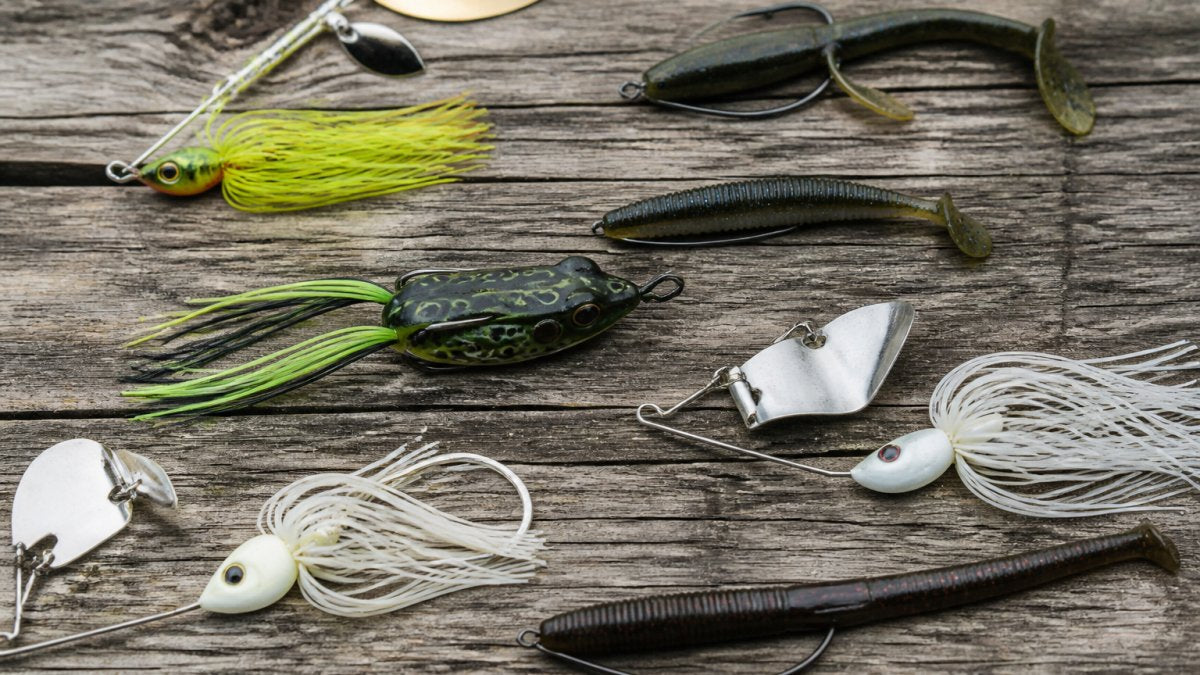
- Chatterbaits and spinnerbaits: Need enough speed to load the blade and create thump. Too slow and the blade stalls; too fast and the bait blows out. A medium retrieve that keeps the blade vibrating is the baseline, and you can slow-roll along the bottom in cold water.
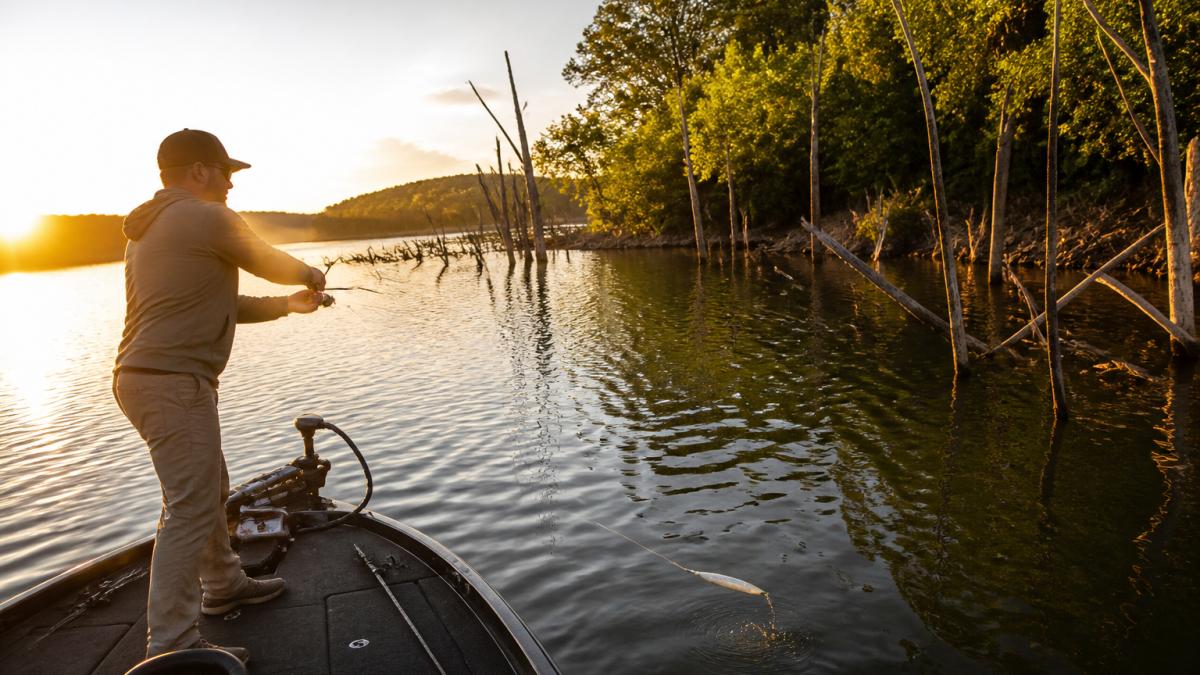
- Glide baits: Built for a slack-line, side-to-side glide. The retrieve is short sweeps of the rod tip followed by a pause, not a steady reel. Speed comes from cadence, not from winding fast.
- Walking topwater: A steady, rhythmic cadence with rod-tip pops; the pause between pops is where most strikes happen.
Match Speed to Fishing Pressure
High-pressure fish see the same lures at the same speeds all day. When the lake is crowded, slowing down and downsizing is often the difference between a follow and a strike. A pressured bass that won't commit to a fast-moving bait will often eat a slow, finesse presentation on the drop. Conversely, on low-pressure water or during an active feed, speeding up until you get a reaction is the fastest way to find the fish that want to eat.
The One-Cast Test
Before you change lures, change speed on the same cast. Work a bait fast for ten casts, then slow to a crawl for ten more. If neither produces, change the retrieve style, horizontal to vertical, steady to stop-and-go, before you tie on something new. Most anglers change everything at once and learn nothing; changing one variable at a time tells you what the fish actually wanted.
Cold Weather Bass Fishing Tactics That Still Produce
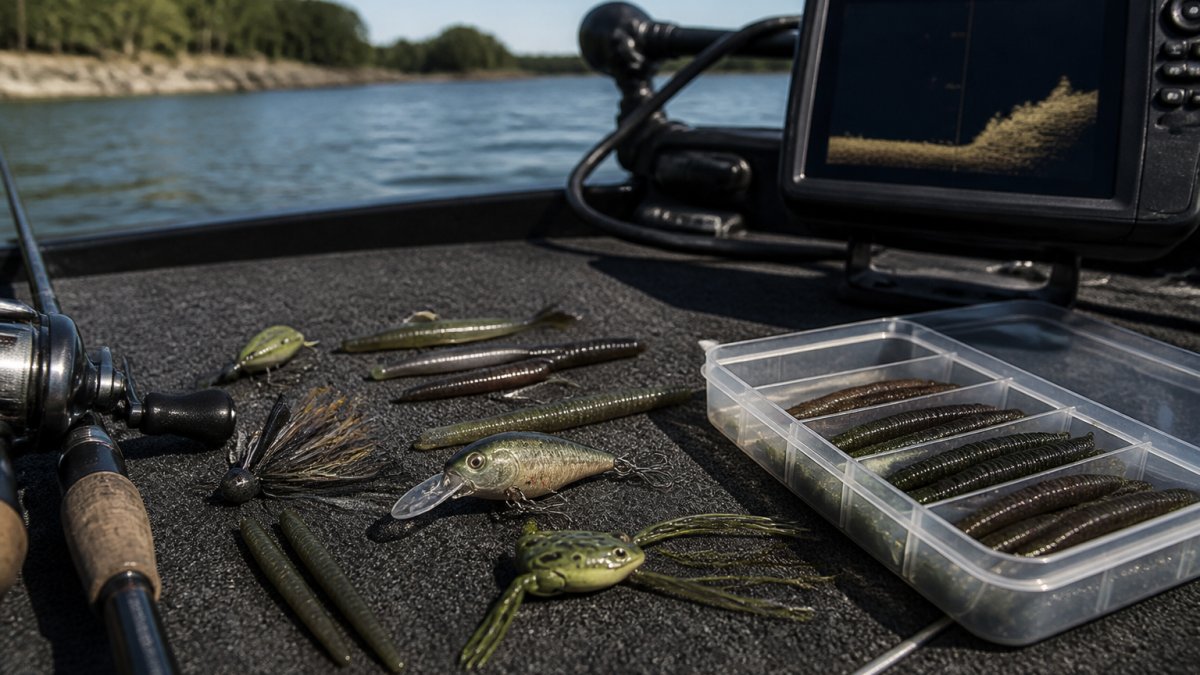
Cold weather bass fishing tactics come down to patience and precision. Fish deep, fish slow, and fish small. Compact jigs and finesse craws worked on the bottom trigger strikes from lethargic bass. The 3" Finesse Craw from UntamedSportsman pairs naturally with a small jig, and its jointed design gives a subtle crawfish profile when fish refuse bigger meals. Downsize line, lengthen your pauses, and soak each cast longer than feels comfortable.
Glide Bait Fishing for Bass: Triggering Trophy-Class Strikes
Glide bait fishing for bass is a big-fish game built on long casts and controlled cadence. These baits swing side to side on a slack line, so retrieve speed and rod tip work matter more than raw speed.
Matching Rod, Reel, and Line to Each Advanced Technique
Tackle matching separates anglers who hook fish from anglers who land them. Use this as your quick reference:
| Technique | Rod | Line | Best For |
|---|---|---|---|
| Glide baits | 7'6" medium-heavy | 20 lb fluorocarbon | Trophy bass, timber |
| Finesse/drop-shot | 6'10" medium-light | 8 lb fluorocarbon | Pressured, clear water |
| Topwater frogs | 7'3" heavy | 50 lb braid | Heavy cover, slop |
| Deep jigs | 7'2" medium-heavy | 15 lb fluorocarbon | Ledges, winter structure |
Pair a ribbed paddletail swimbait with a medium-heavy rod for open-water searching. The 5" Ribbed Paddletail delivers a lively, slithering swim that shines when bass want movement over finesse.

Troubleshooting: What to Change When the Bite Stops
When the bite dies, change one variable at a time. Most anglers change everything at once and learn nothing. Work through this order:
- Slow your retrieve before changing lures
- Downsize your profile and line
- Move shallower or deeper by ten feet
- Switch from horizontal to vertical presentations
- Check your hook point and knot
Conclusion
The anglers who win in 2026 are the ones who adapt fastest to conditions, not the ones with the fullest tackle box. UntamedSportsman builds lures for exactly that: durable topwater frogs for heavy cover, swimbaits with real kick action, and finesse plastics for pressured fish. Our Croaking Frog floats and walks over pads, and our Dancing Reaper glides on the fall when a worm won't trigger a strike.

Frequently Asked Questions
What are the most effective advanced bass fishing techniques for 2026?
The techniques producing most consistently are finesse presentations on forward-facing sonar, glide bait fishing for bass around deep structure, and slow-rolled chatterbaits through pressured grass. The common thread is matching retrieve speed and bait profile to water temperature and clarity. Anglers who adapt presentation to conditions, rather than sticking to one confidence bait, report more consistent bites. Start with a seasonal pattern, then adjust retrieve speed until you find what the fish want that day.
How do experienced anglers locate bass in unfamiliar water?
Start with contour maps and forward-facing sonar to identify depth changes, points, and submerged cover. Fish the shallow-to-deep transition zones first, since bass move along those edges with seasonal patterns. Watch for baitfish schools and bird activity, which signal feeding bass nearby. Once you get a bite, mark the spot and repeat the presentation at the same depth and speed before expanding your search.
When should you burn, work, or soak a lure for bass?
Burn a lure when bass are actively chasing baitfish in warm water, typically above 70 degrees Fahrenheit. Work a lure at a steady medium retrieve when fish are neutral and holding on cover. Soak a lure, letting it sit nearly motionless, when water is cold or bass are heavily pressured. In practice, start fast, and slow down every few casts until you get a reaction. Retrieve speed is often the difference between a follow and a strike.
What are the best cold weather bass fishing tactics?
Cold weather bass fishing tactics center on slow, compact presentations. Use a Ned rig, a 3-inch finesse craw on a small jig, or a drop-shot with a compact worm, and fish deep structure where bass group up. Slow your retrieve to a crawl and let baits soak. Downsize line to 6-8 pound fluorocarbon for better feel. Fish the warmest part of the day, and target steep banks and deep channel swings where water temperature stays most stable.
When should you use a glide bait to catch big bass?
Glide bait fishing for bass works best when you are targeting trophy-sized fish around deep structure, points, and baitfish schools, especially in fall and early winter. Glide baits trigger reaction strikes from big, conditioned bass that ignore smaller offerings. Fish them on a slow, wide side-to-side retrieve with pauses. Use a heavy rod and braided line, and expect fewer bites but bigger fish.
How can you adjust your retrieve when bass stop biting?
Change one variable at a time: speed, depth, or bait profile. If fish followed but did not commit, slow down or add a pause. If they ignored the bait entirely, switch to a smaller profile or a different color. Move shallower or deeper along the same structure before changing baits. Keeping a simple log of what worked at each water temperature helps you repeat successful patterns on future trips.

Leave a comment
All comments are moderated before being published.
This site is protected by hCaptcha and the hCaptcha Privacy Policy and Terms of Service apply.