
Last Updated: October 25, 2026
Quick Summary
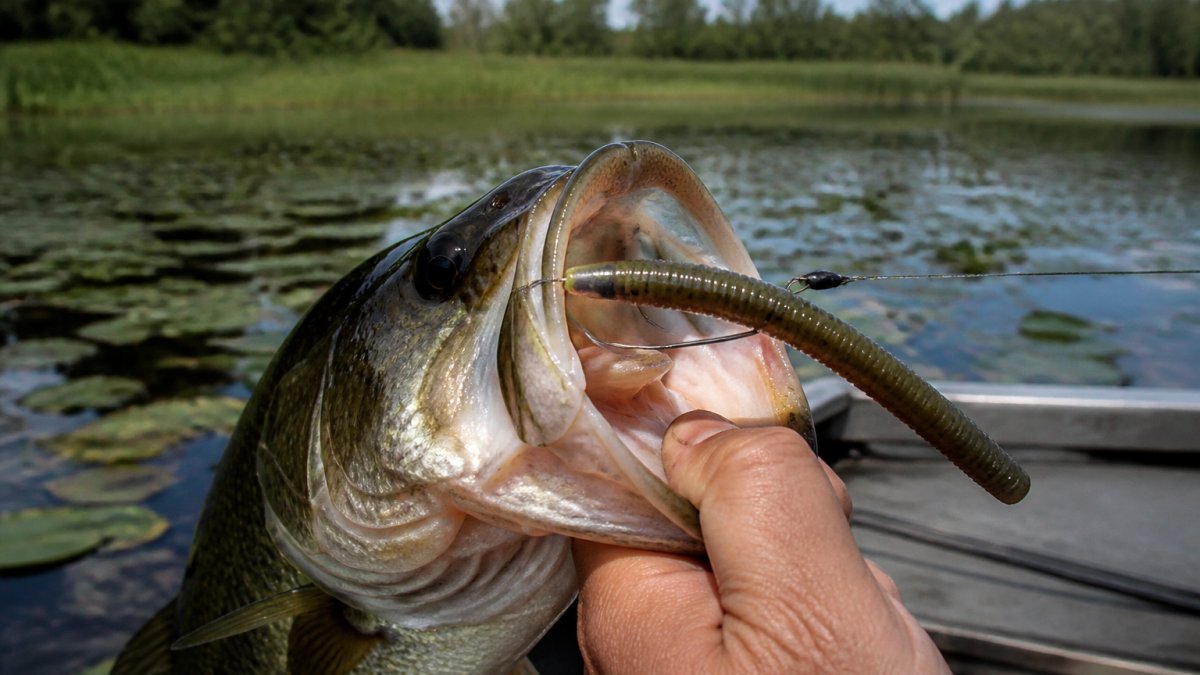
The easiest weedless bass rig for beginners is the Texas rig, which takes about two minutes to set up and works in grass, brush, and pads. It combines a bullet weight, an offset EWG hook, and a soft plastic in a straight line for high snag resistance and a high hookup rate.
- Skin-hook the point just under the plastic's surface for the best balance in scattered grass and pads.
- Use 1/8 oz for shallow grass and 3/8 to 1/2 oz to punch through matted slop.
- Match hook size to bait: 3/0 for a 4-inch worm, 4/0 for a 5-inch worm.
- Wait until you feel the fish's weight, then reel down and sweep hard.
- A 7-foot medium-heavy casting rod with 30-50 lb braid handles frogs and Texas rigs.
Table of Contents
- What Makes a Lure or Rig Weedless?
- Weedless Bass Fishing Rigs Every Beginner Should Know
- The Texas Rig for Beginners: Step-by-Step Setup
- Best Lures for Bass in Weeds and Heavy Cover
- How to Set the Hook with a Weedless Lure
- Choosing a Rig by Vegetation and Cover Type
- Your Complete Beginner Setup: Rod, Reel, Line, Hook, and Bait
- Stock Your Tackle Box for Weedless Bass Fishing
- Frequently Asked Questions
What Makes a Lure or Rig Weedless?
A weedless lure is any bait rigged so its hook point stays shielded from vegetation until a bass strikes. That shield comes from a weed guard, a buried hook point, or a hook seated inside a soft plastic body.
At UntamedSportsman, we build baits specifically for this kind of fishing, and we'll tell you now: the beginner guide to weedless bass fishing starts with understanding that trade-off. More protection means fewer snags but also fewer hookups.
Weed Guards, Hook Placement, and Snag Resistance
Three mechanisms keep a hook out of the weeds:
- Weed guards: wire or fiber strands that deflect grass away from the point
- Skin-hooking: burying the hook point just under the surface of a soft plastic
- Hook placement: seating the point in a hook slot or along the bait's back
The Texas Parks and Wildlife Department fishing basics explains that heavy cover holds bass because it provides shade and ambush points. That's why snag resistance matters so much: the fish live where your hook wants to catch.
Weedless Bass Fishing Rigs Every Beginner Should Know
Five rigs cover nearly every weedless bass fishing situation a beginner will face. Learn these and you can fish almost any cover in the country.
| Rig | Best Cover | Snag Resistance | Hookup Rate | Difficulty |
|---|---|---|---|---|
| Texas rig | Grass, brush, pads | High | High | Easy |
| Weightless Texas | Pads, shallow slop | Very high | Medium | Easy |
| Carolina rig | Open grass edges | Medium | Medium | Moderate |
| Weedless jig | Dense cover, wood | High | High | Easy |
| Ned rig | Sparse grass, rock | Medium | High | Easy |
Texas Rig, Carolina Rig, and Weightless Setups
The Texas rig is the workhorse: a bullet weight, an offset EWG hook, and a soft plastic, all in a straight line. The Carolina rig separates weight from bait with a leader, letting the bait float and dart behind the sinker.
A common mistake is fishing a Carolina rig in thick matted grass. The leader tangles and the bait never gets a clean presentation. Save it for scattered grass and shell beds.
The Texas Rig for Beginners: Step-by-Step Setup
Here's the whole rig in six steps, and it takes about two minutes once you've done it a few times.
- Thread the bullet weight onto your main line, point first. Use 1/8 oz for shallow grass, 3/16 to 1/4 oz for pads and deeper edges, and 3/8 to 1/2 oz when you need to punch through matted slop.
- Tie on an offset EWG hook with an improved clinch knot. Match hook size to bait length: 3/0 for a 4-inch worm, 4/0 for a 5-inch worm or compact creature bait, 5/0 for a 6-inch worm or full-size beaver.
- Insert the hook point into the nose of the soft plastic and push it through about a quarter inch, then bring it out the bottom.
- Rotate the bait and slide it up the shank until the nose sits against the hook eye and the bait hangs straight along the bend.
- Lay the bait along the shank and measure where the point should exit, usually just past the bait's back, in the last third of the body.
- Skin-hook the point just under the plastic's surface so it sits straight and weedless. Nick the plastic lightly; you want the point buried but able to pop free on a hookset.
Rig it straight. A bait with a twisted body spins on the retrieve and kills the action. If the worm looks kinked, back the hook out and start over.
How Much Should You Bury the Hook Point?
This is the single biggest beginner mistake, and it's a trade-off, not a rule. Bury the point too deep and the plastic absorbs your hookset; leave it too shallow and grass peels it out on the first cast.
- Heavy matted grass and slop: bury the point fully flush with the plastic's back. Maximum snag resistance, lower hookup rate, you'll need a harder sweep to drive it home.
- Scattered grass and pads: skin-hook so the point sits just under the surface, barely dimpling the plastic. This is the best balance for most beginners.
- Open water or sparse cover: leave the point exposed or barely touched. You give up weedlessness but gain hookups.
A common pattern among experienced anglers is to start the day skin-hooked and switch to a barely-buried point once fish are located and short strikes start.
Common Rigging Errors to Avoid
- Kinked or twisted bait: the worm spirals on the retrieve. Back the hook out and re-center it along the shank.
- Hook point exiting too early: the point comes out mid-body, leaving the tail to fold over the hook gap and block the hookset. Slide the bait farther up the shank.
- Bait slipping down the hook: the nose tears out after a few casts. A drop of superglue on the hook eye, or a small piece of plastic stopper, holds it in place.
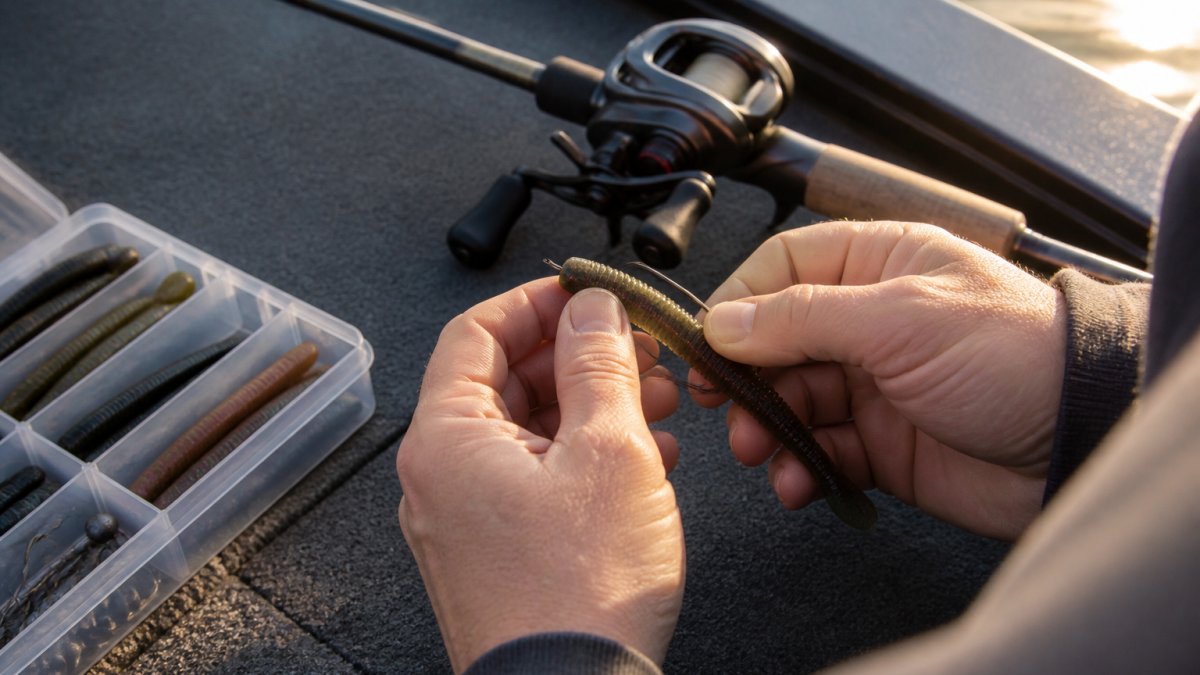
A 4-inch soft plastic worm is the standard bait for this rig, and our 4" Dessert Worm is built for exactly this presentation, sliding through cover without fouling.
Best Lures for Bass in Weeds and Heavy Cover
Soft plastics dominate heavy cover because they're cheap to lose and easy to rig weedless. Hollow-body frogs win on matted grass and lily pads, where their weedless design and topwater action draw explosive strikes.
For pads and matted grass, a hollow-body frog is hard to beat. Our Croaking Frog floats, kicks hard on the retrieve, and comes in 12 colors. The Switch, Jig 4" pairs with a round jig head for a tidy, snag-resistant package.

How to Set the Hook with a Weedless Lure
Setting the hook on a weedless bait requires a harder, faster sweep than fishing an exposed hook. The plastic and weed guard absorb energy, so you need to drive the point through both. Most beginners lose fish not because they set too hard, but because they set too early or too softly.
The Reel-Down Sequence
- Feel weight, not a tap. A bass taking a weedless bait usually feels like a heavy, steady load, not a sharp tap. Wait until the rod loads up.
- Reel down fast until the line comes tight and the rod tip is near the water. This removes slack so your sweep actually moves the hook.
- Sweep hard to the side or straight up, driving the rod through the fish. Don't stop halfway.
- Keep steady pressure on the way in. Slack line is how fish throw a buried hook.
How Hard to Set the Hook by Cover
- Hollow-body frog: wait until you feel the fish's weight, then swing hard and immediately reel. Frogs have the most plastic between you and the point.
- Texas rig in grass: a firm side sweep is enough. A straight-up swing pulls the bait out of the grass and away from the fish.
- Weedless jig in wood: a hard, short snap sets the hook and pulls the fish away from cover before it wraps you.
Troubleshooting Missed Strikes
When you miss fish, work through this checklist in order:
- Swung too early: you felt a tap and set before the fish had the bait. Wait for weight.
- Hook point buried too deep: the plastic absorbed the set. Skin-hook shallower or expose the point slightly.
- Hook too small for the bait: a 3/0 in a 6-inch worm leaves too little gap. Size up.
Choosing a Rig by Vegetation and Cover Type
Match the rig to what's actually in the water, not to what worked last week.
- Matted grass and slop: hollow-body frog or weightless Texas rig
- Scattered grass: Texas rig with a light bullet weight
- Lily pads: weightless Texas rig or frog
The U.S. Fish and Wildlife Service on aquatic vegetation and fisheries notes that submerged vegetation shapes where fish hold and feed. Read the cover first, then pick the rig.
Your Complete Beginner Setup: Rod, Reel, Line, Hook, and Bait
A 7-foot medium-heavy casting rod with a fast tip handles frogs, jigs, and Texas rigs.
For hooks, a 4/0 or 5/0 offset EWG hook covers most soft plastics. A 3/0 works for smaller baits like a 4-inch worm. Ned rigs use a dedicated Ned head, usually 1/16 to 1/8 oz.
For finesse situations, a medium spinning rod with 6-8 lb fluorocarbon is the right tool.
Stock Your Tackle Box for Weedless Bass Fishing
A practical weedless kit fits in one small box. Start with three bait categories and a handful of terminal tackle.
- Offset EWG hooks in 3/0, 4/0, and 5/0
- Bullet weights from 1/8 to 1/2 oz
- Pegs or bobber stoppers to hold weights
Our Tramp is a compact 4-inch beaver-style bait that flips, punches, and takes a Tokyo rig, and the smaller Tramp Jr gives beginners a compact option for the same presentations.


Watch out: buying a dozen bait styles before you've learned two rigs is the fastest way to waste money. Master the Texas rig first.
Frequently Asked Questions
What does weedless mean in bass fishing?
Weedless means the hook point is protected so it won't catch on vegetation during the retrieve. This is usually done by burying the hook point in a soft plastic bait or using a weed guard on a jig. A weedless bass setup lets you cast into lily pads, grass, and brush without constantly snagging, while still exposing the hook when a fish strikes.
What is the easiest weedless rig for beginners?
The Texas rig is the easiest weedless bass fishing rig for beginners. It uses a bullet weight, an offset EWG hook, and a soft plastic bait. You thread the bait onto the hook and bury the point slightly into the plastic. It's simple to tie, works in heavy cover, and is forgiving when you're learning how to set the hook with a weedless lure.
How do you set up a weedless lure for bass?
Start by tying on an offset EWG hook. Slide a bullet weight onto your line above the hook, then thread the soft plastic onto the hook shank. Push the hook point through the bait and back out, then embed the point just under the surface of the plastic so it's protected. This setup keeps the bait weedless while allowing a solid hookset.
What lures work best for bass in weeds and heavy cover?
Soft plastics like creature baits, worms, and beaver-style baits rigged Texas-style are top choices. Hollow-body frogs and swimbaits with screw-lock hooks also excel in slop and grass. For a weedless bass presentation, choose baits with a streamlined profile and rig them with EWG hooks or weedless jigheads to slide through cover without snagging.
How do you set the hook when fishing a weedless rig?
When you feel a strike, reel down until you feel the fish's weight, then sweep the rod upward firmly. With a Texas rig, a strong hookset drives the point through the plastic and into the fish's mouth. With frogs, wait a second after the blow-up before setting. Always keep your line tight to maintain control and improve hookup rate.
How can you avoid getting snagged while bass fishing in weeds?
Use weedless rigs like the Texas rig or weedless jig, and keep your rod tip up during the retrieve. Cast beyond the cover and bring the bait through it rather than dropping it into thick vegetation. Check your hook point often and re-rig if the bait tears. A steady, slow retrieve with pauses helps you feel cover and avoid burying the hook.
Weedless bass fishing rewards patience and the right tackle more than any secret technique. If you're ready to fish heavy cover with confidence, start with baits built for it. UntamedSportsman makes topwater frogs, creature baits, and soft plastics designed to stay weedless and draw strikes in the thickest slop. Get started with UntamedSportsman and put baits that perform in heavy cover in your box before your next trip.


Leave a comment
All comments are moderated before being published.
This site is protected by hCaptcha and the hCaptcha Privacy Policy and Terms of Service apply.